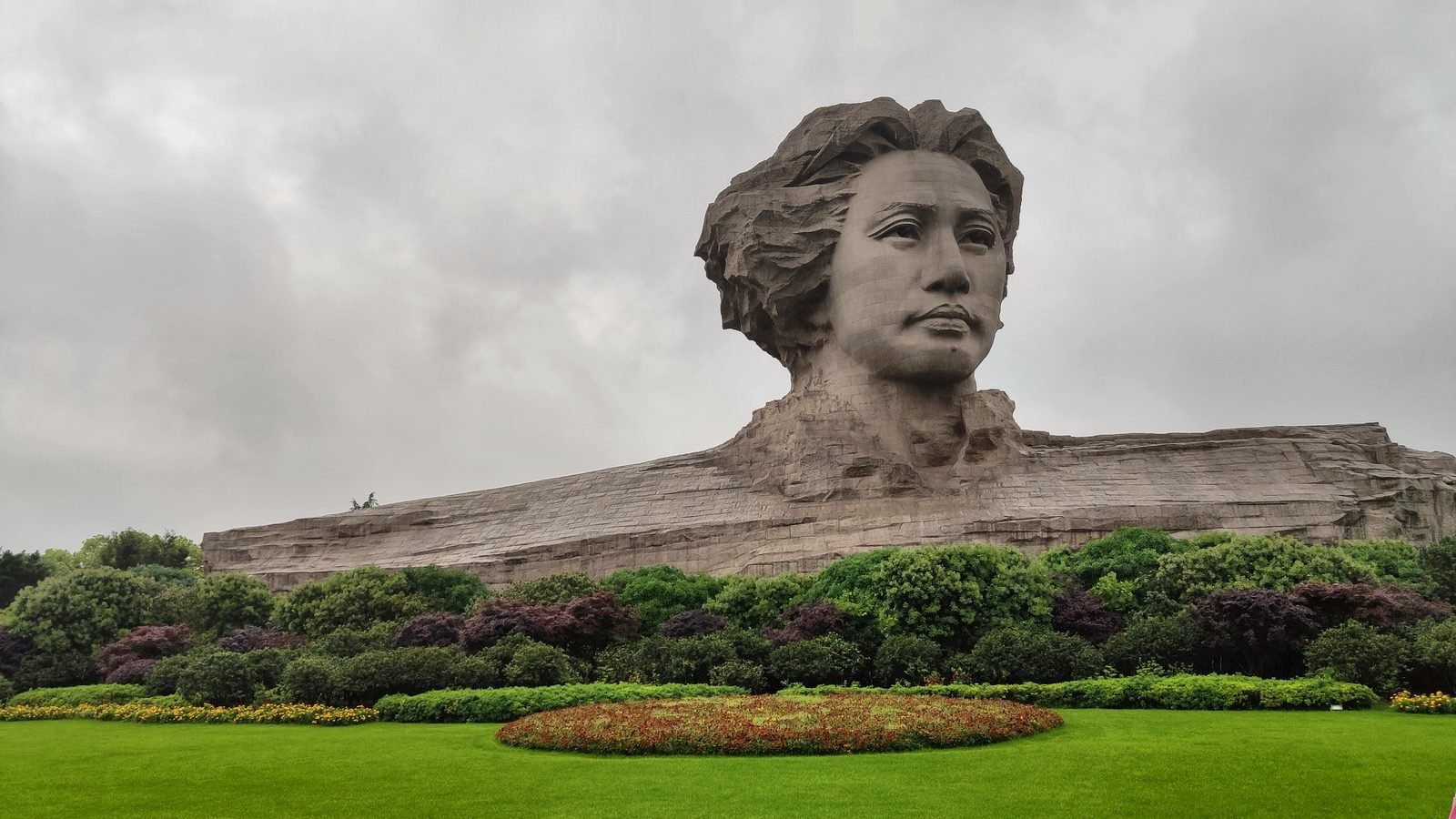
Hunan’s capital earns most of its fame from a sandbar statue and a retro food hall, but ask any local what Changsha actually tastes like and they’ll steer you toward a bowl of rice noodles eaten standing at a corner stall, a plate of black, crackling-skinned tofu, and a fish head buried under a mountain of chopped red chili. These four things — stinky tofu, rice noodles, chopped chili fish head, and the retro dining culture built around them at places like Wenheyou — form the backbone of Changsha’s food identity, and each one carries a story that runs well past flavor. This guide to Hunan’s capital walks through where each dish came from, how it’s eaten, and what’s changed about the city’s most famous food brand heading into 2026.
Signature flavor
Fermented & chili-forward
Stinky tofu, chopped chili, pork broth
Best meal time
Breakfast & late night
Rice noodle culture
Where to start
Pozi Street area
Huogongdian food complex
Changsha Stinky Tofu: The Smell That Built a Legend
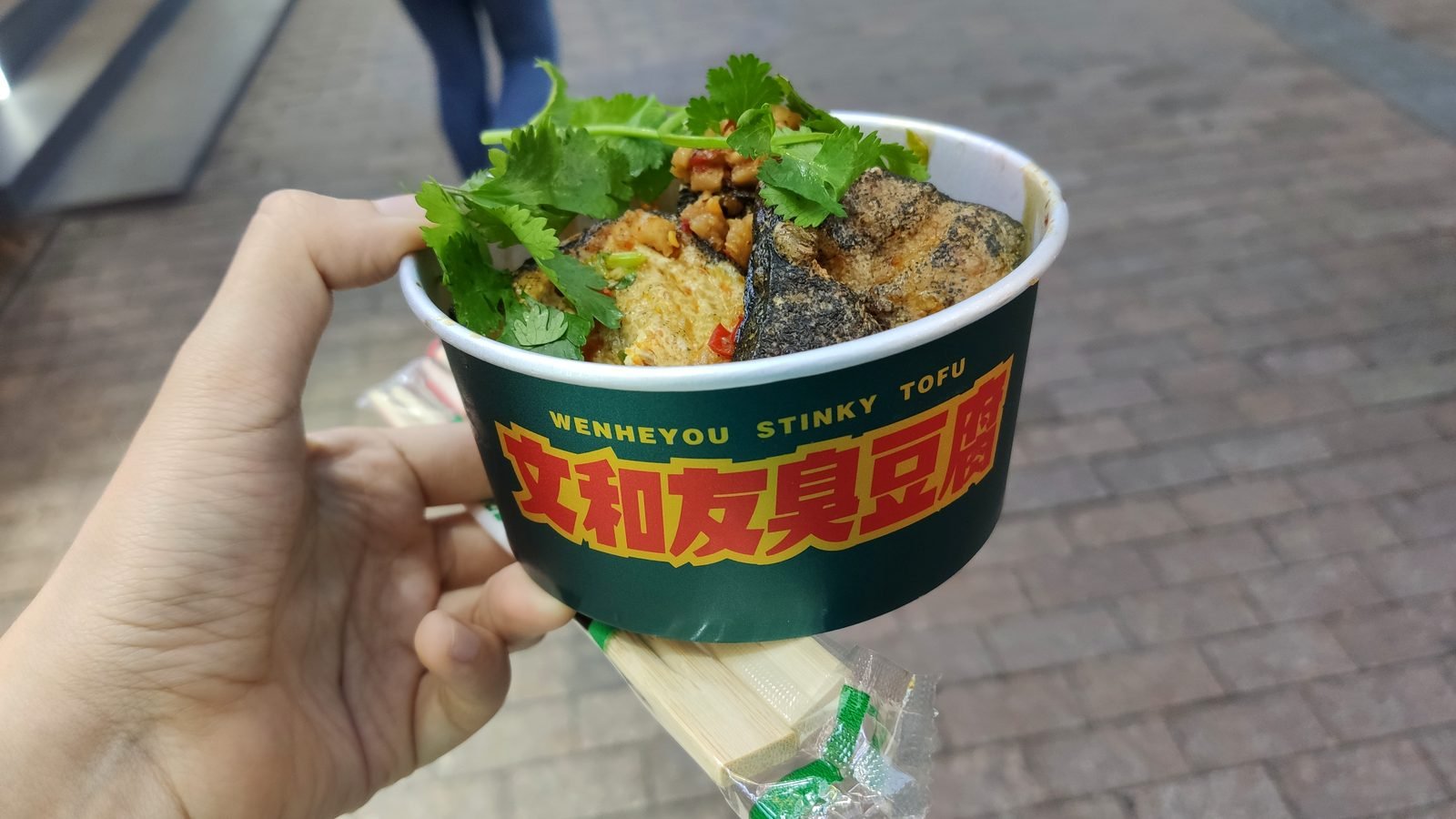
Changsha stinky tofu owes its existence to an accident in a county kitchen, not a chef’s design. Local accounts trace the recipe to a tofu shop in Xiangyin county during the Qing dynasty’s Tongzhi era (1862–1874), where a batch of pickled tofu sat too long and turned dark and pungent. Its owner planned to throw the batch out, but his wife saved a piece, fried it in tea oil, and found the smell gave way to a deep, savory aroma once it hit hot oil. Later cooks refined that accident into the dish served across Changsha today: cubes of fermented tofu fried until the surface turns black and crackling, then finished with chili oil, garlic sauce, and a scattering of scallion. Hunan’s version differs from the stinky tofu found in Taiwan or Sichuan — darker, crisper, and built around a chili-forward sauce rather than a pickled brine soak.
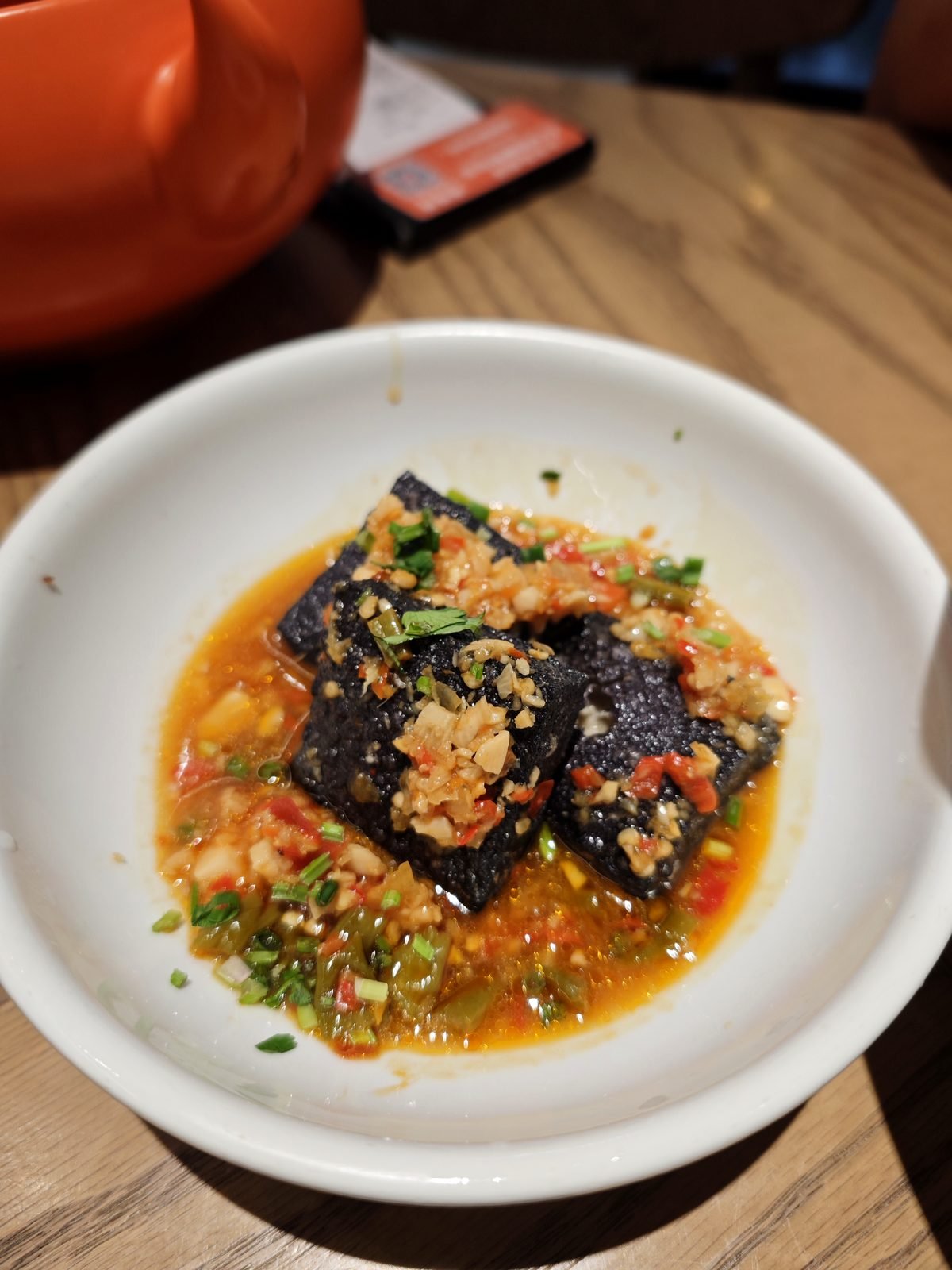
Huogongdian, the restaurant most associated with the dish today, has deeper roots than the tofu itself. Its home began as the Fire God Temple, first built in 1577 during the Ming dynasty and rebuilt in 1941 after wartime fire damage. Restaurant operations began on the same site in 1956, selling the temple’s snack recipes under one roof, and the business now operates as a listed “time-honored brand,” with its main location at 127 Pozi Street in Tianxin District plus several branches around the city.
Mao Zedong is tied to the dish in local folklore, though the story resists hard verification. Writer Wang Zengqi’s essay Five Flavors recorded that young Mao enjoyed Huogongdian’s stinky tofu and, on a later visit back to his home province, praised it again with the line “Huogongdian’s stinky tofu is still delicious.” During the Cultural Revolution, that line reportedly appeared painted on the restaurant’s wall as a “supreme directive,” though neither the exact year of the quote nor the slogan’s precise dating survives in any source checked for this guide — treat it as local legend worth knowing rather than settled history.
Official recognition has since carried the dish well beyond folklore. Changsha stinky tofu’s production technique earned city-level intangible cultural heritage status in 2007, provincial-level recognition in 2009, and a spot on the national intangible heritage list as part of a broader snack-making category in a later batch.
Changsha Rice Noodles: Breakfast, Late Night, and Two Kinds of Noodle
Rice noodles are less a dish than a daily ritual in Changsha, and the city’s version claims one of the longer pedigrees in Chinese food history. Local food writers point to a rice-noodle-making workshop found in a Changsha tomb as evidence the staple already existed more than two thousand years ago, and later accounts describe it as a favorite of the Qing imperial court. Whatever the exact timeline, the noodles function today the way they likely always have — as a fast, cheap breakfast and a reliable late-night fix after a night out.
Order a bowl and the first choice is the noodle itself. Changsha cooks and diners split into two camps: bianfen, flat rice noodles that soak up broth more readily, and yuanfen, round noodles with a slightly firmer bite; bianfen is the local favorite for exactly that broth-absorbing reason. Pork bone stock seasoned with soy sauce builds the broth underneath, rich and faintly sweet before the chili goes in, and the noodles themselves carry almost no flavor on their own — they’re a vehicle for the broth and the toppings, not the main event.
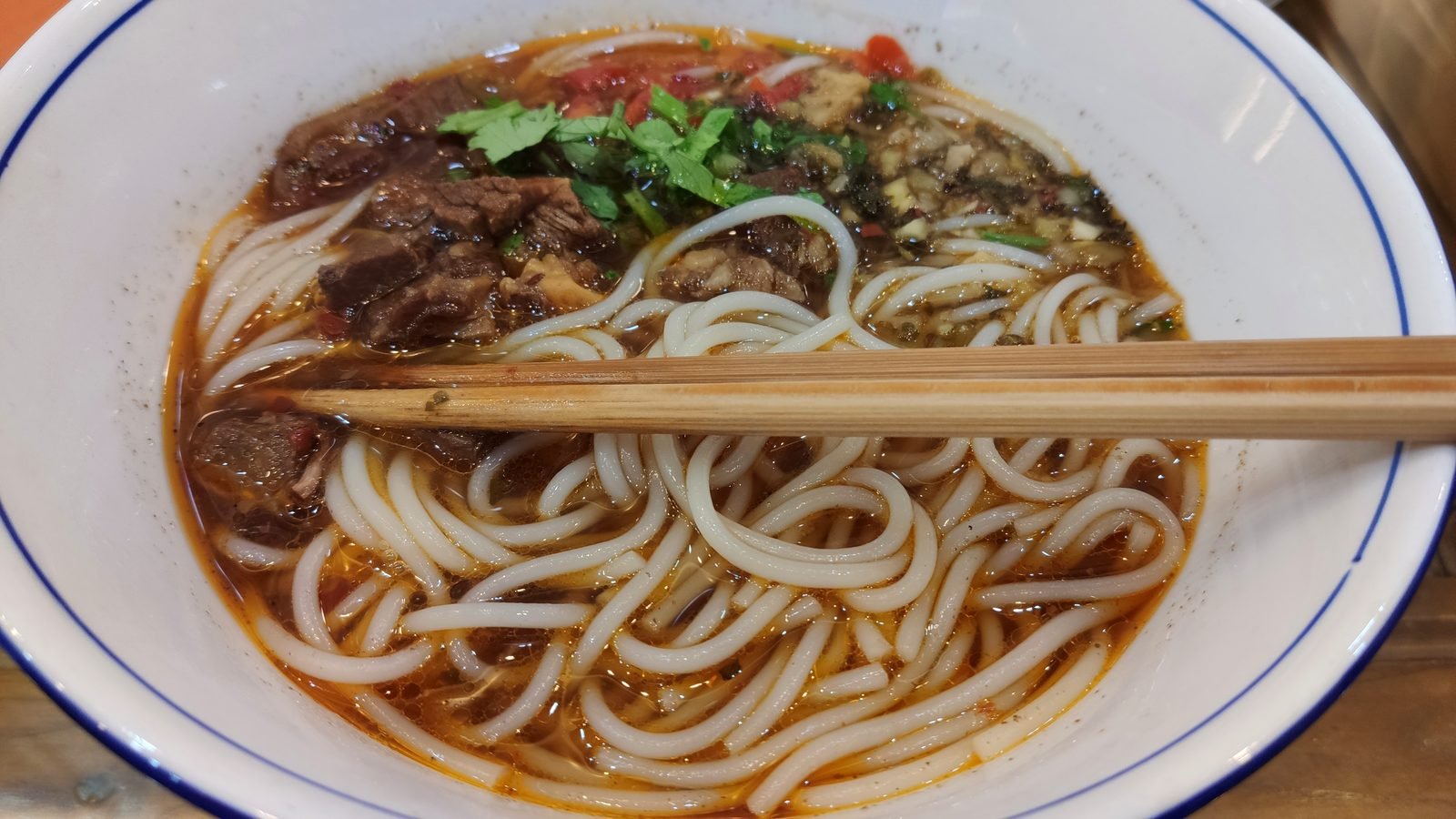
Toppings carry their own vocabulary. Vendors call them mazi, and they come in two styles: weima, meat and sauces simmered in advance in a big pot and ladled on when you order, and chaoma, stir-fried fresh for each bowl at extra cost and extra wait. Shredded pork, pickled chili, and crispy fried chili oil are the standard add-ons; a first-time order of feichang fen (intestine noodles) or paigu fen (rib noodles) with weima toppings is the easiest way to taste the dish the way regulars do, without waiting on a stir-fry.
Chopped Chili Fish Head: A Scholar’s Legend With Two Endings
Chopped chili fish head carries two different origin legends, and neither survives as verified history — which is itself worth knowing before repeating either one as fact. One version names a Qing-dynasty scholar, Huang Zongxian, who took refuge with a farming family while on the run; the farmer’s wife cooked him a fish head topped with chopped chili because that was what the household had, and he liked it enough to have his own chef refine the recipe later. A second, more common telling skips the name entirely: a scholar fleeing the literary persecutions under the Yongzheng Emperor hides in a poor Hunan village, and the family that shelters him — too poor to offer a proper meal — serves fish soup from the meat and steams the heads with chopped red peppers, a dish he later recreates at home. Both versions agree on the shape of the story — poverty, improvisation, and a scholar who carried the recipe back to a kitchen with better resources — even if they disagree on the details.
The cooking method is more settled than the backstory. Cooks split a fresh fish head along the chin so it lies flat, score the meaty sections, and marinate it briefly in cooking wine, salt, and pepper. Ginger, garlic, and scallion go on the plate first, the head on top, then a thick layer of salted chopped chili covers the whole thing before an 8-to-10-minute steam. A final pour of hot, smoking oil over the top — along with more raw scallion and garlic — finishes the dish and releases the aroma that gives chopped chili fish head its reputation as one of Hunan cuisine’s most fragrant dishes.
Wenheyou: From a Street Stall to Changsha’s Last Super Wenheyou
Wenheyou’s early chapters are already familiar territory for readers of this site’s Changsha overview — a street stall, a lucky TV appearance, and a 2018 leap into “Super Wenheyou,” the multi-story 1980s-themed food hall. What that overview doesn’t cover is what happened next, and it matters if you’re deciding whether the place is still worth a visit in 2026.
Riding that early success, the brand tried to replicate itself elsewhere, opening a Guangzhou location inside Taikoo Hui mall in July 2020 — complete with waits of four and a half hours on opening day — followed by a Shenzhen branch built around oysters in April 2021. Neither held up. Guangzhou’s crowds thinned through 2022 as vendors left, and the Taikoo Hui site closed in early 2025 after the mall ended its lease. Shenzhen’s last major anchor vendor pulled out by mid-2025, and the company confirmed in July 2026 that the location had fully stopped operating.
That leaves the original Changsha complex at Hisense Plaza as the one true Super Wenheyou left anywhere, and on-the-ground reporting from mid-2026 found a mixed picture inside it. Floors one through four still draw steady crowds and represent the complex at its photogenic best, but floors five and six have lost far more vendors to vacancy than they’ve kept, and more than 80% of the people walking through now are out-of-town visitors rather than locals grabbing a casual meal. For a traveler, that’s worth knowing going in: Wenheyou today reads more like a themed attraction built around Changsha’s food culture than a spontaneous local hangout, and the ground floor near the entrance is where the original energy still holds up best.
Pairing Changsha’s Dishes with the Rest of Hunan
Travelers working their way around Hunan can treat Changsha’s food scene as one stop in a wider tasting trail. Chenzhou, a few hours south, anchors its own cluster of flavors worth comparing side by side: East River fish and Qifengdu fish noodles make an interesting contrast with Changsha’s own noodle culture, while Chenzhou’s other signature dishes, from spicy whole chicken to smoked duck, show how differently Hunan cooking leans once you’re outside the capital. Sightseeing-focused travelers rounding out a Changsha stay should also look at this site’s guides to Orange Isle and Yuelu Mountain and Yuelu Academy, both an easy add to a food-focused itinerary built around this guide.
Frequently Asked Questions
Where can I try stinky tofu, rice noodles, and chopped chili fish head in one trip?
Pozi Street and the surrounding food-street cluster in Tianxin District put all three within a short walk of each other. Huogongdian’s main location at 127 Pozi Street serves stinky tofu alongside a full Hunan menu that includes chopped chili fish head, and rice-noodle stalls line the lanes nearby. Covering all three dishes in a single afternoon, without a taxi between stops, is realistic.
How spicy are these dishes, and is there a milder way to order?
Chopped chili fish head and the chili sauce on stinky tofu both run hot by most visitors’ standards, but the noodle shops are the easiest place to dial it back — ask for wēilà (微辣, mild) or bú là (不辣, no chili) when ordering, and the kitchen adjusts the mazi topping rather than serving a fixed recipe. Stinky tofu’s chili sauce is harder to order around since it’s part of the dish rather than an add-on, so a small first bite is the safer test before committing to a full plate.
Which rice noodle order should a first-timer try?
Ask for bianfen (flat noodles) with weima toppings — the pre-simmered style — rather than chaoma stir-fried toppings. It’s the fastest order to make, the most forgiving if you’re unsure about spice level, and the version most regulars eat on an ordinary morning rather than for a special occasion.
Is Wenheyou still worth visiting given the closures elsewhere?
Yes, with a caveat: stick to the lower floors. Floors one through four are still busy and represent the complex at its best, while floors five and six have far more vacant units than operating vendors as of 2026. Going for the ground-floor snack stalls and the retro architecture, rather than expecting every floor to be fully alive, sets the right expectations.
How do I get to the Pozi Street food area, and which metro line is closest?
Wuyi Square station, served by metro Lines 1 and 2, is the closest stop, with the Pozi Street and Huogongdian cluster a short walk from the station toward the river. Set up a transit QR code in Alipay or WeChat Pay before you arrive — the same system covers both Changsha’s metro and most of its buses, so a single food-focused afternoon doesn’t require a separate transit card.