Yuelu Mountain rises directly across the Xiang River from Orange Isle, and together the two make up the natural core of central Changsha — a free riverside hill on one side, a thousand-year academy at its foot on the other. Hunan University’s modern campus now wraps around that academy, so a walk up this hillside moves through Song-dynasty lecture halls, a Qing-era pavilion with its own place in Communist Party history, and a Buddhist temple founded in the third century, all before reaching a ridge with skyline views back over the river. This guide covers what’s actually worth paying for, what’s free, and how to get up and down without losing half a day to logistics.
Summit elevation
~300 m (987 ft)
Yunlu Peak
Yuelu Academy ticket
¥50
Mountain park itself is free
Best for maples
November
Around Aiwan Pavilion
A Hill Where Three Faiths and a Thousand Years of Scholars Overlap
Local guides call Yuelu Mountain the tail peak of Mount Heng’s seventy-two-peak range, the last ripple of Nanyue’s sacred mountain system before the land flattens out into the Xiang River plain — a lineage that gave the hill its name and its long-standing reputation as sacred ground. Buddhist, Taoist, and Confucian institutions all took root on its slopes starting in the third century, and most of them are still standing today. Lushan Temple, built in AD 268, counts as Hunan’s earliest Buddhist temple and has been rebuilt several times since, most recently in the 1980s. Yunlu Palace, a Taoist complex, was added in 1478. Confucian scholarship arrived later and outlasted both: Yuelu Academy, founded at the mountain’s eastern foot in 976 during the Song dynasty, became one of the four great academies of imperial China and eventually grew into Hunan University, whose modern campus now surrounds the old academy grounds.
Yuelu Academy: Where a Thousand-Year Argument Still Echoes
Visitors to the academy usually pause at the front gate before going any further: the wooden doorframe carries a couplet that has outlived every dynasty since it was written, “惟楚有材,于斯为盛” (“Chu produces talent, and here it flourishes most”). Yuan Mingyao, the academy’s head during the Qing dynasty’s Jiaqing era, composed it with a student, splicing a line from the ancient Zuo Zhuan chronicle onto a line from the Analects of Confucius. Admission runs ¥50, with hours from 7:30 a.m. to 6:00 p.m. between May and October and 8:00 a.m. to 5:30 p.m. the rest of the year; confirm current hours locally, since heritage sites in China adjust seasonal schedules from time to time.
Inside, the academy’s real claim to fame predates the Ming and Qing restorations on display today. In 1167, Zhu Xi — the philosopher who later built Neo-Confucianism into state orthodoxy — traveled from Fujian to debate Zhang Shi, then the academy’s head, over the meaning of the Doctrine of the Mean. So many scholars and students arrived to listen that, according to the often-repeated account, the nearby pond ran dry from everyone drinking out of it. That meeting, known as the Zhu-Zhang Debate, set the template for cross-school “debate lectures” that later academies across China copied, and it cemented Yuelu’s academic reputation for the eight centuries since. Restored lecture halls, stone stelae, and a small on-site museum now walk visitors through that history, and Hunan University’s modern buildings press right up against the academy’s outer walls — expect to share the paths with current students, especially on weekday mornings.
Aiwan Pavilion: A Poem, a Fire, and Mao Zedong’s Calligraphy
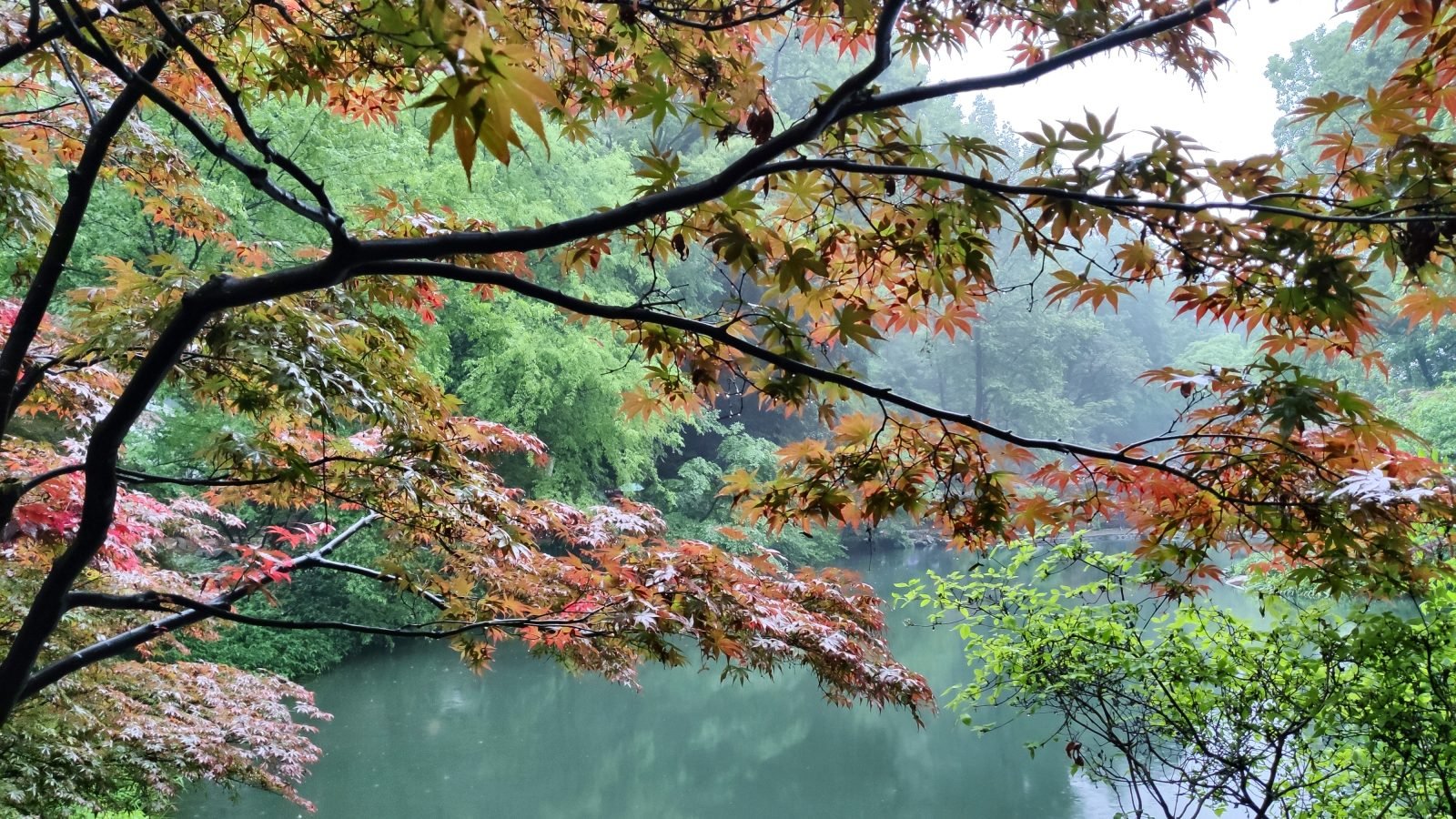
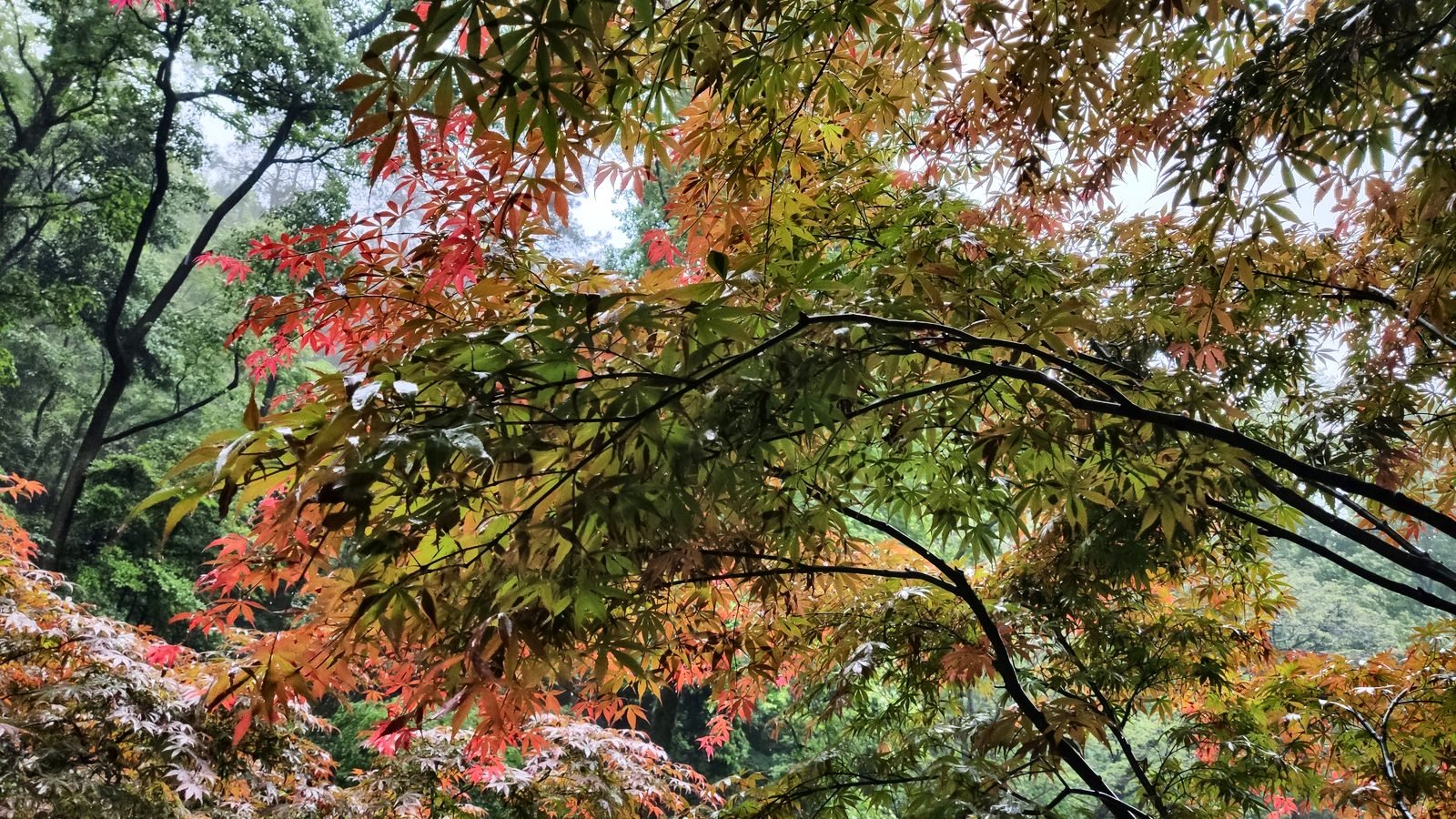
Climbing from the academy into Qingfeng Gorge leads to Aiwan Pavilion, one of the “Four Great Pavilions of Jiangnan” and the single most photographed spot on the mountain come autumn. Luo Dian, an academy head during the Qianlong era, built it in 1792 under a different name — Red Leaf Pavilion — before Bi Yuan, then viceroy of the region, renamed it after a line from Tang-dynasty poet Du Mu: a traveler stops his carriage because the frosted maple leaves burn redder than spring flowers. Imperial Japanese forces destroyed the pavilion during the Second Sino-Japanese War; the Hunan government rebuilt it in 1952 and restored it fully in 1987. Mao Zedong, who studied nearby at Hunan First Normal University and often hiked up here with classmates to argue philosophy and politics, wrote the pavilion’s nameplate in 1952 — the red stele hangs on the pavilion’s second floor today. Visit in November, when the Japanese maples planted around it turn a deep red, and the crowds show why the pavilion earned its name twice over.
Lushan Temple, Yunlu Palace, and the Ridge of Revolutionaries
Past Aiwan Pavilion, the path climbs on to Lushan Temple, Hunan’s oldest Buddhist temple, founded in AD 268 and rebuilt most recently in the 1980s after centuries of damage and repair. Yunlu Palace, a Taoist complex dating to 1478, sits further up near the summit, alongside oddities like the Flying Clock and Flying Stone — a bell hung in an old ginkgo tree and a carved stone resting beneath it — and the weathered King Yu Tablet, whose inscription has faded past full legibility. That same stretch of mountain holds the tombs of Huang Xing and Cai E, two of the key military figures behind the 1911 revolution that ended imperial rule, along with monuments to other revolutionary-era figures buried on the slopes. Together, the temple, the palace, and the tombs are why local guides describe Yuelu as a hill where Confucianism, Buddhism, and Taoism still physically overlap — not metaphorically, but within a single afternoon’s walk.
Getting Up the Mountain: On Foot, by Cable Car, or by Sightseeing Bus
Three ways get visitors from the base to the upper slopes, and picking the right one depends on how much climbing is on the agenda.
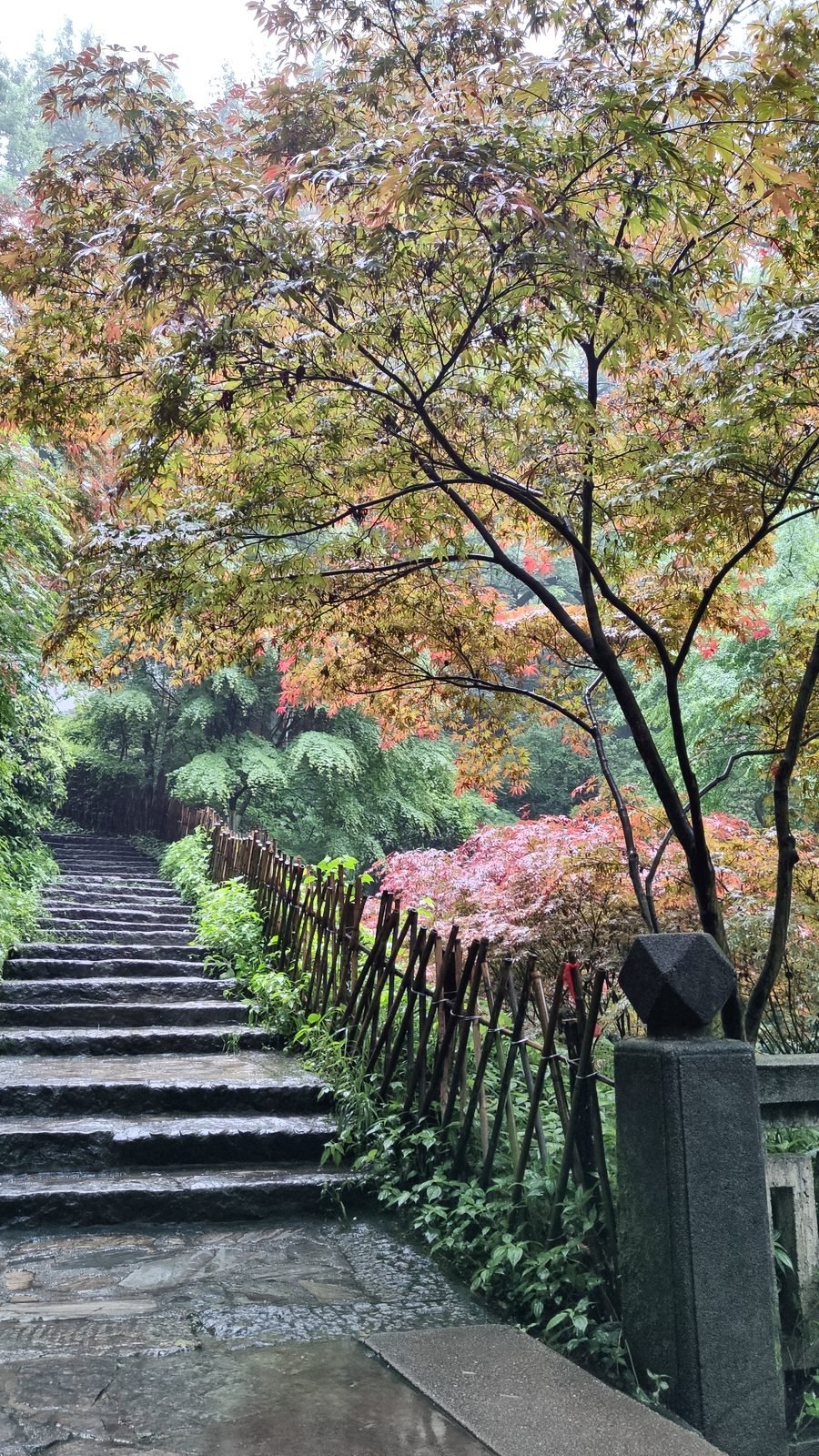
Hiking — the main trail from the academy up past Aiwan Pavilion to Yunlu Peak takes most visitors 1.5–2 hours one way; shaded and stepped, and busiest on weekend mornings and during the autumn maple season.
Cable car — runs partway up the mountain for ¥30 one-way up, ¥25 one-way down, or ¥50 round-trip; the fastest option if the summit view is the goal and the historic sites along the way are optional.
Sightseeing bus — covers the paved road sections for ¥20 one-way or ¥30 round-trip; a middle option for visitors who want to stop at the academy and pavilion but skip the steepest climbing.
Most visitors mix methods: walk the academy-to-pavilion stretch, since it’s shaded and only gently inclined, then switch to the cable car or bus for the steeper push toward Yunlu Peak if the summit view matters more than the walk itself.
Getting There from Central Changsha
Yuelu Mountain sits on the west bank of the Xiang River, a short ride from the river crossing near Orange Isle. Metro Lines 2 and 4 both stop at Yingwanzhen; take Exit 1 and walk west about five minutes to reach the main entrance near Yuelu Academy. Several bus routes — 106, 202, 358, 360, 407, 902, 908, 913, and Tourist Line 1 — stop at Lushan Nanlukou, a ten-minute walk north of the entrance, and work as a backup if the metro station is crowded. Set up a transit QR code in Alipay or WeChat Pay before arriving; it covers both the metro and most of the bus lines without a separate ticket.
Planning Your Visit
Autumn — specifically November, when the maples around Aiwan Pavilion turn — draws the heaviest crowds and the best photos; spring brings fresh greenery and thinner weekday crowds, while summer heat and humidity make the uphill stretches harder going. Budget at least half a day for the academy and pavilion alone, and a full day if the summit hike and Lushan Temple are also on the list. Combine the visit with a stop at Orange Isle on the opposite bank, or treat it as part of a longer stay covered in this site’s Changsha travel guide and, further south, the waterfalls and canyons in this site’s Chenzhou travel guide. Hikers who enjoyed the climb here might also like the exposed ridge walks at Gaoyi Ridge, the misty river views at Xiaodongjiang, or the barrier-free forest trails at Mangshan, all a few hours south in Chenzhou.
Frequently Asked Questions
Do I need to book Yuelu Academy or the mountain park in advance, the way Hunan Museum requires?
No — unlike Hunan Museum’s advance-booking system, both Yuelu Academy and the mountain park admit visitors on a walk-up basis. The academy sells its ¥50 ticket at its own gate, and the mountain park’s free entry needs no ticket or reservation at all. The only real queue to plan around is the one at Aiwan Pavilion during peak maple weeks, not a booking slot.
How crowded does it get during the November maple season, and is there a way around that?
Weekend crowds in peak maple weeks bottleneck the stairs around Aiwan Pavilion specifically, more than anywhere else on the mountain. A weekday morning visit, or arriving right at opening, cuts the wait meaningfully; the summit and the academy itself stay comparatively calm even when the pavilion area is packed.
Can I see both Yuelu Mountain and Orange Isle in one day?
Yes — they sit on opposite banks of the Xiang River. Orange Isle is served by Juzizhou station on Metro Line 2, and Yuelu Mountain is a short ride further west via Yingwanzhen station on Lines 2 or 4; the crossing takes well under 30 minutes by metro, or about 15–20 minutes by taxi over the bridge. Starting at Orange Isle in the morning, before the heat builds, then crossing to Yuelu in the afternoon for the mountain’s tree cover, is the common split.
Is the cable car worth the extra cost, or should I just hike?
If reaching Yunlu Peak’s summit view is the main goal, the cable car saves roughly an hour each way over hiking the full route. If the historic stops — the academy, Aiwan Pavilion, Lushan Temple — matter more than the summit itself, walking the lower, shaded sections and skipping the final push to the top is the better trade.
Is this climb manageable for visitors who can’t handle steep stairs?
Yuelu Academy and Aiwan Pavilion sit on relatively gentle, paved paths that don’t require serious climbing, and the sightseeing bus covers the paved road sections for anyone who wants to go further without the stairs. The push toward Yunlu Peak itself runs on a sustained stepped trail that isn’t wheelchair- or mobility-aid-friendly; the cable car is the practical way to reach the upper mountain without that climb.