Chenzhou sits where Hunan runs out of room, pressed against the Nanling mountains with Jiangxi to the east and Guangdong to the south. Most travelers know it only as a stop on the Wuhan–Guangzhou high-speed line, a blur of tunnels between Changsha and the Pearl River Delta. Step off the train, though, and the city opens onto some of the most dramatic landscape in southern China: a Danxia gorge carved red and green, a river that breathes its own fog, and a primary forest old enough to still be hiding species science only named a few decades ago.
A City Shaped by Mountains and Metal
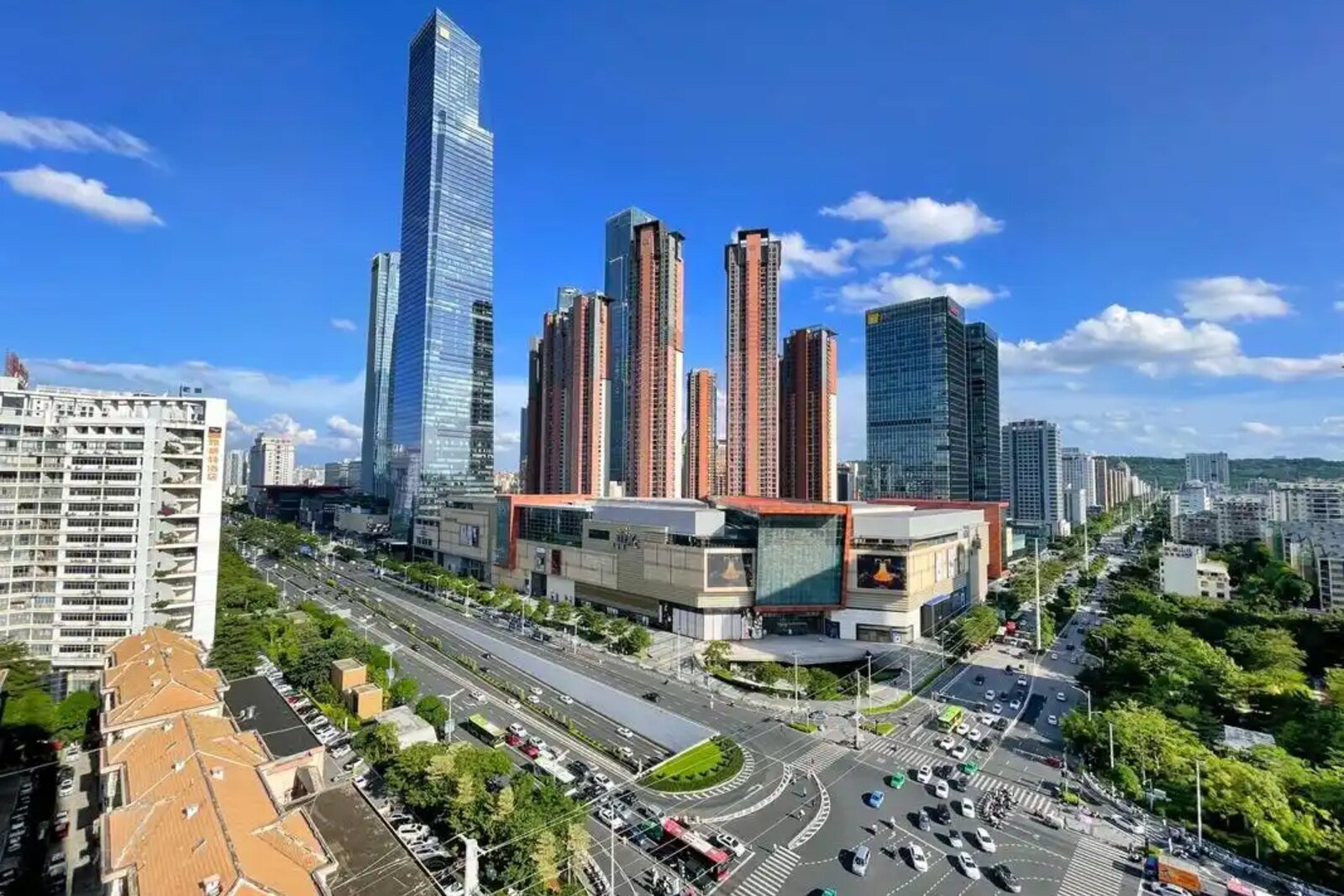
Chenzhou’s history goes back to the Qin dynasty, when the area was known as Guiyang Commandery. The name “Chenzhou” arrived later, in 735 CE under the Tang dynasty, by which point the region’s scenery was already drawing attention — Tang poets including Han Yu, Liu Yuxi, Qin Guan, Du Fu, and Wang Changling all passed through and wrote about it. It is the kind of pull that still draws travelers to Liuzhou’s karst country in neighboring Guangxi, a few hours further down the rail line — dramatic stone scenery with its own long literary shadow. The city today governs two urban districts, Beihu and Suxian, the county-level city of Zixing, and eight counties stretching toward the Guangdong border, including Yizhang, Linwu, and Guiyang.
Underground wealth shaped Chenzhou as much as poetry did: the region holds substantial reserves of tungsten, bismuth, and molybdenum, and nonferrous metal production remains a core industry. On the table, the city’s best-known export is Linwu duck, a national geographic-indication product from Linwu County. The climate is humid subtropical, with a wet spring, a long hot and sticky summer, a cooler dry autumn, and a short winter that can still bring the odd cold snap.
Gaoyi Ridge: A Danxia Canyon You Walk Into
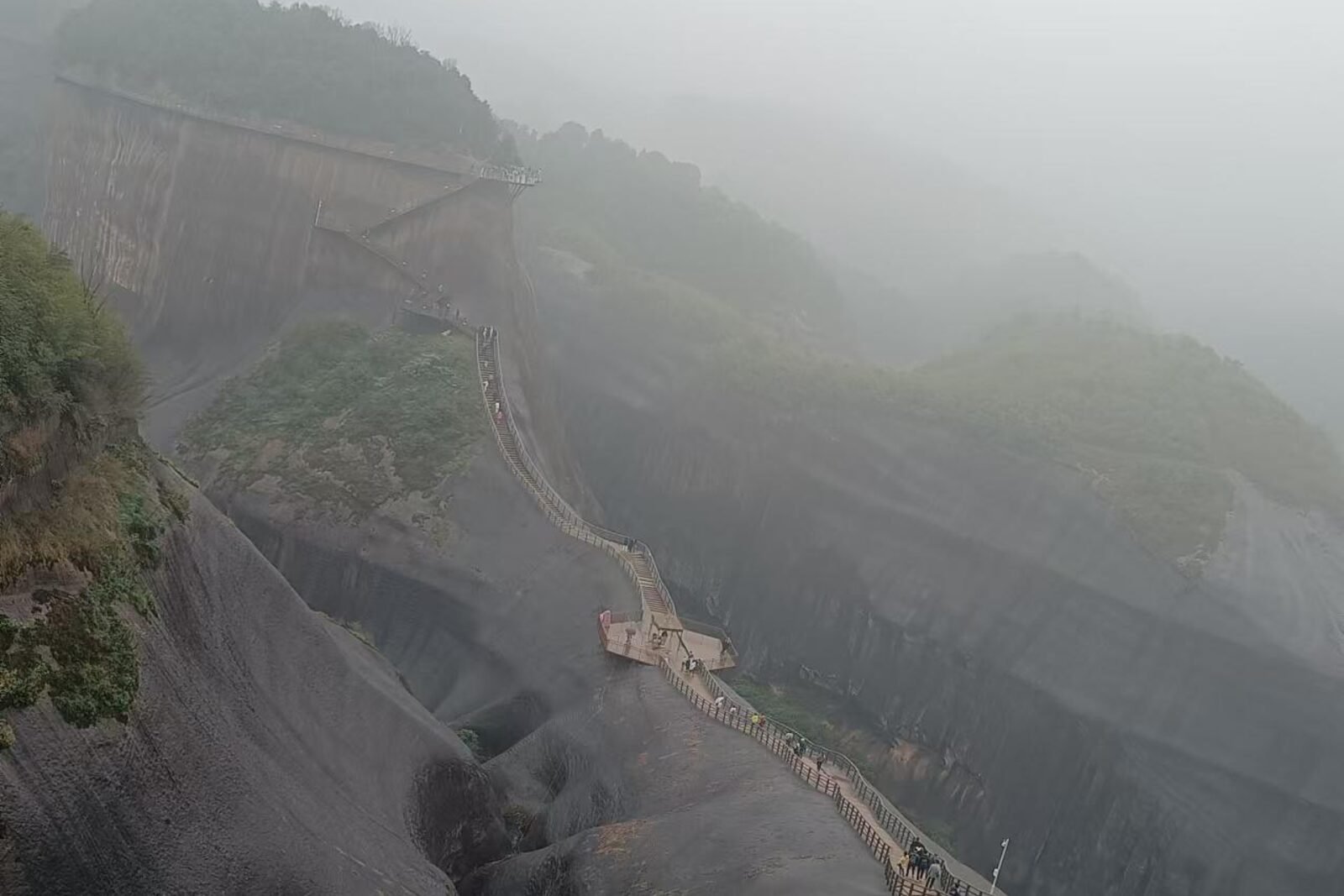
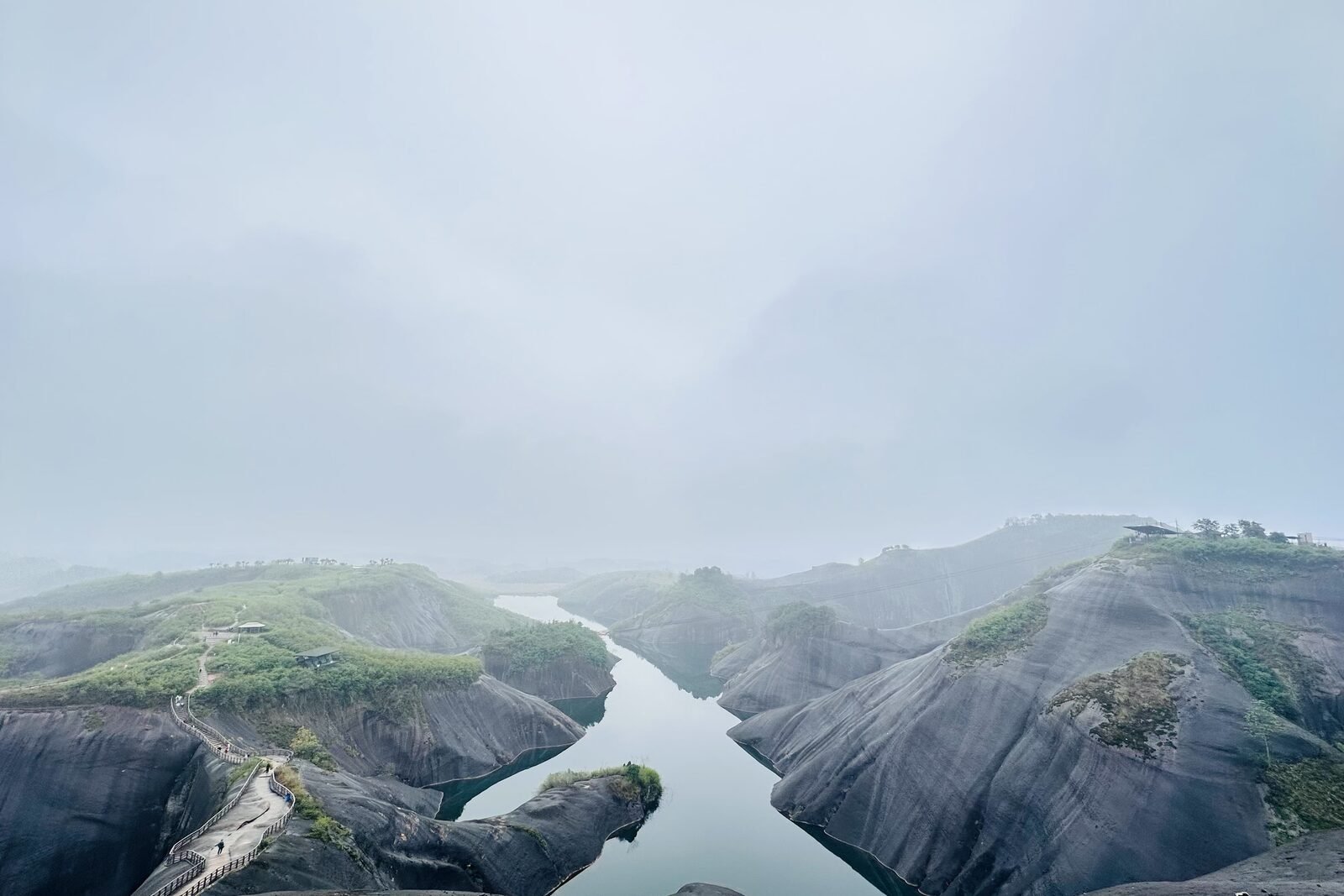
Gaoyi Ridge straddles the border between Suxian District and Zixing, a roughly 50-square-kilometer stretch of Danxia landform where centuries of erosion have cut the red sandstone into narrow ridges, sheer drops, and gorges that pool a startling jade green at the bottom. It’s one of those places where photographs flatten what the body actually feels: paths run along the top of knife-edge rock walls, and the ground falls away on both sides into the gorge below.
For anyone uneasy with heights, standing at the edge can feel less like sightseeing and more like the rock is trying to pull you in. The scenic area has responded with guardrails along both sides of the exposed walkways, which cuts the vertigo without cutting the view — you still get the full drop, just with something solid under your hand. Go slowly where the path narrows, and budget at least half a day: the ridge rewards walking its full length rather than stopping at the first lookout.
Xiaodongjiang: A River That Makes Its Own Weather
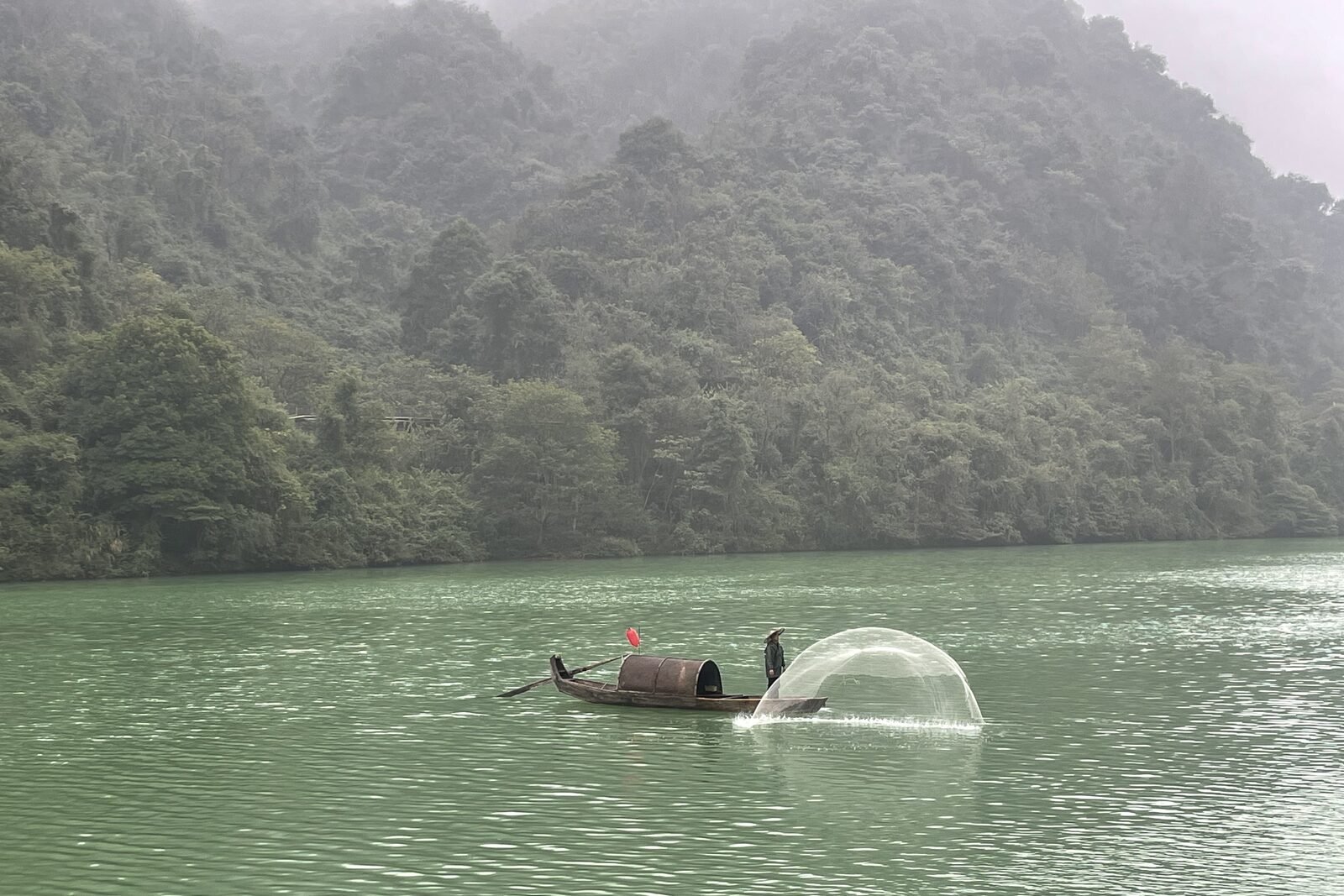
A short drive from Gaoyi Ridge, in Zixing, Xiaodongjiang runs about 12 kilometers from the Dongjiang Lake visitor center down to the Dongjiang Dam — and for a few months a year, it disappears under its own weather system. The water released from the bottom of the dam stays close to 8–10°C even in summer, and when that cold flow meets warm, humid air over the river surface, it condenses into drifting layers of mist. Locals call the result “misty Xiaodongjiang,” and it has made the river a national 5A-rated scenic area in its own right.
Timing matters here more than almost anywhere else on this list. The fog shows up anywhere from April to October, but June through September is the reliable window, and within each day the mist is thickest between roughly 5 and 8 o’clock, morning or evening — arrive at noon on a clear day and you’ll just see a river. The scenic area opens at 6 AM from May through October and 8:30 AM the rest of the year, closing at 5 PM year-round, so an early start isn’t optional if the fog is the point of the trip.
Mangshan: Primary Forest at the Edge of Two Provinces
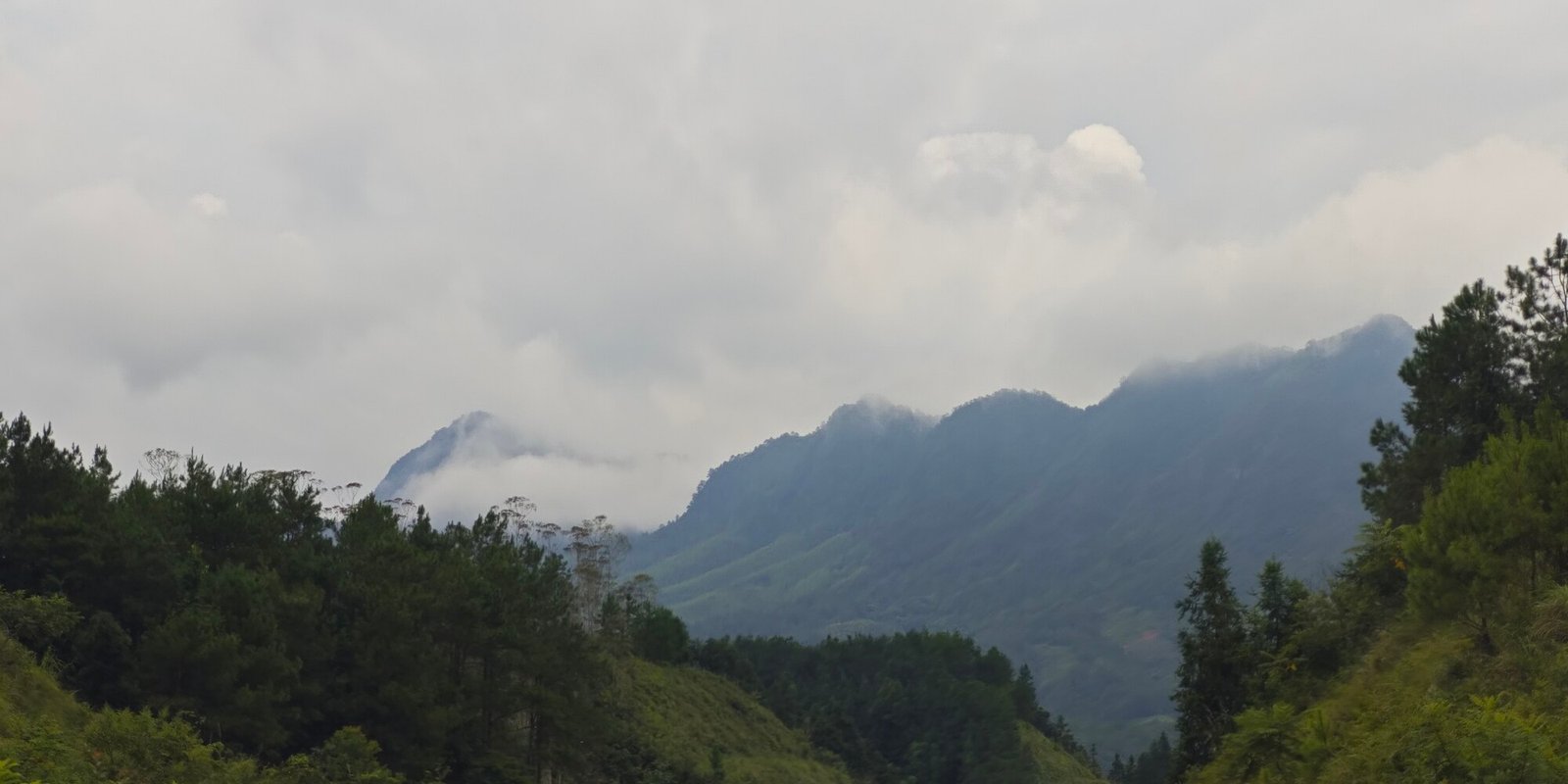
Southeast of the city, where Yizhang County meets the Guangdong border, Mangshan National Forest Park climbs from 420 meters to 1,902 meters through the Nanling range. Forest cover here runs to 99.01 percent, and the park protects the largest and best-preserved stretch of primary evergreen broadleaf forest found at this latitude anywhere on Earth — which is also why it’s sometimes called a “green pearl.” The core area, Wuzhifeng (Five Finger Peak), was built as China’s first fully barrier-free mountain scenic area, with a cableway, boardwalks, elevators, and escalators carrying visitors up where the terrain would otherwise stop them.
The forest’s most famous resident is one almost nobody sees: the Mangshan pit viper, found nowhere on Earth outside Mangshan and a neighboring stretch of Guangdong’s Nanling reserve. A local reserve worker, Chen Yuanhui, first came across it in 1984 while treating a snakebite victim, and it wasn’t formally named until 1990. It’s a national first-class protected species, and the wild population — wiped down to roughly half its numbers by a severe ice storm in 2008 — has only recovered to somewhere around five or six hundred individuals since. You won’t go looking for one, but knowing it’s out there changes how the forest feels underfoot.
Planning a Visit
Chenzhou West Railway Station, opened in December 2009, sits on the Wuhan–Guangzhou high-speed line, and the Changsha–Chenzhou run alone carries well over a hundred departures a day — this is an easy add-on to a wider Hunan or Guangdong itinerary rather than a destination that requires its own special trip to reach. Gaoyi Ridge and Xiaodongjiang are both close to Zixing and can realistically be combined in one full day with an early start; Mangshan, out toward the Guangdong border, is better treated as its own day given the driving distance and the size of the park itself. Travelers continuing south toward the coast will find a very different register of South China in Zhanjiang, a few hours further down the same rail corridor.
Spring and autumn offer the most comfortable temperatures for walking Gaoyi Ridge’s exposed paths and Mangshan’s trails. If misty Xiaodongjiang is the priority, build the trip around a summer morning instead, and accept that the other two sights will be warmer and more humid than ideal — on a short trip, the fog window is the one thing on this list you can’t shift to suit your own schedule.
Frequently Asked Questions
How do I get from Chenzhou West Railway Station to Gaoyi Ridge and Xiaodongjiang?
Both sit near Zixing, about an hour from the station. From Chenzhou West, the 201 city bus or the “Fucheng Express” runs directly to the Dongjiang Lake tourist area, with Gaoyi Ridge and Xiaodongjiang a short local ride or taxi apart from there. Coming from the older Chenzhou railway station instead, take a bus to Zixing and transfer to local bus 1, 2, or 5 into the Dongjiang Lake scenic area.
Do I need to book Gaoyi Ridge tickets in advance?
It isn’t strictly required, but it’s worth doing during peak weekends and holidays, when the walkways can bottleneck. Tickets are sold through the “高椅岭风景区” WeChat official account, or through the Ctrip, Meituan, and Qunar apps; phone booking is also available directly through the ticket office.
Is Mangshan reachable without a car?
Yes, though it takes a transfer. From either Chenzhou West Railway Station or the older Chenzhou railway station, take a city bus to Tianlong Bus Station, then catch the Chenzhou–Mangshan line bus, which runs directly to the forest park’s visitor service center.
What are Gaoyi Ridge’s opening hours?
The scenic area is open 8:00 AM to 5:30 PM from January through November, with last entry at 5:30 PM. December hours run shorter, with last entry around 4:25 PM. Hours can shift around public holidays, so it’s worth a quick check before setting out.