Most people meet Zhanjiang as a name on a seafood menu long before they meet it as a city. The prawns, the oysters, the golden pomfret on ice at a market a thousand kilometres away — a surprising share of them start here, at the bottom of a peninsula that most travellers fly straight over on their way to Hainan.
That is a shame, because Zhanjiang is one of the more unusual cities in Guangdong: a working port with a French colonial past, a volcanic crater lake on its doorstep, the largest mangrove reserve in the country at the end of its peninsula, and an eating culture that runs from 7 a.m. noodle stalls to 1 a.m. barbecue tables. This guide covers what kind of place it is, what it is known for, and what is worth knowing before you go.
Where Zhanjiang Is, and Why It Feels Different
Zhanjiang sits at the top of the Leizhou Peninsula, the long finger of land that reaches down from south-western Guangdong towards Hainan. Look at a map and the geography explains most of the city: it is closer to Haikou than to Guangzhou, it has water on three sides, and it has spent its whole history being a port rather than a provincial capital.
The urban area is split into pieces rather than radiating from one centre. Chikan and Mazhang sit to the north, Xiashan to the south, with a stretch of less built-up land in between. Xiashan is where the old French quarter and the waterfront parks are; Chikan is the older commercial core. Practically, this means you will use taxis or ride-hailing more than you expect for a city this size — the districts are far enough apart that walking between them is not realistic.
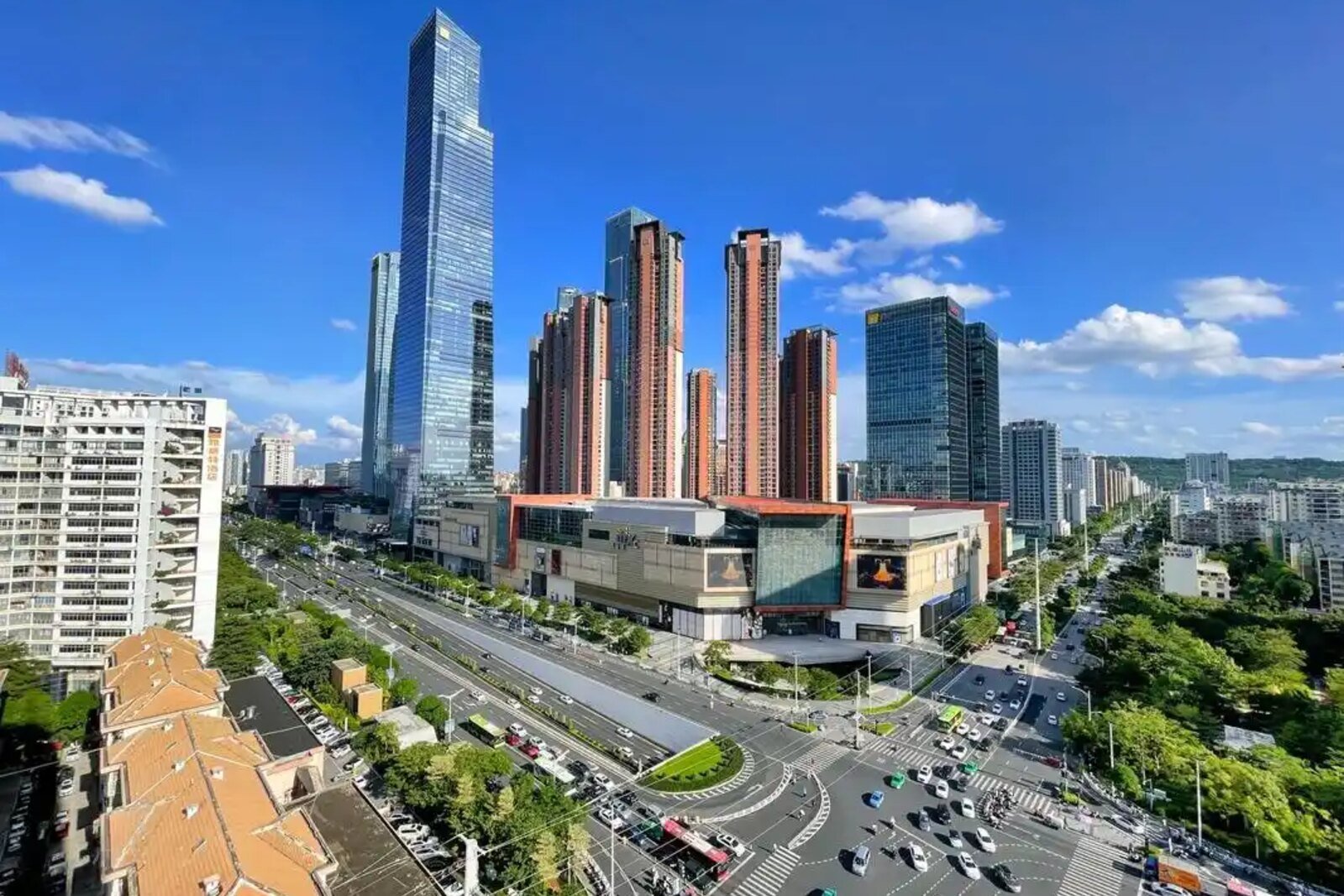
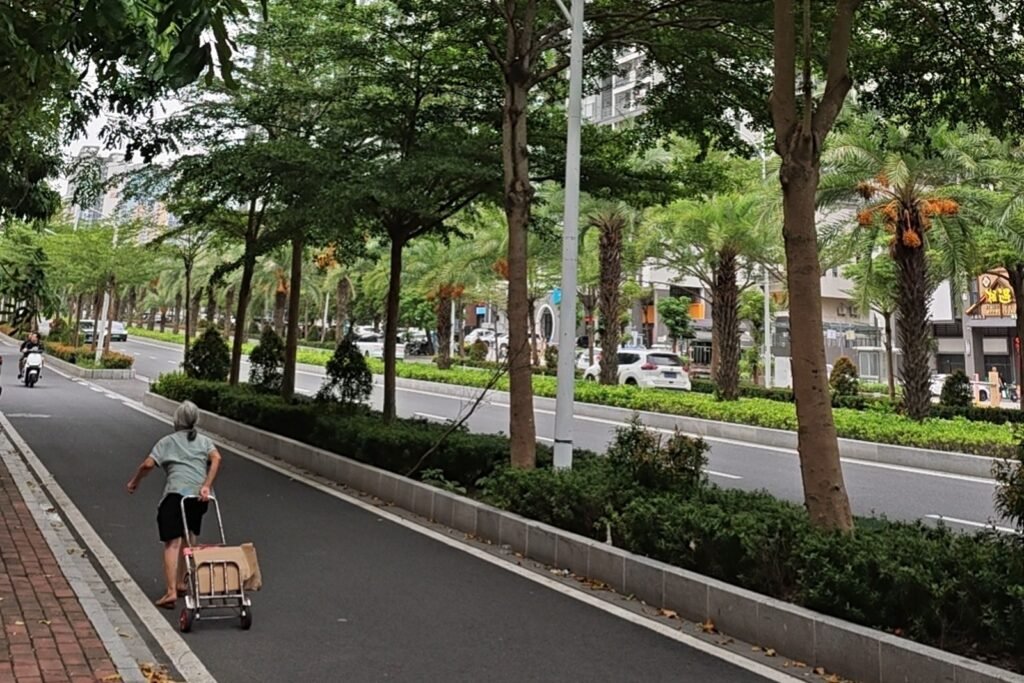
What surprised us most was how green and low-pressure it feels. Wide boulevards lined with palms and shade trees, scooters everywhere, apartment blocks rather than towers, people running errands at a pace that would look leisurely in Shenzhen. It reads as a subtropical provincial city that happens to be attached to a very large port.
A Short History: Fort Bayard and the French Lease
Zhanjiang is one of the few Chinese cities with a French colonial layer rather than a British, Portuguese or Japanese one. In 1898 France took a 99-year lease on the bay and its hinterland, a territory known as Guangzhouwan, ratified by the Qing government in 1900. The administrative capital was called Fort Bayard, and it stood where Zhanjiang stands today.
The lease never ran anywhere near its full term. The French flag came down for the last time on 20 November 1945, and the territory returned to Chinese control.
What survives is scattered rather than assembled into a preserved quarter. A handful of early-1900s buildings still stand in Xiashan District, including the Cathedral of Saint Victor and the former French legation and police station. Treat these as stops on a walk rather than as a destination in themselves — this is not Macau or Gulangyu, and the buildings sit among ordinary streets and traffic. Opening arrangements for individual buildings vary, so check locally before making a special trip.
Why It Is Called China’s Seafood Capital
This is not a tourism slogan invented for visitors. Zhanjiang has led Guangdong in aquatic product output for more than twenty years, operates close to 3,500 deep-sea aquaculture cages — roughly two-thirds of the provincial total — and was the first city in the country to be officially recognised as a Seafood Gourmet Capital. It also carries the national titles of Shrimp Capital, Oyster Capital and Golden Pomfret Capital.
For a traveller, the practical consequence is simple: seafood here is cheaper, fresher and less ceremonious than it is in the big coastal cities. Grilled oysters are a street food rather than a delicacy. Prawns turn up at ordinary neighbourhood restaurants. You do not need to find a famous address to eat well.
The city is also an industrial port — steel, petrochemicals, container shipping — and that side of it is visible if you go looking. It is worth knowing before you arrive that Zhanjiang is a place that works for a living, not a resort town that happens to have a harbour.
Huguangyan Maar Lake and the Leiqiong Geopark
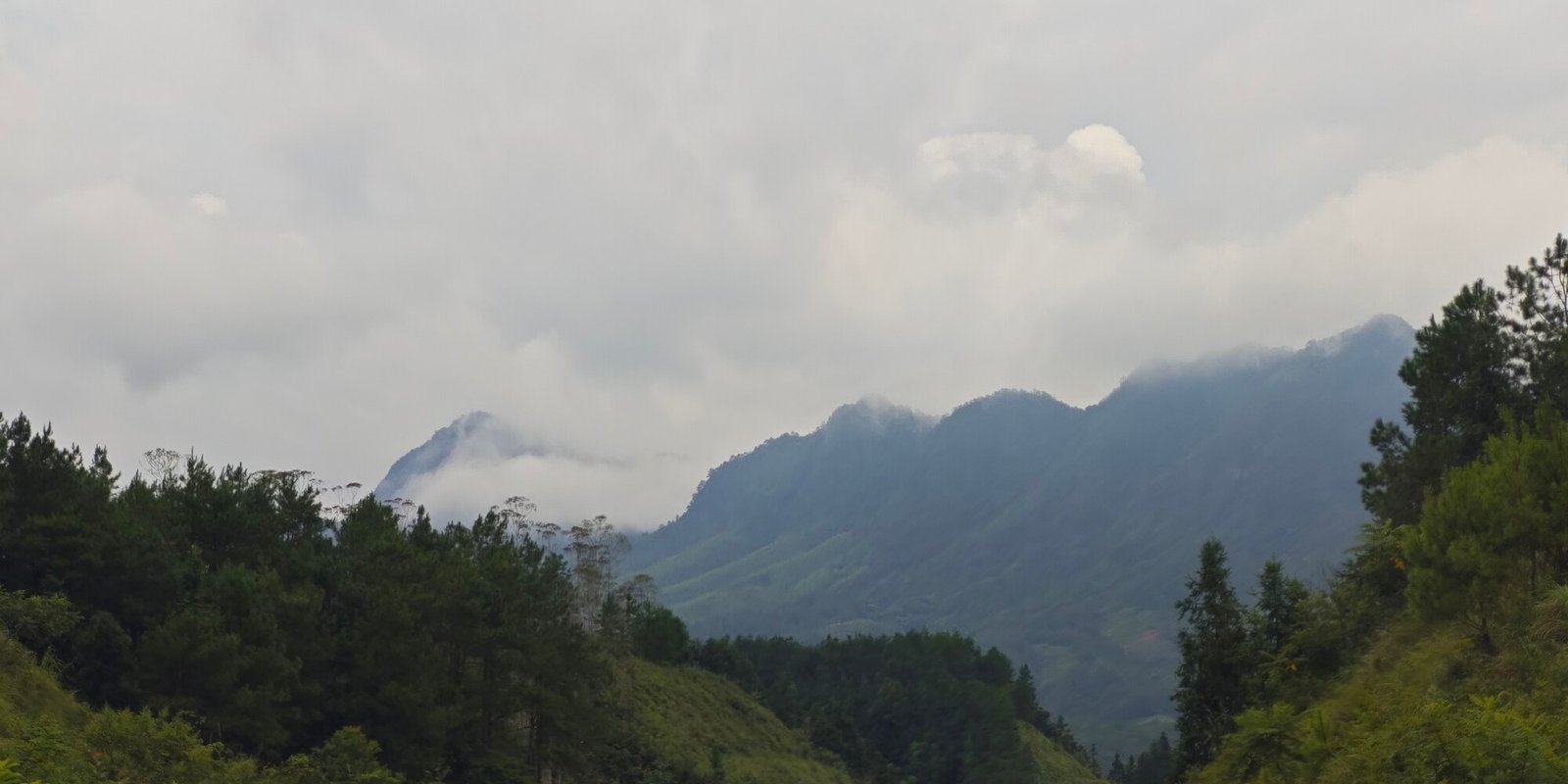
The single most distinctive natural sight near the city is Huguangyan, a maar lake sitting inside a volcanic crater about twenty kilometres south-west of the centre. A maar forms when rising magma hits groundwater and the two meet explosively; what is left afterwards is a broad, shallow crater that fills with water.
Huguangyan is part of the Leiqiong UNESCO Global Geopark, designated in 2015, which spans both Zhanjiang and Haikou across the Qiongzhou Strait. The geopark covers 305,000 hectares and protects one of the most complete collections of Quaternary volcanoes anywhere — more than a hundred volcanoes, 38 protected volcanic structures and 78 geosites.
Huguangyan is not just scenic; it is scientifically significant. It was where the first Chinese research on maar lakes was carried out, and its undisturbed sediment layers have made it a reference site for joint Chinese and German palaeoclimate work.
Check before you go
Entrance arrangements, opening hours and any reservation requirement at Huguangyan change from season to season. Confirm the current details on the scenic area’s official channels rather than relying on a travel article, including this one.
The Coast: Donghai Island and the Mangrove Reserve
Donghai Island
Donghai Island lies immediately south-east of the city and is reached by an old causeway and a newer parallel bridge from the southern suburbs; city bus route 32 runs out to it from Xiashan and Chikan. A long beach runs down the entire eastern shore, and behind it the island is a working landscape of sugar cane and corn fields, fishing villages and shrimp ponds.
Be realistic about what it is. The north-central part of the island is an industrial zone with a steel mill and a refinery, and the beach is a local weekend beach rather than a developed resort strip. Go for a long, empty stretch of sand and a seafood lunch, not for beach clubs.
The mangroves at the end of the peninsula
Further south, at the bottom of the Leizhou Peninsula, is the country’s most significant mangrove wetland. The Zhanjiang Mangrove National Nature Reserve covers 20,278.8 hectares in total, of which more than 9,000 hectares is mangrove forest — 33% of China’s mangrove area and 78% of Guangdong’s. It has been a Ramsar wetland of international importance since 2002.
316 bird species have been recorded there, including 70 nationally protected ones such as the spoon-billed sandpiper and the black-faced spoonbill. This is a serious birdwatching destination in migration season, and a long day trip from the city rather than an afternoon out. If you are going specifically for birds, plan around the tide and the season, and arrange transport in advance.
What We Ate in Zhanjiang
We came for the seafood reputation and ended up spending most of our meals on things that had nothing to do with it. Zhanjiang’s everyday eating — the breakfast noodle bowls, the late-night barbecue, the sweet soups — turned out to be the part we talked about afterwards.
Breakfast: beef brisket and offal ho fun
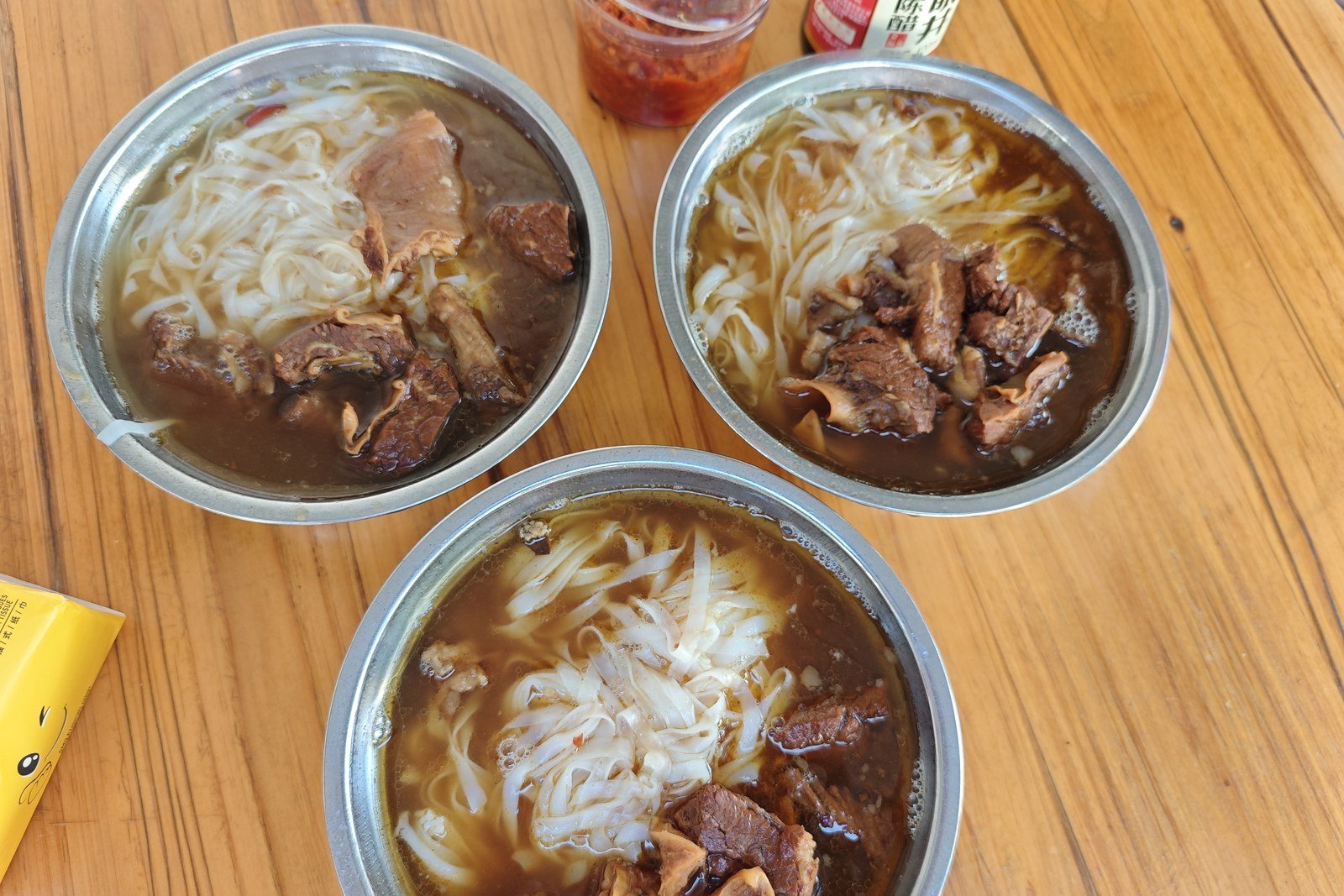
Breakfast was a bowl of flat rice noodles in a dark braised broth, with beef brisket and offal — tendon, tripe, the chewy bits — piled on one side. It arrives in a steel bowl on a wooden table with a jar of chilli paste and a bottle of vinegar already sitting there, and you adjust it yourself. It is the sort of thing a city eats standing up on a Tuesday, and it was better than most of the sit-down meals we paid three times as much for.
The bowl to look for: Wuchuan la ji fen
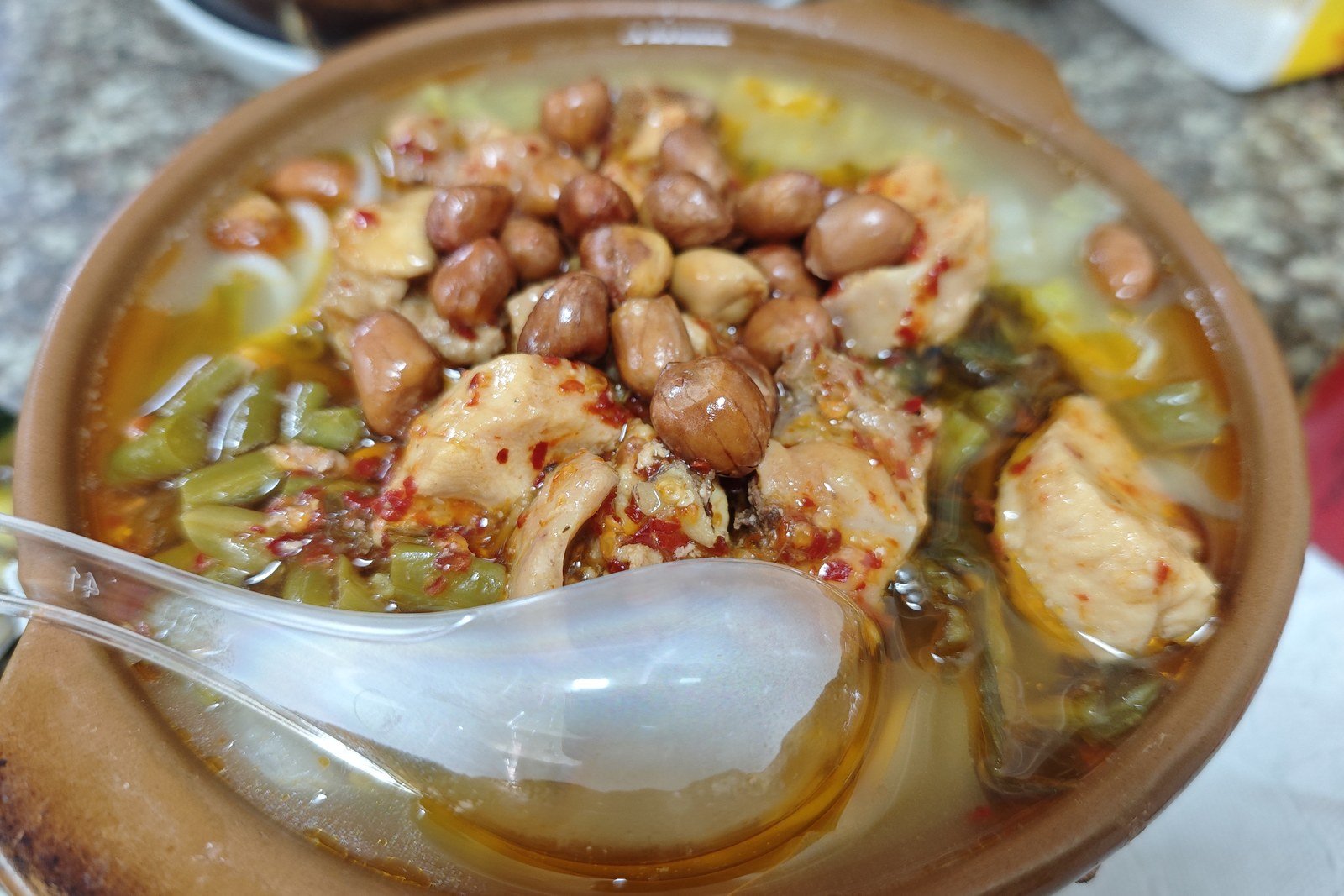
The best thing we ate in Zhanjiang was a bowl of la ji fen — spicy chicken rice noodles — at a roadside place with granite tables. It came in a clay bowl: rice noodles in a light, sour-savoury broth, with spicy chicken, cabbage, quail eggs, pickled long beans and a heap of peanuts on top, and a plastic cup of dressed cucumber on the side. The peanuts are the point. They stay crunchy in the broth and change the texture of every mouthful. The whole bowl, fully loaded, came to ¥12.
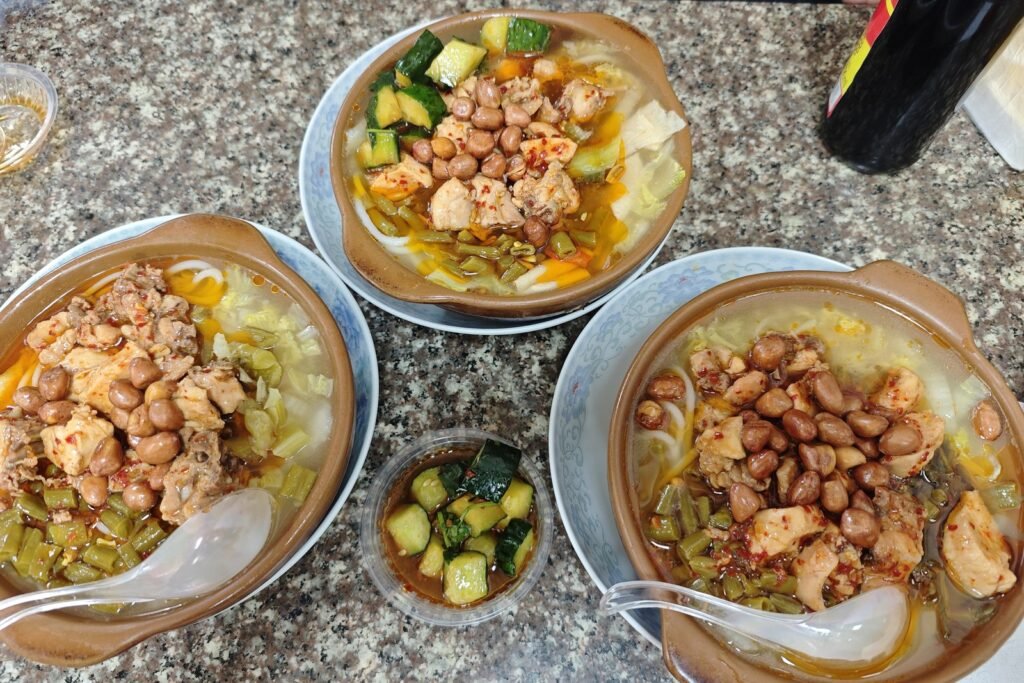
The dish belongs to Wuchuan, the coastal county-level city within Zhanjiang that also gives its name to the airport, and it is everywhere in the old Meilu quarter there. A local write-up describes the same combination we were served — chicken, pickled greens and peanuts as the base, with quail eggs, tofu skin and ham sausage on the upgraded clay-pot version, and dressed cucumber alongside.
Here is the distinction worth knowing, because two neighbouring cities do the same dish differently. In Wuchuan the chicken is stir-fried and goes straight into the bowl, so it keeps its moisture and stays tender. In Maoming, the next city up the coast, the chicken is cooked drier and diced — closer to Hunanese spicy chicken cubes, fragrant rather than juicy. Both are good. If you only eat one, eat the Wuchuan version, and eat it in Zhanjiang.
Late-night dapaidang
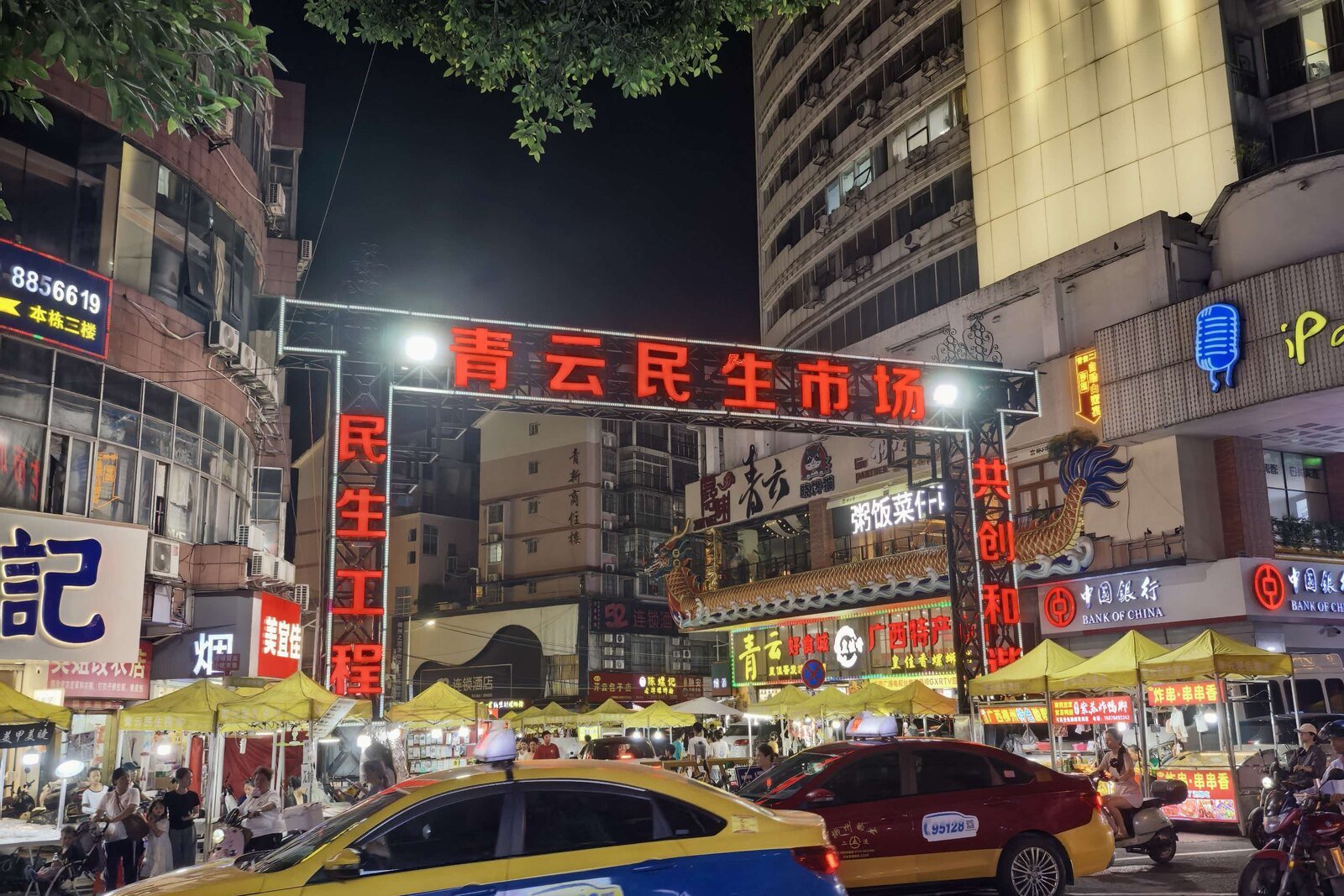
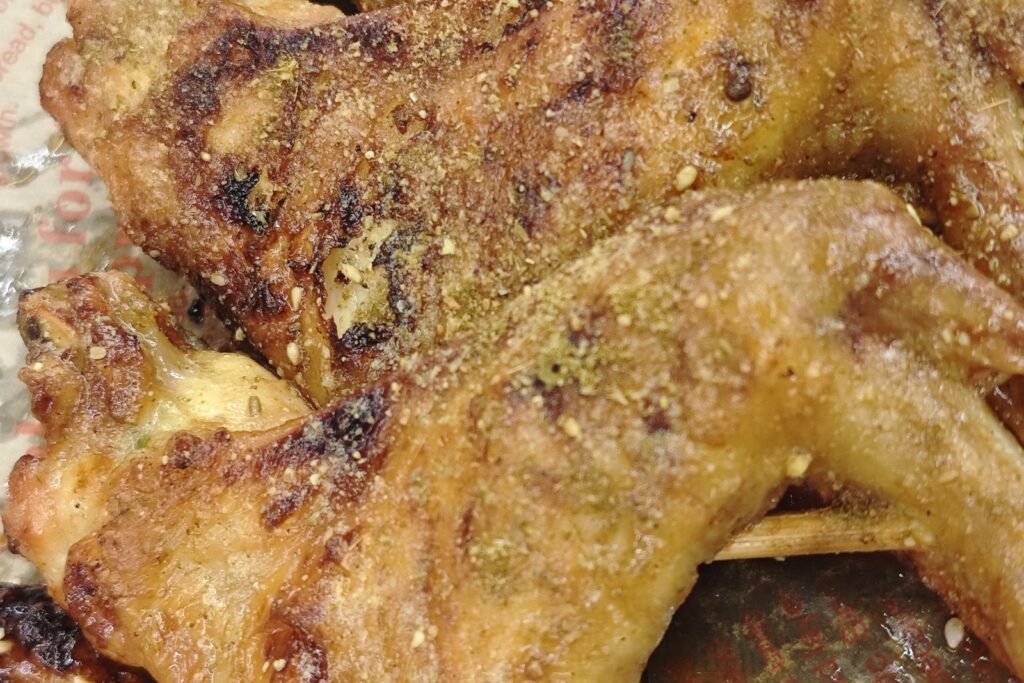
Late at night the barbecue tables come out. Chicken wings dusted with cumin and sesame, whole aubergines split and buried in garlic, mushrooms on bamboo skewers, thin-sliced pork. This is the same dapaidang culture you find across southern China, but with the volume turned up — it is hot for most of the year here, so eating outside at midnight is normal rather than an occasion.
Tong sui, and an unusually crunchy bowl of snow fungus
Finish with tong sui, the Cantonese sweet soups, sold several kinds at a time in small porcelain bowls. We had three between us: kelp with mung bean, plain snow fungus, and the two combined. Cold, barely sweet, and the correct way to end an evening in this climate.
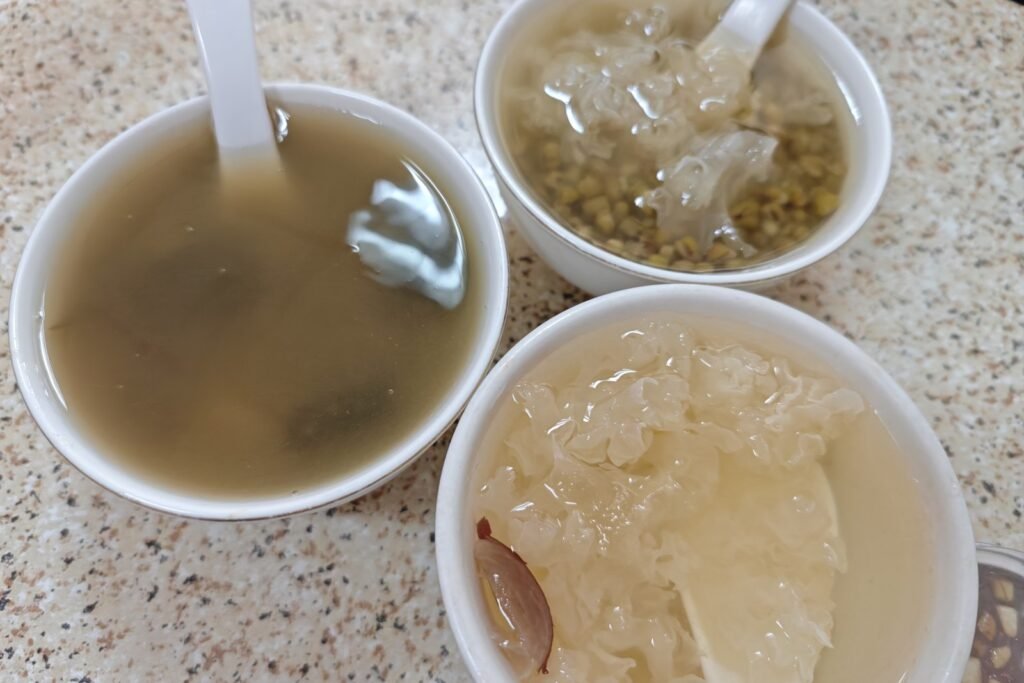
One of them was genuinely unusual. Snow fungus is normally stewed until it collapses into something gelatinous; this shop’s was still crisp, closer to a fresh vegetable than a dessert. It is a small thing, but it is the kind of detail that tells you a place is cooking to its own standard rather than copying a template.
One honest caveat: we did not record the names of the places we ate at, so this is a description of what Zhanjiang street food is like rather than a list of addresses to copy. If you enjoy this kind of regional noodle bowl, our Liuzhou luosifen guide goes much deeper into how one southern Chinese city built an identity around a single dish.
Getting to Zhanjiang
By high-speed rail
This is the easiest option from within Guangdong. Zhanjiang West is the high-speed station, connected to Guangzhou by the line through Jiangmen and Maoming that opened for through services in July 2018. The line is built for 250 km/h, and Guangzhou to Zhanjiang takes a little over three hours. There is also an older station, Zhanjiang South, used by conventional services.
By air
Zhanjiang Wuchuan International Airport (ZHA) opened on 24 March 2022, replacing the old airport that sat inside Xiashan District. It is about 35 kilometres from the city centre, so budget for the transfer at both ends of your trip and do not schedule anything fixed immediately after landing.
To and from Hainan
Zhanjiang is the mainland side of the Qiongzhou Strait crossing, and ferries run to Haikou. The ferry terminal is not in the city itself — allow about an hour by road to reach it — so treat the crossing as a half-day move rather than a quick hop.
Getting Around the City
City buses connect the northern districts with Xiashan — routes 2, 11, 12 and 22 are the main links, and route 32 runs out to Donghai Island. They are cheap and they work, but they are slow if you are crossing the whole city.
For most visitors, ride-hailing is the sensible default. Distances between the districts are long, fares are low by big-city standards, and it removes the problem of explaining where you want to go. Set up your payment and transport apps before arriving; that single step makes more difference to a trip here than any other piece of preparation.
- Stay in Xiashan if you want the waterfront parks, the colonial-era buildings and the densest concentration of restaurants.
- Stay in Chikan for the older commercial streets and a slightly more local feel.
- Do not split the difference — the corridor between the districts is the least useful place to base yourself.
When to Go, and How Long to Stay
Zhanjiang is hot and humid for much of the year, and it sits on a stretch of coast that takes typhoons through the summer and into early autumn. Autumn through spring is the comfortable window: warm, drier, and easier for the outdoor half of the trip. If you travel in summer, watch the forecast and keep the beach and the geopark flexible rather than fixed to a particular day.
Two full days covers the city itself: one for the districts, the waterfront and the food, one for Huguangyan. Add a third if you want Donghai Island, and a fourth if you are going down the peninsula for the mangroves. Beyond that, Zhanjiang works better as one end of a longer route — into Hainan by ferry, or back up the coast — than as a week in one place.
Frequently Asked Questions
How do I book the ferry across to Hainan?
Online, in advance, every time. Ports on this side no longer sell vehicle tickets at the gate, and cars without a booking are turned away, so arriving to queue does not work. Official channels are the Lundu Guanjia ferry app and its mini-programs, plus the Xinhai Port and Qiongzhou Strait ferry accounts on WeChat; vehicle sailings open fifteen days ahead. Foot passengers have more room to improvise than drivers, but holiday weekends fill either way.
When is typhoon season here, and how much should it affect planning?
Roughly late June to early October. Forecasters expected five to seven systems to affect Zhanjiang during 2026, two or three of them severe or making landfall, and 2025 set a local record at eleven. Strait ferries suspend first, flights follow, and bridges and coastal roads can close. Travelling in that window is perfectly normal, but keep a spare day in the itinerary, check warnings each morning, and treat a suspension notice as final rather than something to negotiate at the terminal.
How do I pay for buses and taxis without a Chinese bank account?
City buses take cash — small notes, no change given — or a scan-to-ride QR code. Activate that code for Zhanjiang specifically inside Alipay under Transport, or through WeChat’s ride-code mini-program, since the codes are issued city by city rather than nationally. International Visa, Mastercard and JCB cards can be linked to either wallet. For taxis, use Didi, which has an English interface and also runs inside Alipay and WeChat; set the destination in the app rather than explaining it to the driver.