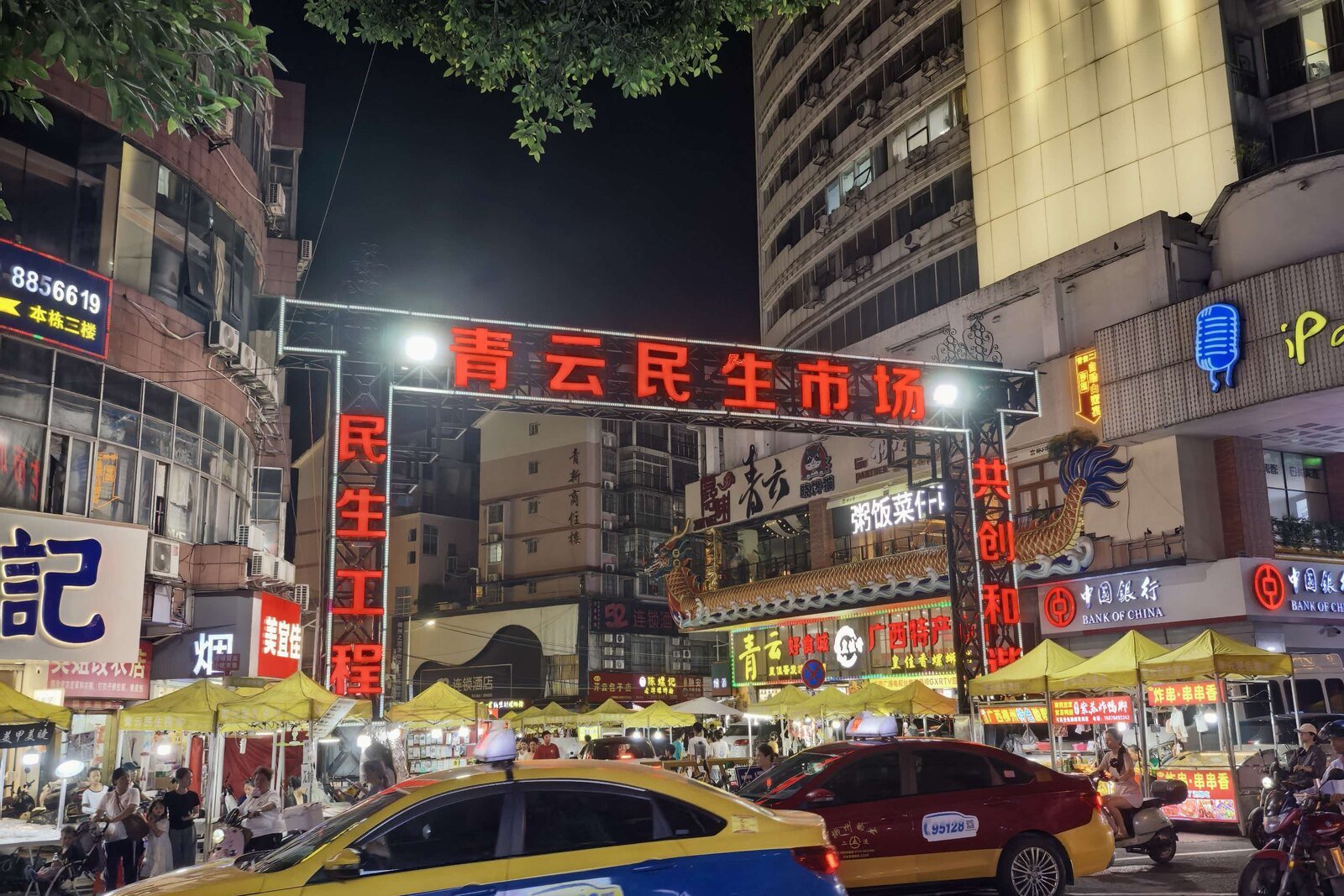
Liuzhou is a city where the air seems to carry a faint trace of luosifen. You notice it before you find the source: a warm, sour, savoury aroma drifting out of a doorway, following you down a side street, then appearing again beside a night-market stall.
I arrived with friends I first met when we were eighteen. Somewhere between our first bowl, the shared toppings and the old jokes, the intervening years began to feel surprisingly light.
The closest way to return to eighteen is to be with the friends you met at eighteen.
A Liuzhou reunion
This trip was a reunion, but it also became a practical lesson in Liuzhou’s most famous dish. We tried different styles, compared noodle textures and learned that choosing a shop by its speciality is usually more useful than choosing one by the length of its queue.
If Liuzhou is one stop on a wider trip, our Guangxi travel guide will help you put the city in context.
What Liuzhou Luosifen Actually Tastes—and Smells—Like
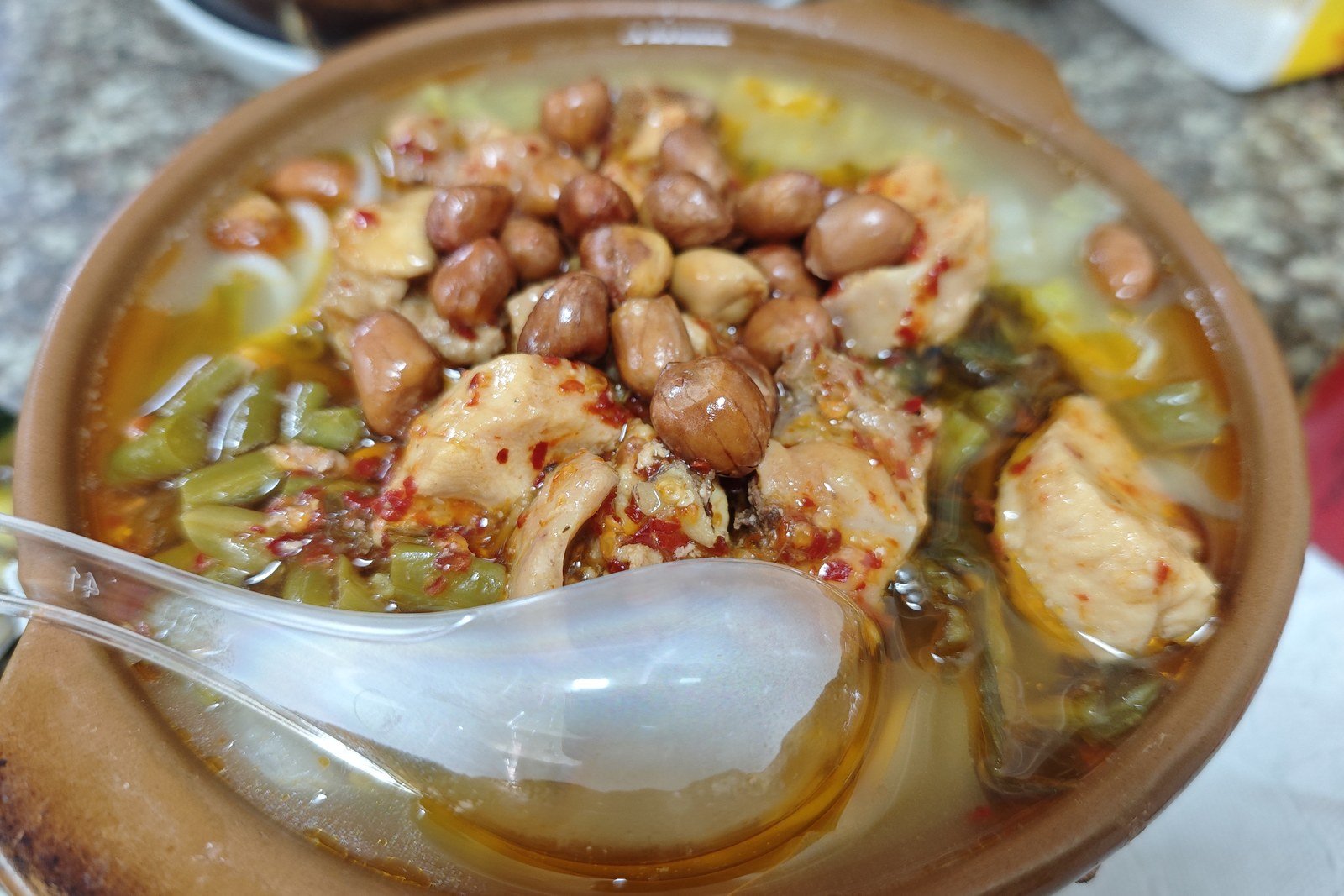
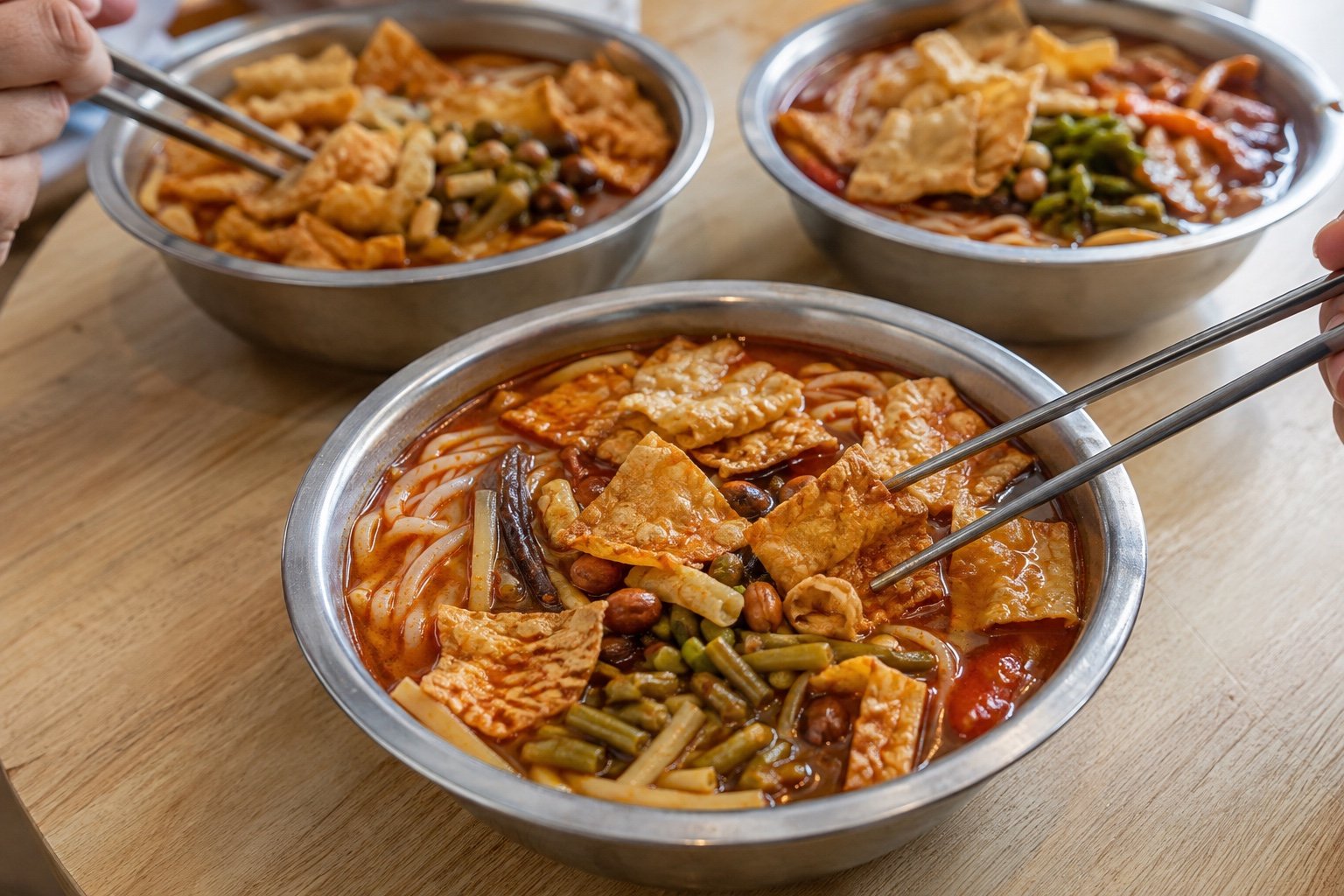
Luosifen is built around springy rice noodles and a savoury broth traditionally flavoured with river snails and often pork bones. The bowl is then layered with sour bamboo shoots, pickled vegetables, wood-ear mushrooms, peanuts, fried tofu skin and chilli oil. Recipes vary, but much of the appeal lies in the contrast: hot broth, cool crunch, sourness, spice and toppings that soften as they absorb the soup.
The smell that divides first-time eaters comes mainly from the fermented bamboo shoots, not from the snails. Packaged versions can release a more concentrated aroma when opened and cooked, so many travellers expect the fresh version to be overwhelming.
It was not. To me, freshly made luosifen in Liuzhou did not taste “stinky”; it tasted layered. The fermentation added depth and acidity rather than an unpleasant flavour.
At times, it felt as if the whole city carried that aroma in the air. Yet in Liuzhou it does not feel like a novelty or a dare. It is everyday food: quick, affordable and endlessly adjustable.
How to Order Luosifen in Liuzhou
Ordering becomes easy once you make five small choices. Available sizes and spice levels vary by shop, so use these as flexible phrases rather than a rigid script.
For takeaway, replace 堂食 (tángshí) with 打包 (dǎbāo). Repeat the toppings and confirm the total before paying, especially when the base bowl is listed as “from” a certain price.
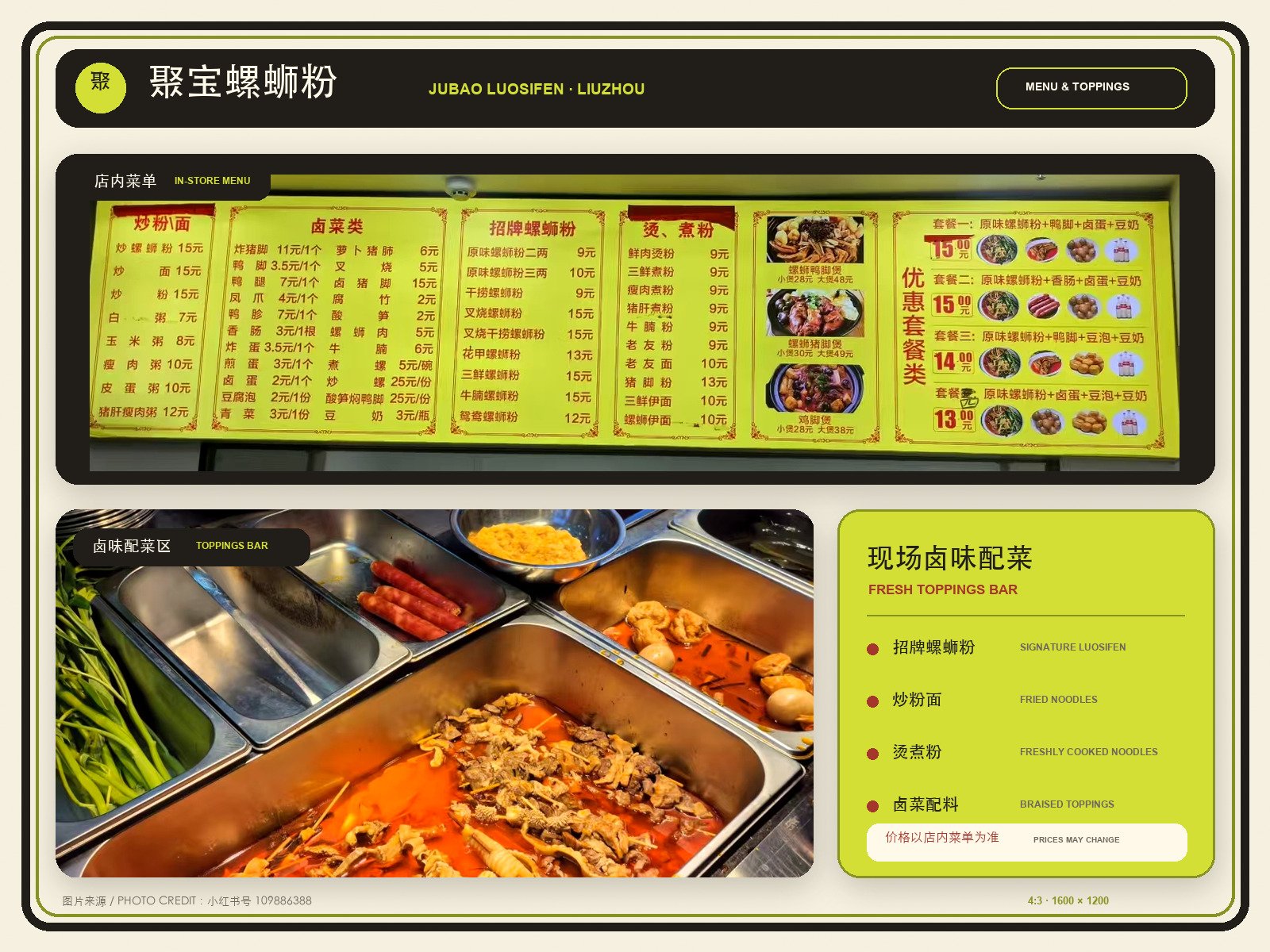
Pingjie Luosifen: Prices and What to Order
Pingjie is the place to choose when you want stir-fried luosifen rather than only the classic soup version. The wok gives the noodles a richer, slightly smoky flavour, and their firm, chewy texture stood out during our visit.
The menu also makes Pingjie useful for a group: one person can keep things simple while everyone shares pork trotter, duck feet, crispy pork and tofu-skin toppings across the table.
Prices shown in the ordering-menu screenshots supplied in September 2026. Prices are per serving unless stated otherwise and may change — confirm the current total before paying.
Main dishes and signature plates
| Item | Chinese | Price |
|---|---|---|
| Original luosifen | 原味螺蛳粉 | From ¥9 |
| Dry-mixed luosifen | 干捞螺蛳粉 | ¥12 |
| Stir-fried luosifen | 爆炒螺蛳粉 | ¥17 |
| Snail and duck-feet pot | 螺蛳鸭脚煲 | ¥49 |
| Wok-fried river snails with perilla | 紫苏炒石螺 | ¥29 |
| Stir-fried duck feet | 炒鸭脚 | ¥29 |
| Stir-fried pork trotter | 炒猪脚 | ¥38 |
| Family feast platter | 全家福 | ¥98 |
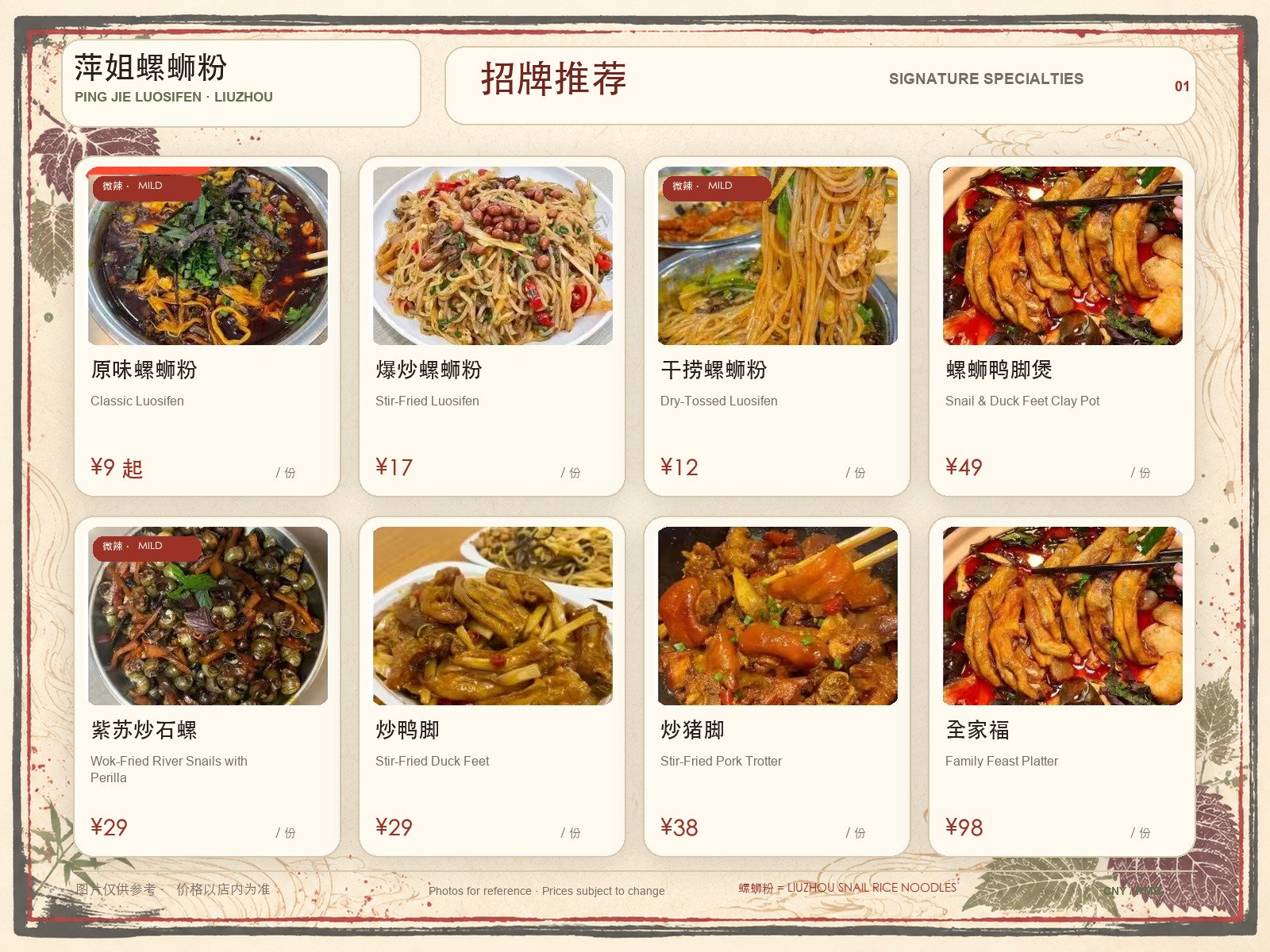
A bowl based on the sample order above starts at about ¥43 when the ¥9 base option is available: ¥9 for the noodles, ¥4 for the deep-fried egg, ¥15 for the pork trotter, ¥10 for crispy roast pork and ¥5 for extra vegetables. Pingjie’s menu lists “extra vegetables” rather than water spinach separately, so ask whether water spinach is available and confirm the final total.
View the full Pingjie add-on price list30 items
| Add-on | Price | Add-on | Price |
|---|---|---|---|
| Tiger-skin pork trotter 虎皮猪脚 | ¥15 | Duck foot 鸭脚 | ¥4 |
| Tiger-skin chicken foot 虎皮鸡爪 | ¥5 | Braised pork intestine 卤肥肠 | ¥10 |
| Char siu 叉烧 | ¥10 | Crispy roast pork / guoshao 锅烧 | ¥10 |
| Braised duck leg 鸭腿 | ¥10 | Pig ear 猪耳朵 | ¥10 |
| Pork lung 猪肺 | ¥10 | Duck intestine 鸭肠 | ¥10 |
| Deep-fried egg 炸蛋 | ¥4 | Braised egg 卤蛋 | ¥2 |
| Quail egg 鹌鹑蛋 | ¥2 | Soft-centred egg 糖心蛋 | ¥3 |
| Pan-fried egg 煎蛋 | ¥3 | Large fried tofu-skin sheet 大片腐竹 | ¥5 |
| Tofu skin 豆皮 | ¥5 | Fried tofu strips 豆腐条 | ¥1 |
| Flower-cut tofu skewer 兰花串 | ¥3 | Crispy tofu-skin roll 响铃卷 | ¥3 |
| Braised pork skin 扣肉猪皮 | ¥8 | River-snail meat 螺蛳肉 | ¥10 |
| Braised pork offal (xiaodu), small 卤小肚(小份) | ¥10 | Pork sausage 肉肠 | ¥5 |
| Roasted sausage 烧肠 | ¥10 | House-made sausage 自制手工香肠 | ¥7 |
| Regular sausage 普通香肠 | ¥4 | Braised chicken leg 鸡腿 | ¥8 |
| Fried taro sticks 芋头条 | ¥2 | Extra vegetables 加一份配菜 | ¥5 |
The photographed menu also lists crispy pork intestine at ¥15 small or ¥30 large, and house-made char siu at ¥10 small or ¥20 large. Chilled tofu pudding, mung-bean soup and cassava sweet soup are ¥5 each. The images did not show separate, readable Pingjie prices for fried pork skin, tiger-skin duck feet, tofu puffs, beef balls, fish balls or stinky tofu, so those are left unpriced here.
Best Luosifen Toppings: Our Personal Ranking
There is no universal “correct” combination, but these are the pairings I would order again.
Where to Eat Around Wuxing Pedestrian Street
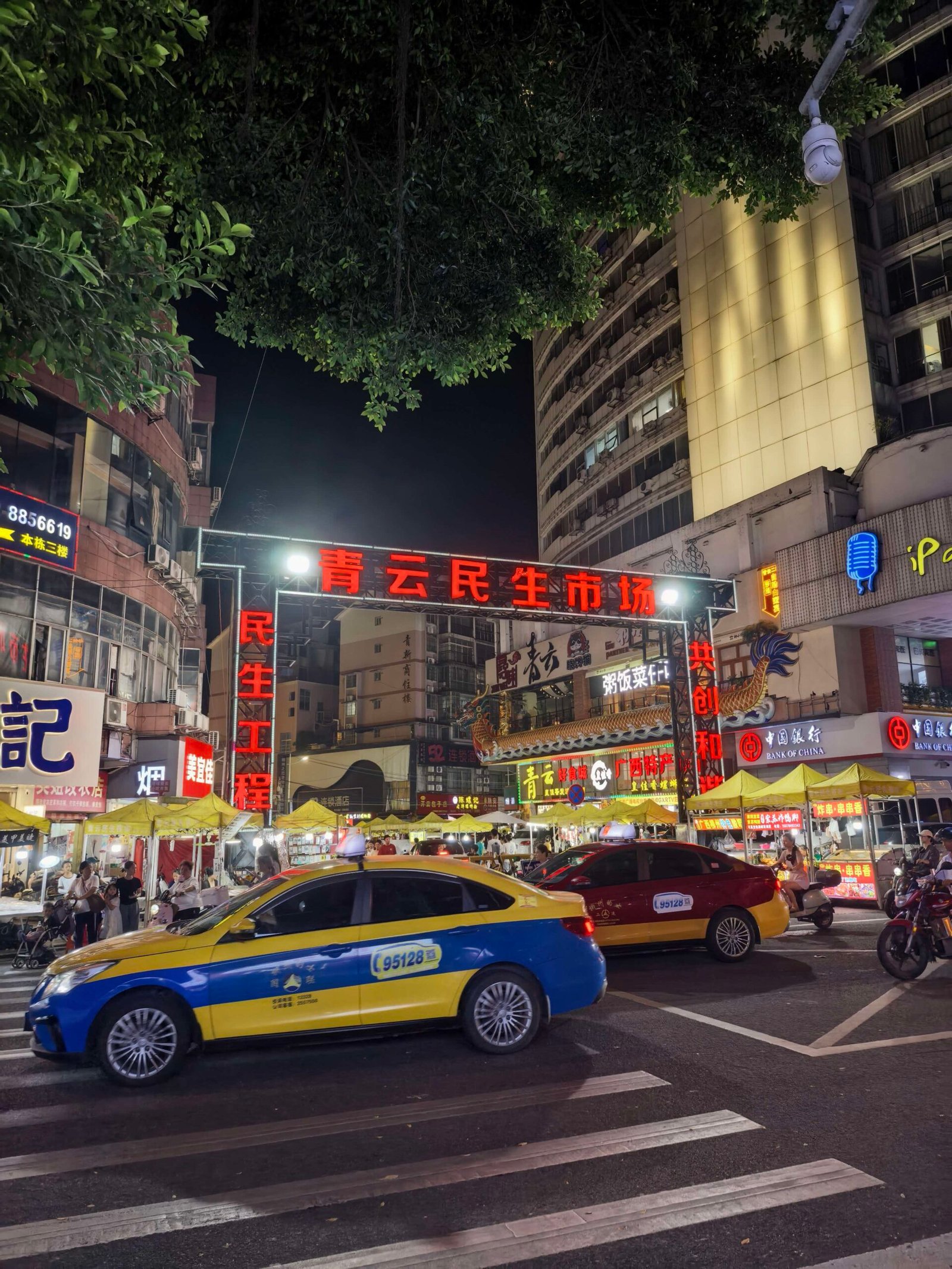
In and around Wuxing Pedestrian Street you can find more than a dozen luosifen shops within an easy walk. We quickly stopped treating them as a ranking and started treating them as different cooking styles.
The shop name is often the most useful clue: look for 爆炒螺蛳粉 for stir-fried noodles, 鸭脚煲 for a duck-feet pot or 臭豆腐 for the fermented crossover. Afterwards, use this guide to decide what else to eat in Liuzhou beyond luosifen.
Luoshen Alley 螺神巷
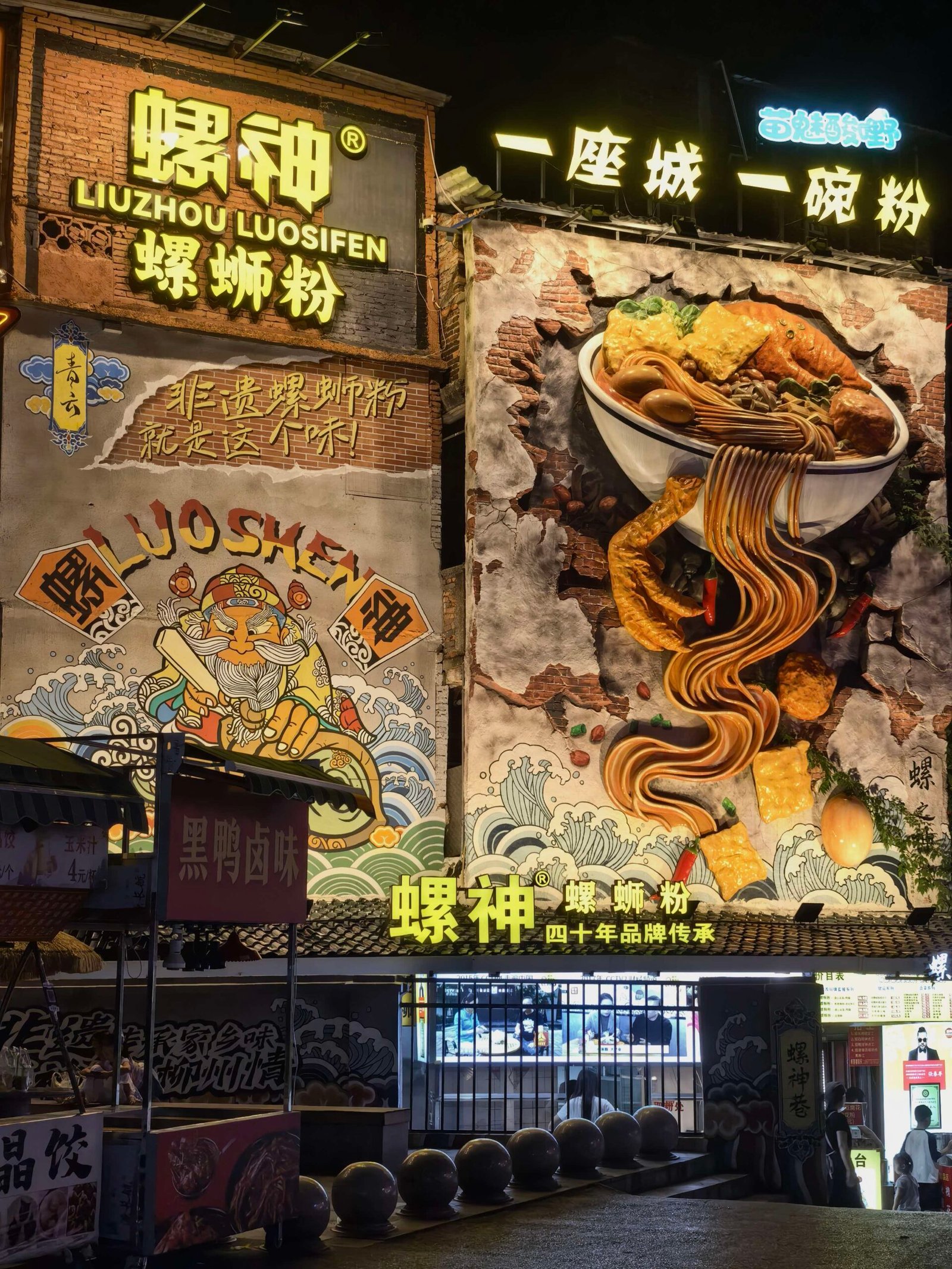
Luoshen Alley is worth visiting for the playful luosifen mural and the way the neighbourhood turns a local meal into part of the streetscape. Treat it as a visual stop and another chance to eat — not as a promise that one famous bowl must be the city’s definitive best.
Good to Know Before You Go
You can also browse more firsthand food and culture stories.
Liuzhou Luosifen FAQ
Is the packaged version a Liuzhou product, or an imitation?
A Liuzhou product, and an enormous one. Pre-packaged luosifen turned the dish into an industry worth 75.96 billion yuan across the whole supply chain in 2024, selling into more than seventy countries and supporting over 300,000 jobs. Packets you buy abroad were almost certainly made here. What changes in the packet is assembly rather than authenticity: the bowl in front of you is built to order, and the sour bamboo has not spent months in a pouch.
Can I take packets out of China?
Inside China, yes — vacuum packs travel fine in checked luggage. Across a border, check first. The sachets are built on a snail-broth base, and most countries restrict meat and seafood products in passenger baggage, so a suitcase of packets can be confiscated at arrival. Look up your destination’s rules before you buy in bulk, and declare food on arrival: declaring costs nothing, failing to declare can cost a great deal.
What do people drink with it?
Something cold and sweet, usually afterwards rather than alongside. Liuzhou has a deep sugar-water and shaved-ice habit, and a bowl of that after a hot, sour, chilli-heavy one is the standard local sequence. Shops sit close to the noodle streets; the rest of Liuzhou’s food covers where they are.
The years sat more lightly
The bowls were not identical, but the ritual was: choose the noodles, debate the toppings and pass the best bites around the table. The old rhythm of our friendship returned before any of us noticed it happening.
Liuzhou gave that reunion a taste and an aroma strong enough to remember. We left without declaring a single bowl the best, only with a clearer sense of the city and the familiar pleasure of eating together without needing to explain ourselves.