A practical three-day Liuzhou itinerary through local markets, karst parks, industrial history and late-night bowls of luosifen—with honest advice on where to stay, what to eat and how to get around.
The closest way to return to eighteen may be to travel with the friends you met at eighteen. That was how our three-day trip to Liuzhou in Guangxi, China, began: with old jokes, shared meals and a city we knew mainly through luosifen. We came for the noodles but found karst parks, lively markets, industrial history and river nights. This itinerary follows our relaxed route through central Liuzhou, using short taxi rides, electric scooters and walks. It is designed for first-time visitors arriving before lunch on Day 1 and leaving on the afternoon of Day 3.
Liuzhou 3-Day Itinerary at a Glance
Liuzhou is compact enough for a three-day city break, with most places in this itinerary connected by short rides. We kept the arrival day relaxed, used the second day for the fullest city route and saved Longtan Park for the final morning.
| Day | Morning | Afternoon | Evening | Food focus |
|---|---|---|---|---|
| Day 1 | Arrive in Liuzhou and leave your luggage at the hotel | Check in after 2:00 p.m., eat your first bowl of luosifen and explore Wuxing Pedestrian Street and Luoshen Alley | Ma’anshan sunset and a Liu River walk | Classic luosifen, sour fruit or duck-foot hot pot |
| Day 2 | Qingyun Minsheng Market, Dongmen Tower, Liuhou Park or Liuzhou Museum | A local lunch and Liuzhou Industrial Museum | Yaobu Ancient Town and the illuminated riverfront | Market snacks, shared Guangxi dishes and sweet soup |
| Day 3 | Longtan Park | One final bowl of luosifen, souvenirs and departure | — | Dry-mixed, stir-fried or another luosifen style |
This route assumes an arrival before lunch on Day 1 and an afternoon or evening departure on Day 3. If your train leaves earlier, shorten Longtan Park or move it to Day 2. Museum closures, river cruises and mountain transport should always be checked before the trip.
Before You Go
Liuzhou is relatively compact, but a little preparation will make a three-day trip much easier—especially if you want to balance markets, parks, museums and evening activities without rushing.
Plan Your Arrival and Departure
This itinerary works best if you arrive before lunchtime on Day 1 and leave after 3:00 p.m. on Day 3. Travellers arriving later can skip the first afternoon walk and begin with Ma’anshan or the Liu River at sunset.
If you are travelling by train, allow enough time to reach your hotel and leave your luggage before exploring. Airport transfers require more time, so avoid scheduling a fixed attraction immediately after landing.
Check Closures and Reservations
Museum schedules can determine the order of your itinerary. At the time of writing, Liuzhou Industrial Museum is normally closed on Mondays and open from Tuesday to Sunday. Reservations may also be required.
Check the latest official information for:
- Museums and temporary exhibitions
- Ma’anshan transport facilities
- Liu River cruises and water buses
- Seasonal performances and lighting shows
If Day 2 falls on a Monday, replace the Industrial Museum with an outdoor attraction or move the museum visit to another day.
Choose a Convenient Base
Wuxing Pedestrian Street is convenient for food, shopping and evening walks, but the commercial area can be noisy. Light sleepers may prefer a quieter part of central Liuzhou rather than staying directly beside the pedestrian street.
Liuzhou’s main urban attractions are generally connected by short rides, so staying directly beside every attraction is unnecessary. We compare the most practical hotel areas—and the hotel we stayed in—later in this guide.
Prepare for Heat and Rain
Much of this itinerary is outdoors. Check the forecast before travelling and bring:
- Comfortable shoes with good grip
- Sun protection
- A light rain jacket or umbrella
- Drinking water
- A portable charger
On hot or humid days, visit parks and markets in the morning, take a break after lunch and continue exploring later in the afternoon.
A Note for International Travellers
Mobile payment and ride-hailing will make travelling around Liuzhou considerably easier. Set up your preferred payment and transport apps before arrival.
Foreign visitors planning to rent a car should also confirm their driving eligibility in advance. An overseas driving licence alone may not be sufficient; a valid Chinese driving licence or provisional driving permit may be required.
Day 1: Wuxing Pedestrian Street, Luoshen Alley and Ma’anshan
Day 1 is deliberately relaxed. After arriving and leaving your luggage at the hotel, spend the afternoon exploring central Liuzhou before watching the city light up from Ma’anshan.
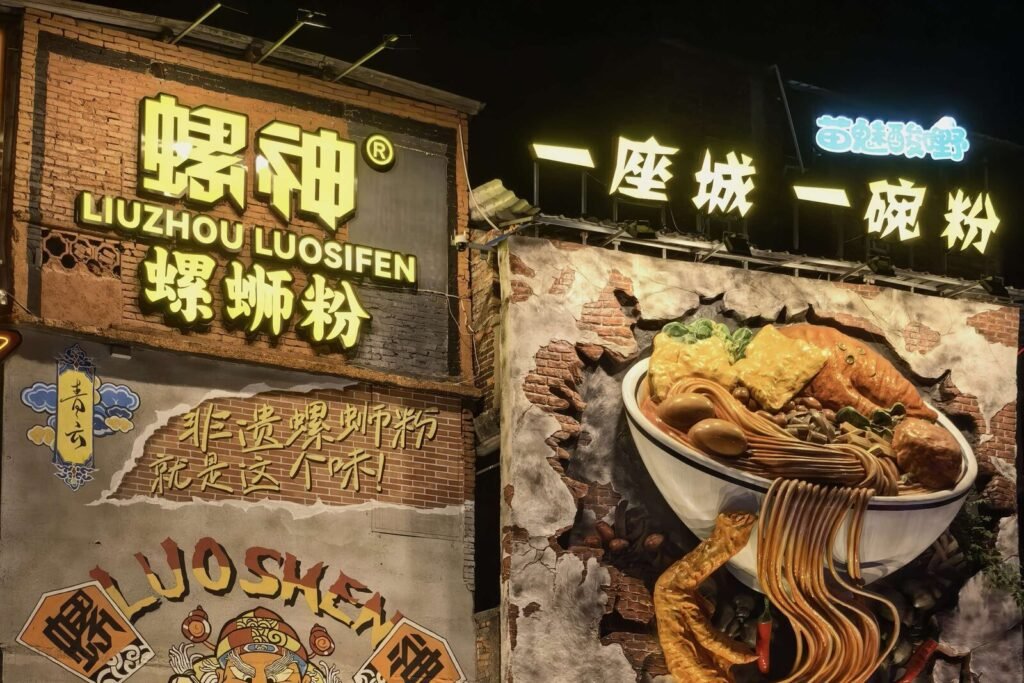
11:00–12:30 — Arrive and Leave Your Luggage
Many hotels in Liuzhou list their standard check-in time at around 2:00 p.m. Only a small number allow guests to check in from noon, and early access usually depends on room availability. Confirm the exact time on your booking.
If you arrive before your room is ready, ask the reception desk to store your luggage rather than waiting at the hotel. You can head directly to Wuxing Pedestrian Street for lunch and return to complete check-in after 2:00 p.m. Alternatively, leave your luggage at reception and check in after finishing the afternoon route.
Contact the hotel in advance if early check-in is important, but do not build the itinerary around it unless the hotel has confirmed availability.
12:30–14:00 — Start with Your First Bowl of Luosifen
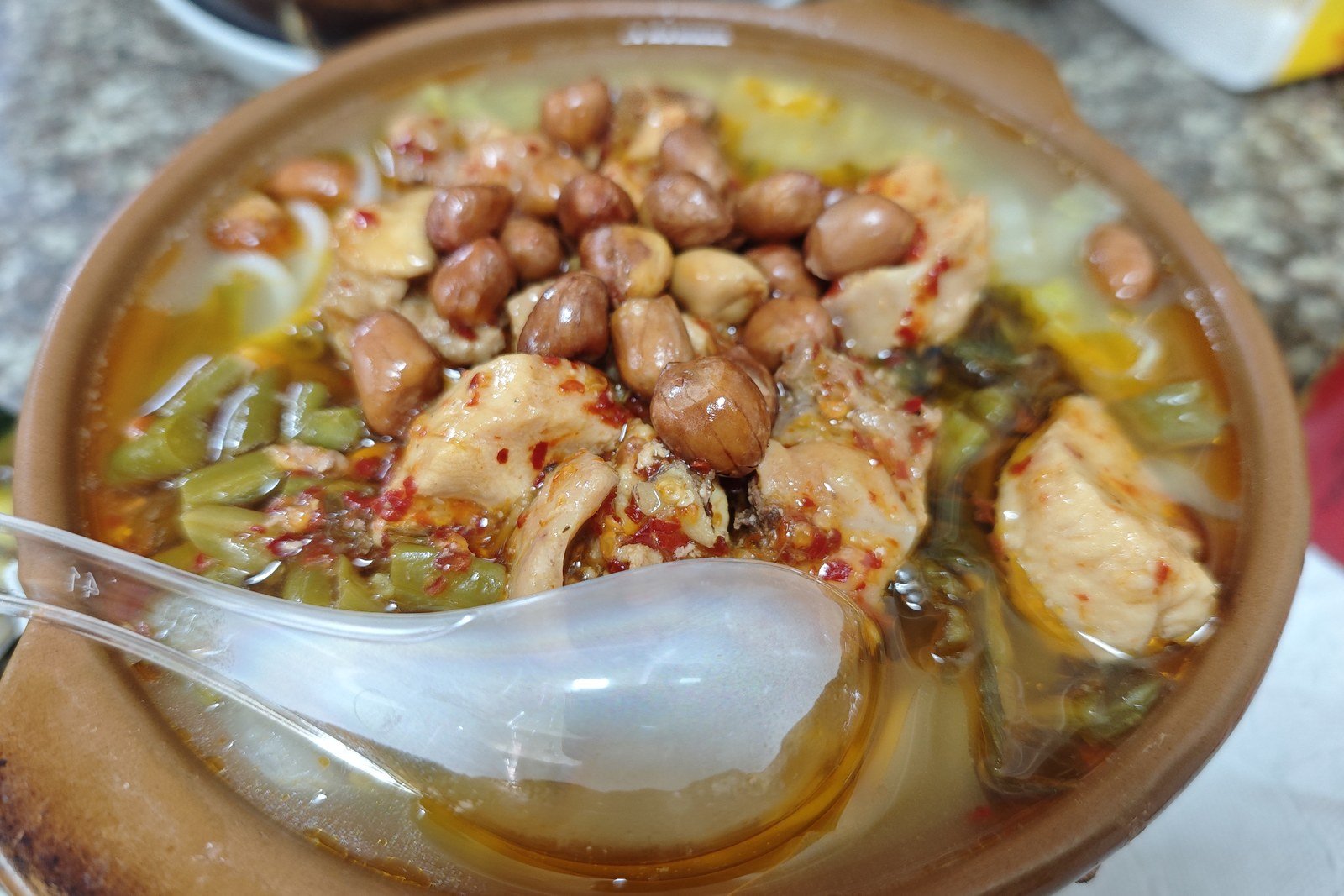
Wuxing Pedestrian Street and the surrounding lanes bring together several different styles of luosifen. Instead of searching for a single “most authentic” shop, choose according to how you want the noodles prepared.
You may find:
- Classic soup luosifen
- Dry-mixed luosifen
- Stir-fried luosifen
- Stinky-tofu luosifen
- Snail and duck-foot hot pot
Shop names often reveal their speciality. Pingjie is a useful choice for stir-fried luosifen, while Panyi focuses on stinky-tofu variations. Jubao offers a wide selection of braised toppings, and Liu Yuan Yuan is better known for duck-foot hot pots.
For your first meal, keep the order relatively simple. Try a classic bowl with a deep-fried egg, one vegetable and one braised topping. You can explore richer combinations later in the trip.
For noodle texture, spice levels, Pingjie prices and topping combinations, see our complete Liuzhou luosifen guide.
14:00–16:30 — Walk Around Wuxing Pedestrian Street and Luoshen Alley
After lunch, explore Wuxing Pedestrian Street and the smaller streets around it. The main shopping street is busy and commercial, but the surrounding lanes provide more interesting glimpses of everyday Liuzhou.
Look for fruit stalls, dessert shops, small noodle restaurants and walls covered with luosifen-inspired artwork. Luoshen Alley is particularly suitable for photographs, although it does not require a long visit.
This is also a good time to try a light snack. Sour fruit, tofu pudding or a local sweet drink is a better choice than immediately ordering another full meal.
We found that Liuzhou’s food culture was most enjoyable when we stopped trying to complete a checklist. Wandering with friends, sharing whatever looked interesting and arguing over who had chosen the best bowl became part of the experience.
17:00–19:00 — Watch the Sunset from Ma’anshan
Leave Wuxing Street around an hour before sunset and travel to Ma’anshan Park. The view is most rewarding when you arrive while the city is still visible in daylight and remain long enough to see the bridges and buildings begin to glow.
Check the weather and visibility before going. Haze or heavy rain can obscure the view, while public holidays may bring long queues and crowded paths. Any lift, cableway or other transport facility should be checked on the day rather than treated as guaranteed.
If you do not want to climb, replace Ma’anshan with a walk beside the Liu River. You will still see the city lights, bridges and limestone hills without committing to an uphill route.
After 19:30 — Dinner and the Liu River at Night
For dinner, choose something different from your lunchtime bowl. Good options include stir-fried luosifen, a snail and duck-foot hot pot, local barbecue or a shared meal of Liuzhou dishes.
Finish the evening with an unhurried walk beside the Liu River. A river cruise can be added if the schedule and weather suit your visit, but it is not essential. The illuminated riverfront is enjoyable from land and leaves you free to stop whenever you find a good view.
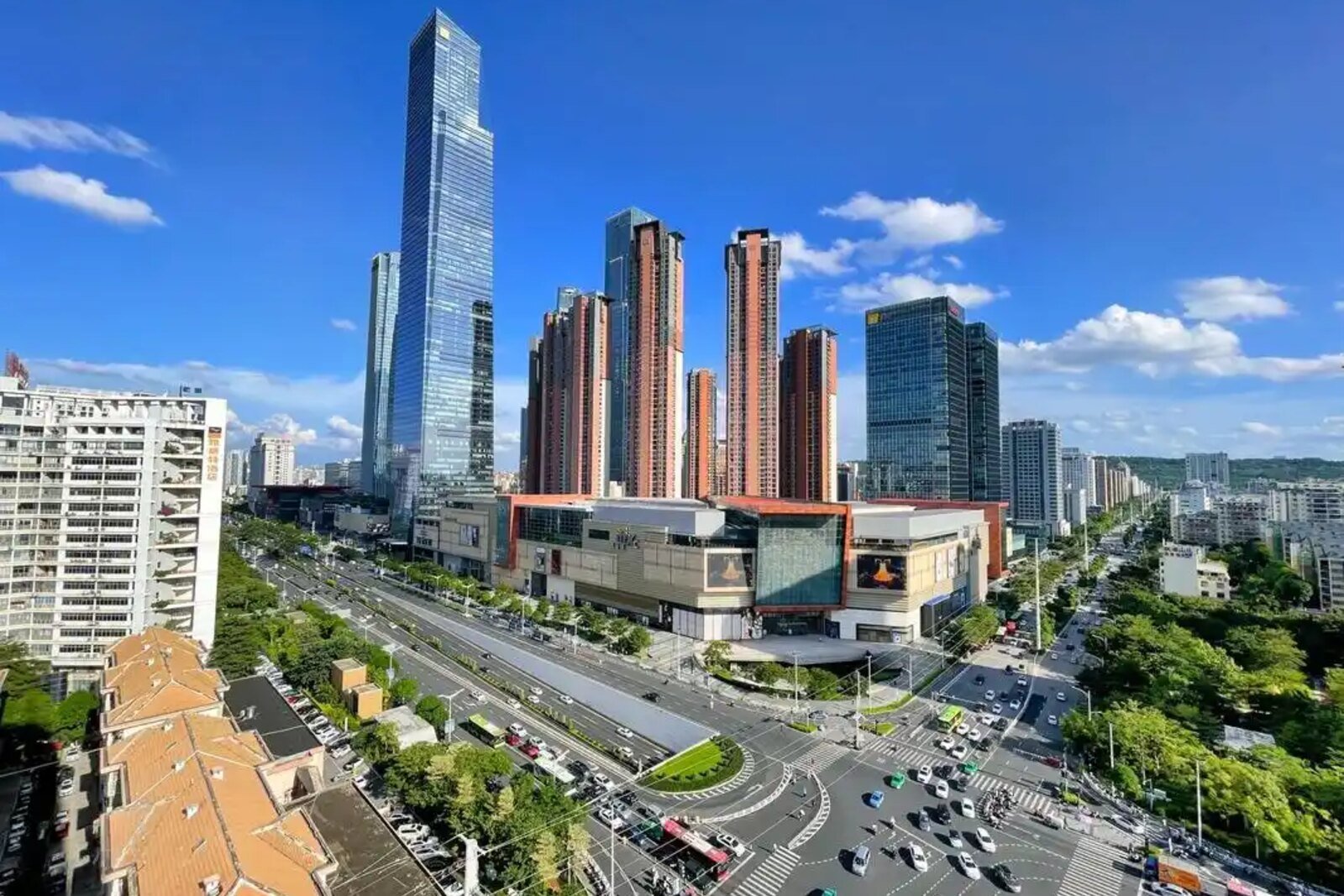
From above, Liuzhou no longer looked like a city defined by a single bowl of noodles. Hills, bridges, apartment towers and the river all occupied the same nightscape. It was the first moment we began to understand the city beyond luosifen.
If You Arrive Late
If you reach Liuzhou after 3:00 p.m., simplify the route:
Hotel → early dinner → Ma’anshan or the Liu River → Wuxing Pedestrian Street
Move Luoshen Alley to Day 2 or Day 3 rather than rushing through every stop.
Day 2: Qingyun Market, Old Liuzhou and Yaobu Ancient Town
Day 2 brings together four different sides of Liuzhou: its morning market, historical centre, industrial identity and modern riverfront. It is the busiest day of the itinerary, but the route moves gradually from the old city towards Yaobu Ancient Town, reducing unnecessary backtracking.
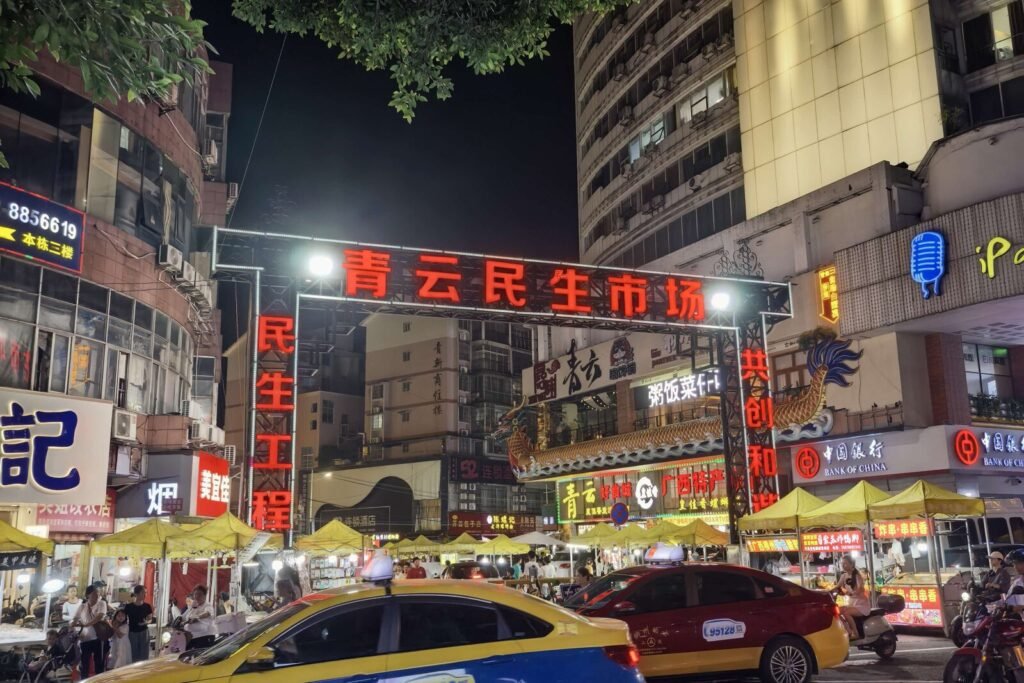
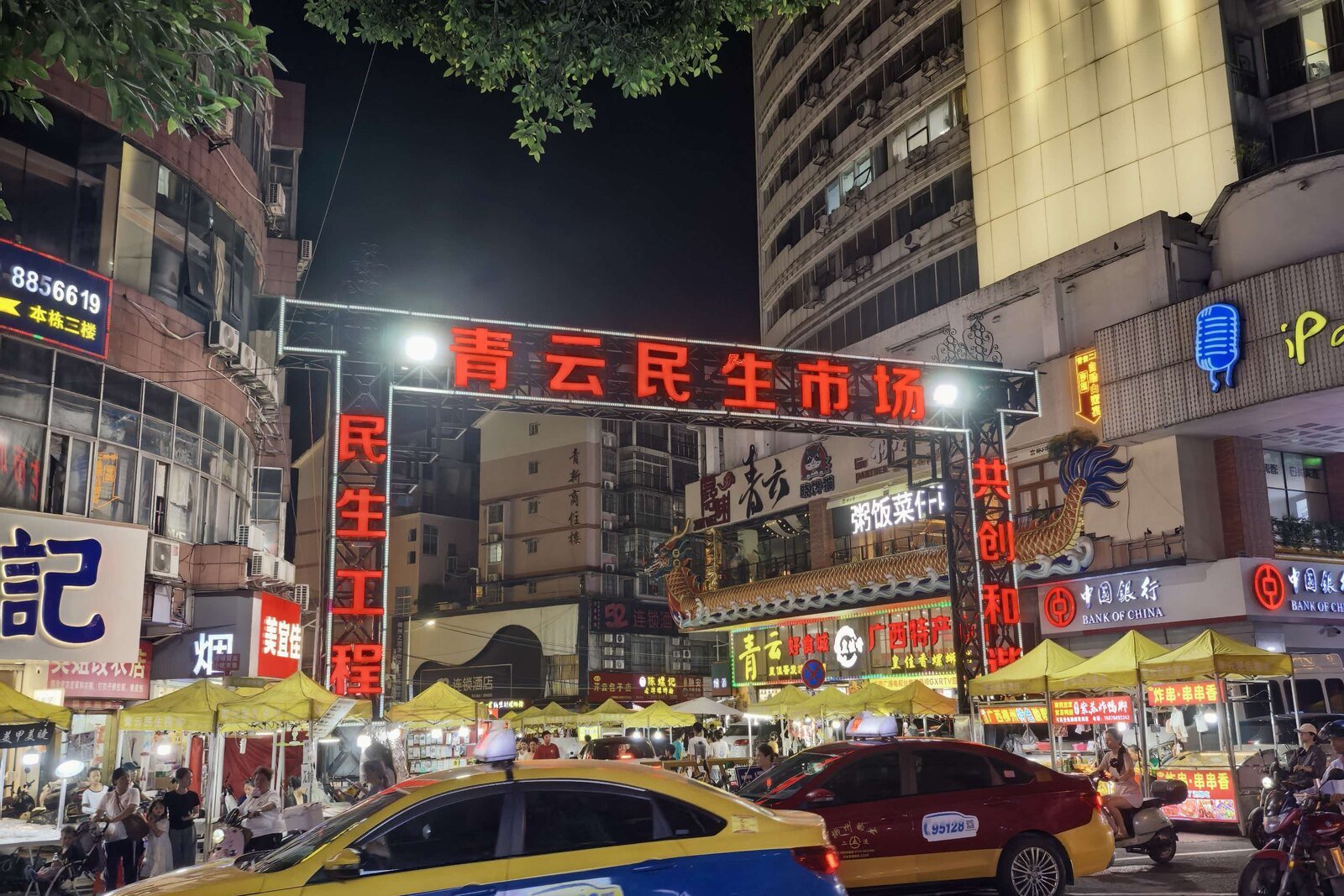
07:30–09:00 — Breakfast at Qingyun Minsheng Market
Visit Qingyun Minsheng Market (青云民生市场) early, while it is still functioning primarily as a neighbourhood market rather than an attraction.
The market contains hundreds of stalls selling fresh produce, cooked food, snacks and everyday groceries. Instead of attempting to try everything, share a few small portions and leave room for lunch.
What We Would Eat Again
Our two favourite discoveries were fresh corn juice and fried fermented tofu.
The fermented tofu was very different from ordinary soft tofu. Its texture was dense and firm, with a noticeable five-spice flavour. After frying, the outside became crisp while the centre remained substantial.
It was served with a Guangxi-style sour chilli sauce made with tomato. The combination of crisp tofu, warm spices, acidity and mild heat made it one of the most memorable snacks we tried at the market.
The corn juice provided a useful contrast. It was naturally sweet and gentle enough to drink between stronger, saltier dishes.
What We Would Skip
The shrimp dumplings, vegetable dumplings and other steamed dumplings we tried were less successful. Our batch was no longer hot, and the wrappers were thicker than we expected.
This may vary between stalls and times of day, so it is not a judgement on every dumpling sold in the market. Check whether the food has recently come out of the steamer and buy a small portion before ordering more.
09:15–12:00 — Dongmen Tower and Either Liuhou Park or Liuzhou Museum
After breakfast, continue through central Liuzhou towards Dongmen Tower and either Liuhou Park or Liuzhou Museum.
Dongmen Tower works best as a short stop rather than a major attraction. Use it as part of the walk between the market and the historical centre, paying attention to how fragments of the old city sit beside modern streets and commercial buildings.
Liuhou Park offers a quieter introduction to Liu Zongyuan, the Tang-dynasty writer and official whose time in Liuzhou remains central to the city’s cultural identity. The park is also valuable for a simpler reason: it is an everyday public space where local residents walk, exercise and rest.
If you want more historical context, continue to Liuzhou Museum. Travellers with limited time can choose either the park or the museum rather than rushing through both.
Check the museum’s current opening schedule and reservation requirements before visiting.
12:00–13:30 — Have a Non-Luosifen Lunch
After eating luosifen on Day 1 and sampling several market snacks in the morning, use lunch to explore another side of the city’s food.
Look for a restaurant serving shared local dishes rather than another individual bowl of noodles. Seasonal vegetables, stuffed dishes, duck, river fish or a simple family-style meal will give the day more variety.
Ordering several smaller dishes works especially well when travelling with friends.
14:00–16:30 — Visit Liuzhou Industrial Museum
Liuzhou Industrial Museum explains a side of the city that is easy to miss when focusing only on food and scenery.
The museum was created from former factory buildings and traces the development of Liuzhou’s machinery, manufacturing and automotive industries. Large industrial exhibits and the surrounding architecture help connect the city’s working history with the vehicles and factories still associated with modern Liuzhou.
At the time of writing, the museum normally opens from Tuesday to Sunday and closes on Mondays. Confirm the current schedule and reservation requirements through the official museum information before visiting.
After 17:00 — Yaobu Ancient Town and the Riverfront
Finish the day at Yaobu Ancient Town. Despite its name, it is better understood as a modern riverside leisure and dining district than as a completely preserved historical town.
Arrive before dark so that you can first see the buildings and riverfront in daylight. Stay as the lights come on, then walk through the lanes, browse the shops or find somewhere for dinner.
Yaobu becomes more atmospheric after sunset, but it can also feel commercial and crowded. Treat it as a pleasant evening promenade rather than a place where every shop must be visited.
If you are staying at Bo Lin Hotel, Yaobu Ancient Town is particularly convenient for the end of the day, as the hotel is approximately one kilometre away based on our route.
Day 2 reveals why Liuzhou is more interesting than its food-first reputation suggests. Within a single day, the city moves from a crowded morning market to Tang-dynasty history, heavy machinery and a brightly lit riverfront.
If Day 2 Falls on a Monday
Because Liuzhou Industrial Museum is normally closed on Mondays, replace it with additional time at Liuzhou Museum, a longer riverside walk or a slower afternoon in the old city. Do not rearrange the entire trip solely to force both museums into the same day.
Day 3: Longtan Park and One Last Bowl of Luosifen
The final day is slower and more flexible. Spend the morning among the karst scenery of Longtan Park, return to the city for one last bowl of luosifen, then collect your luggage and leave.
08:00–09:00 — Breakfast and Luggage
If your hotel requires checkout around midday, either check out before leaving and store your luggage at reception or confirm whether you have enough time to return after the park.
Choose a relatively light breakfast, such as rice porridge, sticky rice, soy milk or another local rice noodle dish. After two food-heavy days, there is no need to turn every meal into a checklist.
Travellers staying at Bo Lin Hotel will find this morning especially convenient. Based on our route, the hotel was approximately two kilometres from Longtan Park.
09:00–12:00 — Explore Longtan Park
Longtan Park offers a very different image of Liuzhou from the commercial streets and industrial buildings of the previous two days.
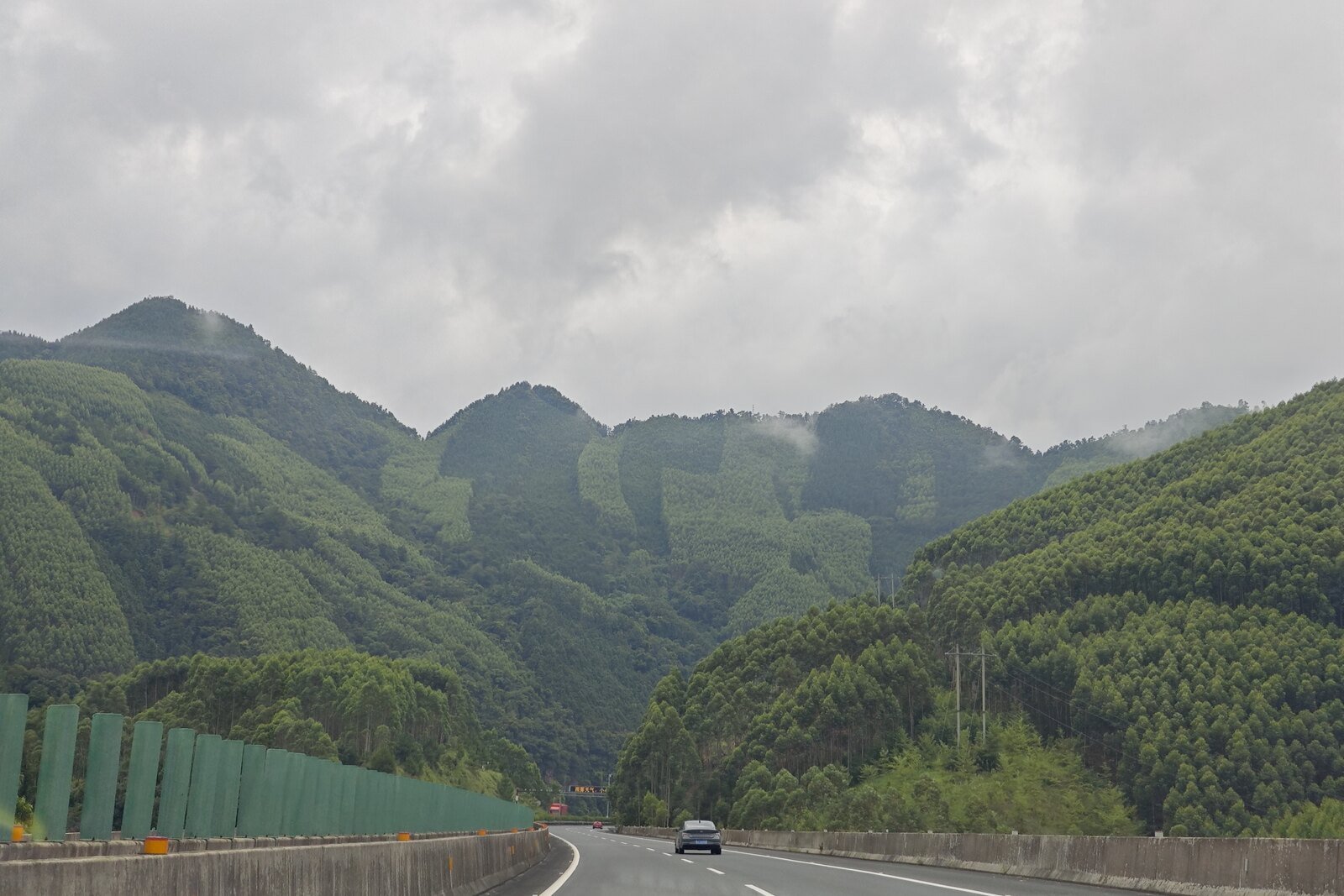
The park combines lakes, limestone hills, subtropical vegetation and architectural elements inspired by the cultures of southern China. Although it sits close to the city centre, parts of the park feel surprisingly removed from the traffic outside.
A relaxed route can include:
- Jinghu Lake
- Longtan and Leitan pools
- The main karst viewpoints
- The ethnic-culture village and bridge area
- Lakeside paths and shaded resting places
You do not need to cover the entire park. Choose a manageable loop and allow time to stop beside the water rather than walking quickly from one photo location to another.
Wear shoes with reasonable grip, especially after rain, as some paths and stone steps may become slippery. In hot weather, arrive early and carry water; the combination of humidity and walking can be more tiring than the distance suggests.
Longtan Park is officially described as a city park combining karst scenery, southern ethnic culture and subtropical limestone vegetation. Check the latest entrance and operating information through the official park introduction before visiting.
12:30–14:00 — Eat One Last Bowl of Luosifen
Make the final bowl different from the one you ordered on Day 1.
If you started with classic soup luosifen, consider trying:
- Dry-mixed luosifen
- Stir-fried luosifen
- Stinky-tofu luosifen
- A bowl with a more generous topping combination
This is also a good opportunity to adjust the noodles to your preferred texture. Ask for them slightly firmer or softer, depending on what you learnt from the previous bowls.
There is no need to spend the final hours queuing outside a famous shop. In Liuzhou, neighbourhood restaurants generally understand the dish well. Choosing a shop according to its speciality is often more useful than choosing one according to the length of its queue.
By our last meal, the discussion was no longer about whether luosifen smelled strange. We were comparing broth, noodle texture and how completely the tofu skin had absorbed the soup—as if we had always been entitled to such strong opinions.
After 14:00 — Souvenirs and Departure
If you want to take luosifen home, packaged versions are widely available. Check the production date, ingredients and package condition rather than buying only according to the most colourful box.
Seal strongly scented food inside an additional bag and check any luggage restrictions that apply to your transport.
Return to the hotel, collect your luggage and leave enough time to reach Liuzhou Railway Station or the airport. Avoid adding another distant attraction simply because a few hours remain.
If You Have an Early Departure
If you need to leave before lunchtime, move Longtan Park to Day 2 and keep the final morning simple:
Breakfast → short neighbourhood walk → collect luggage → station or airport
Do not attempt a rushed visit to Longtan Park if it leaves no time to enjoy the landscape.
Where to Stay in Liuzhou
Liuzhou is compact enough that hotel location affects atmosphere and sleep quality more than overall travel time. Most places in this itinerary are connected by short taxi or scooter rides, so staying directly beside a major attraction is not essential.
Wuxing Pedestrian Street: Best for Food and Nightlife
The area around Wuxing Pedestrian Street is the most convenient option for first-time visitors who are travelling without a car.
Restaurants, luosifen shops, Qingyun Minsheng Market and the Liu River are all easy to reach. You can return to the hotel between meals, walk around after dark and avoid arranging transport every time you want a snack.
The disadvantage is noise. Wuxing is an active commercial district, and rooms facing busy streets may be affected by traffic, music or late-night crowds.
Light sleepers should consider a quieter residential street in Chengzhong District, away from Wuxing’s nightlife, rather than staying directly beside the pedestrian street. Check recent reviews for comments about street noise and request a room away from the road.
Vienna International Hotel Liuzhou Wuxing Pedestrian Street is one of the most conveniently located options in this area. It sits close to Wuxing Pedestrian Street, Qingyun Minsheng Market and the riverfront, although the central location may not suit travellers seeking complete quiet.
Where We Stayed: Bo Lin Hotel
We stayed at Bo Lin Hotel—Liuzhou Ma’anshan Park and Yaobu Ancient Town.
We paid ¥202 for a king room during our trip. This was the price for our specific stay rather than a fixed hotel rate, so future prices will depend on the date, room type and booking platform.
The room included smart controls, and the overall environment was pleasant and comfortable. Its location worked particularly well for our itinerary because it was outside the busiest part of Wuxing while remaining close to several attractions.
Based on the routes shown during our stay, the approximate distances were:
| Destination | Approximate distance |
|---|---|
| Yaobu Ancient Town | 1 km |
| Longtan Park | 2 km |
| Museums and central parks | 3–4 km |
| Wuxing Pedestrian Street | 4 km |
These are approximate travel distances from our trip rather than guaranteed measurements. Traffic, road access and the exact entrance used can change the journey.
Bo Lin Hotel is a particularly practical choice if your itinerary includes Yaobu Ancient Town in the evening and Longtan Park on the final morning. It is less convenient for repeatedly walking back to Wuxing Street, but the journey by taxi or electric scooter remains short.
Other Hotels to Compare
Another option is JI Hotel Liuzhou Yaobu Ancient Town Chengzhong Wanda. It is positioned between several eastern and central attractions and may suit travellers who prefer a quieter modern hotel environment.
Be careful not to confuse 全季酒店—JI Hotel with 四季酒店—Four Seasons Hotel when translating or searching in English.
Travellers who prioritise nightlife and market access can compare JI Hotel and Bo Lin Hotel with Vienna International Hotel near Wuxing Pedestrian Street.
We did not personally stay at JI Hotel or Vienna International Hotel on this trip, so they should be treated as alternatives to compare rather than first-hand recommendations.
Staying Near Liuzhou Railway Station
A hotel near Liuzhou Railway Station is most useful if you arrive late at night, leave early in the morning or have heavy luggage.
For a full three-day itinerary, however, the station area is less convenient for evening food walks and riverside activities. Unless train access is your main priority, Wuxing, Chengzhong or the Yaobu–Longtan side of the city will usually provide a better travel experience.
Our Recommendation
Choose according to your priorities:
- Stay near Wuxing Pedestrian Street for food, nightlife and maximum walking convenience.
- Stay at Bo Lin Hotel or around Yaobu for easier access to Longtan Park, the Industrial Museum and eastern Liuzhou.
- Choose a quieter part of Chengzhong District if you are a light sleeper.
- Stay near Liuzhou Railway Station only when arrival or departure convenience matters most.
Before booking, compare the latest price, cancellation policy, standard check-in time and recent comments about noise. Hotel rates in this article should always be presented as what we paid, not as a guaranteed future price.
Getting Around Liuzhou: Taxis, Electric Scooters and the Wuling Hongguang MINIEV
Liuzhou is compact, and most attractions in this itinerary are only a short ride apart. For two or three friends, our first choice would be a small electric scooter on clear days, with taxis reserved for rain, luggage and longer journeys.
| Transport | Best for | Things to consider |
|---|---|---|
| Walking | Wuxing Pedestrian Street, Qingyun Market and the old city | Hot or rainy weather |
| Taxi or ride-hailing | Luggage, bad weather and short cross-city trips | Costs increase beyond the initial distance |
| Electric scooter | Friends travelling light in good weather | Heat, rain, battery range and road safety |
| Wuling Hongguang MINIEV | Travellers with a valid Chinese driving permit | Parking, deposit, insurance and rental conditions |
Taxis and Ride-Hailing
Taxis are the easiest option when arriving at the railway station, travelling with luggage or moving between attractions in bad weather. Ride-hailing apps are also useful, although international visitors may find hotel staff assistance helpful if payment or location names cause difficulties.
Many journeys within central Liuzhou are inexpensive because the city is relatively compact. However, not every trip will remain within the starting fare: the meter continues once the initial distance has been exceeded. Check the destination in your map app before departure and use “starting-fare distance” only as a rough description, not a guaranteed price. Liuzhou’s published taxi tariff provides the current charging structure.
Renting a Small Electric Scooter
For a group of friends, a small electric scooter is arguably the most enjoyable way to explore Liuzhou. The roads around many central attractions are relatively narrow, while the distances between parks, museums, markets and food streets are short.
During our trip, the day rate was less than ¥30 per scooter. Rental rates can change by season and shop, so confirm the return time, deposit and charging policy before paying.
Before leaving the rental shop:
- Check the brakes, tyres, lights and remaining battery.
- Photograph any existing scratches or damage.
- Ask what happens if the battery runs low.
- Confirm where the scooter may be parked and when it must be returned.
- Wear a helmet and keep each scooter within its permitted passenger capacity.
A scooter is best when the weather is dry and you are carrying only a small bag. On very hot or rainy days, the convenience quickly disappears, and taking a taxi is the more comfortable option.
Renting a Wuling Hongguang MINIEV
The Wuling Hongguang MINIEV feels especially appropriate in Liuzhou, the home city of Wuling. We asked about renting one but did not drive it ourselves, so this is not a first-hand review. The rates we found appeared reasonable, particularly when divided between several friends.
Compared with a scooter, a MINIEV provides air conditioning, rain protection and space for small bags. However, you will also need to consider parking, traffic rules, the security deposit, insurance coverage and responsibility for damage.
International visitors cannot normally rent a car using an overseas driving licence alone. A valid Chinese driving licence or provisional Chinese driving permit is generally required. The Chinese government’s guide for international drivers explains the documents and identity checks involved.
Our Recommendation
Choose one electric scooter per traveller if you are visiting with friends, travelling light and the weather is good. Use taxis when carrying luggage, after a long day of walking or during rain. Consider a Wuling Hongguang MINIEV only if the driver has the required permit and your itinerary includes enough driving to justify the rental and parking arrangements.
What Else to Eat in Liuzhou
It is tempting to plan every meal around luosifen, but leave at least one meal for the wider flavours of Guangxi. Liu Yuan Yuan’s luosi duck-foot hot pot (螺蛳鸭脚煲) is a good communal dinner: braised duck feet arrive in a sour and spicy broth, with rice noodles added near the end so that they become soft and absorb the soup.
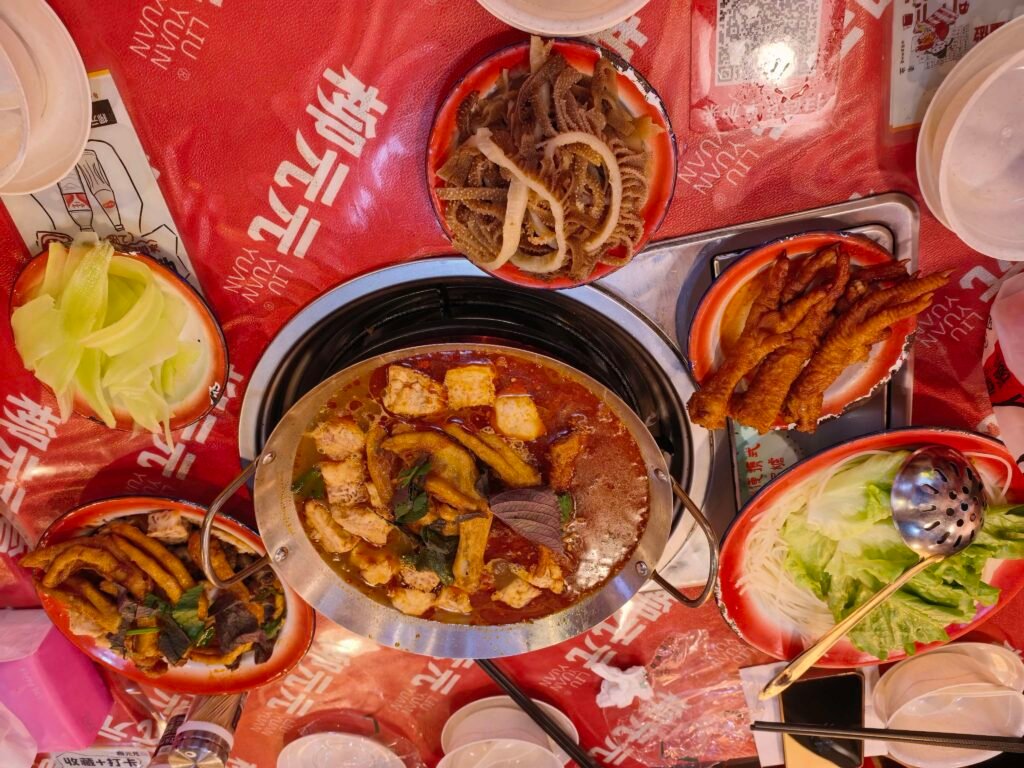
For a sit-down meal, our table at Gui Xiao Chu (桂小厨) included Laoyou fish with pickled bamboo shoots, tomato and chilli; cold-tossed clams; honey-glazed grilled ribs; and beef with pickled radish and perilla leaf. Finish with tangshui (糖水), the sweet soups sold at small street stalls, if you still have room.
In this itinerary, keep Day 1 for your first luosifen, use Day 2 for duck-foot hot pot or a shared Guangxi meal, and order a different style of luosifen before leaving on Day 3.
For photographs and detailed first-hand notes, read Beyond Luosifen: What Liuzhou Locals Actually Order for a Big Meal.
How Much Does a 3-Day Liuzhou Trip Cost?
Liuzhou is an affordable destination compared with many larger Chinese cities. Most parks and city attractions in this itinerary are free, distances are short, and a satisfying bowl of luosifen rarely requires a large budget.
The following estimate is for one person travelling with a friend and sharing a hotel room. Prices are in Chinese yuan (¥) and reflect a planning range rather than guaranteed future rates. Transport to and from Liuzhou is excluded.
| Expense | Estimated cost per person | Notes |
|---|---|---|
| Accommodation | ¥200–400 | Two nights in a shared room |
| Food and drinks | ¥200–400 | Noodles, market snacks, one or two shared dinners and desserts |
| Local transport | ¥80–160 | Short taxi rides plus one day of scooter rental |
| Attractions | ¥0–50 | Most places in this itinerary are free |
| Souvenirs and extras | ¥50–150 | Packaged food, drinks and unplanned purchases |
| Estimated total | ¥530–1,160 | Excluding trains or flights |
Accommodation
Our king room at Bo Lin Hotel cost ¥202 per night. For two nights, that came to ¥404 per room—or approximately ¥202 per person when shared by two travellers.
This was the price during our visit, not a guaranteed future rate. Weekend, holiday and last-minute prices may be higher.
Food
A basic bowl of luosifen is inexpensive, but toppings, market snacks and shared dinners can gradually increase the total. A practical food budget is around ¥70–130 per person per day.
Budget more if you plan to order duck-foot hot pot, several Guangxi dishes or frequent drinks and desserts. Travelling with friends makes shared meals better value because you can try more dishes without ordering a full portion of everything for one person.
Local Transport
Allow approximately ¥80–160 per person for local travel over three days. This could cover several short taxi or ride-hailing journeys and one day of electric-scooter rental. Car hire is not included because insurance, parking and rental conditions vary.
A Realistic Overall Budget
For two friends sharing a room, approximately ¥600–900 per person should provide a comfortable three-day trip without excessive spending. Travellers choosing more expensive hotels, taking taxis for every journey or ordering larger restaurant meals should plan closer to ¥1,000–1,200 per person.
Solo travellers should add extra money for accommodation and transport because these costs cannot be divided between companions.
Final Thoughts: The Closest Way Back to Eighteen
Returning to eighteen does not mean recreating the past. Sometimes it is enough to sit across from the friends who knew you then, repeat jokes that need no explanation and realise how quickly the years between can disappear.
Liuzhou gave us the right setting for that reunion. The city never asked us to rush. Its attractions were close together, meals stretched longer than expected, and another bowl of luosifen was always waiting around the next corner. We moved between markets, karst parks, museums and riverside streets, but some of our best moments happened simply while sitting around a table.
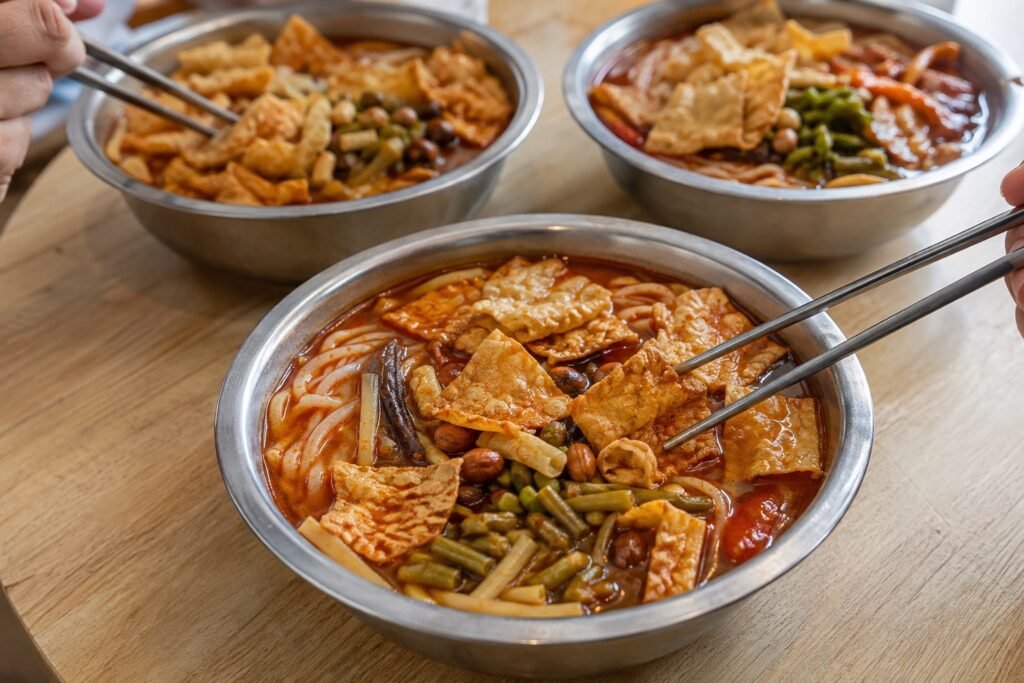
We did not return to eighteen because Liuzhou turned back time. We returned because the people beside us still remembered who we were at eighteen.
For first-time visitors, three days and two nights are enough to experience the city without reducing it to a checklist. Do not worry about finding the single most famous noodle shop or fitting every attraction into the route. Choose the style of luosifen you want, explore at a comfortable pace and leave room for an unplanned meal.
Cities become meaningful through the people and moments we associate with them. For us, Liuzhou will always taste like luosifen—and feel a little like being eighteen again.