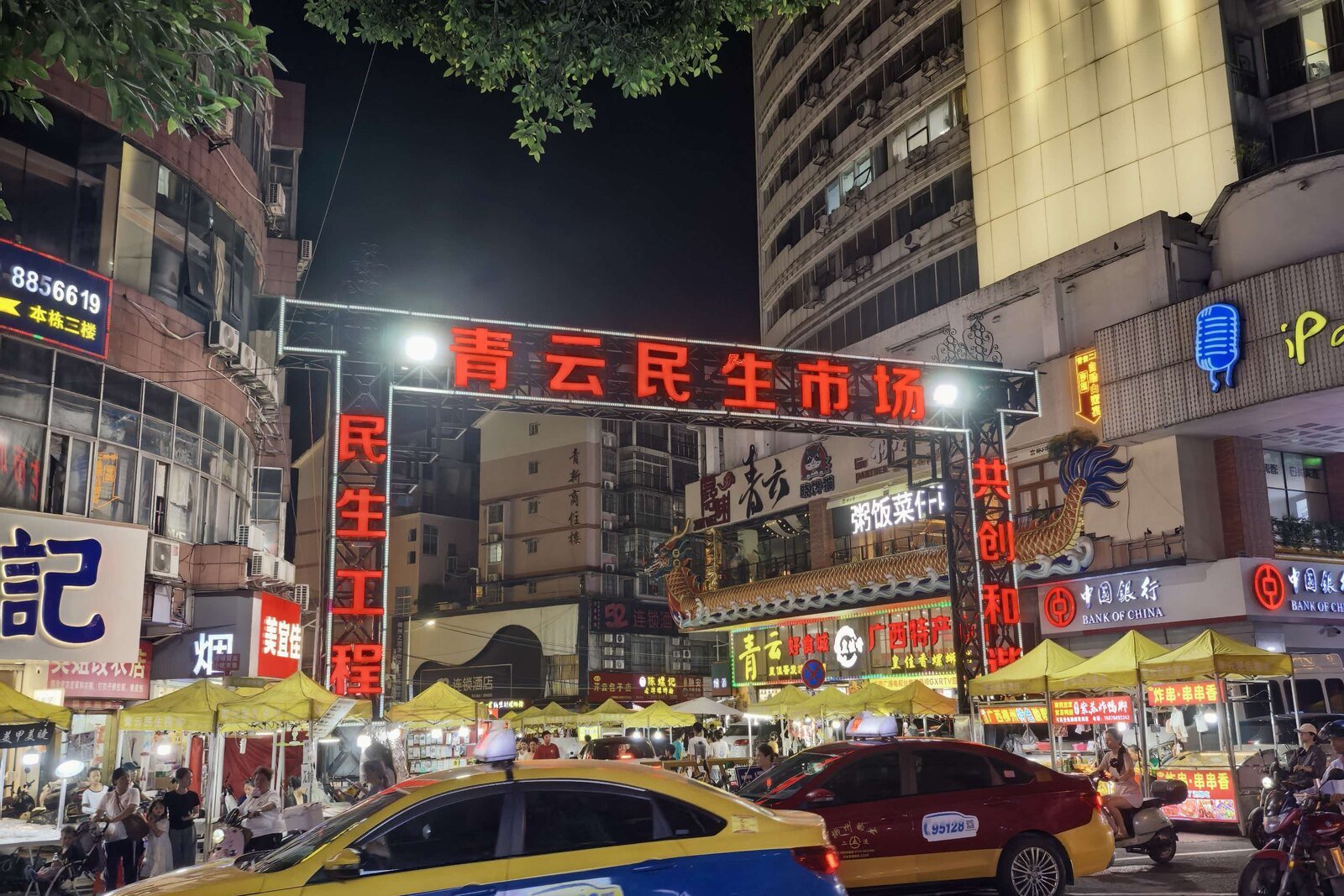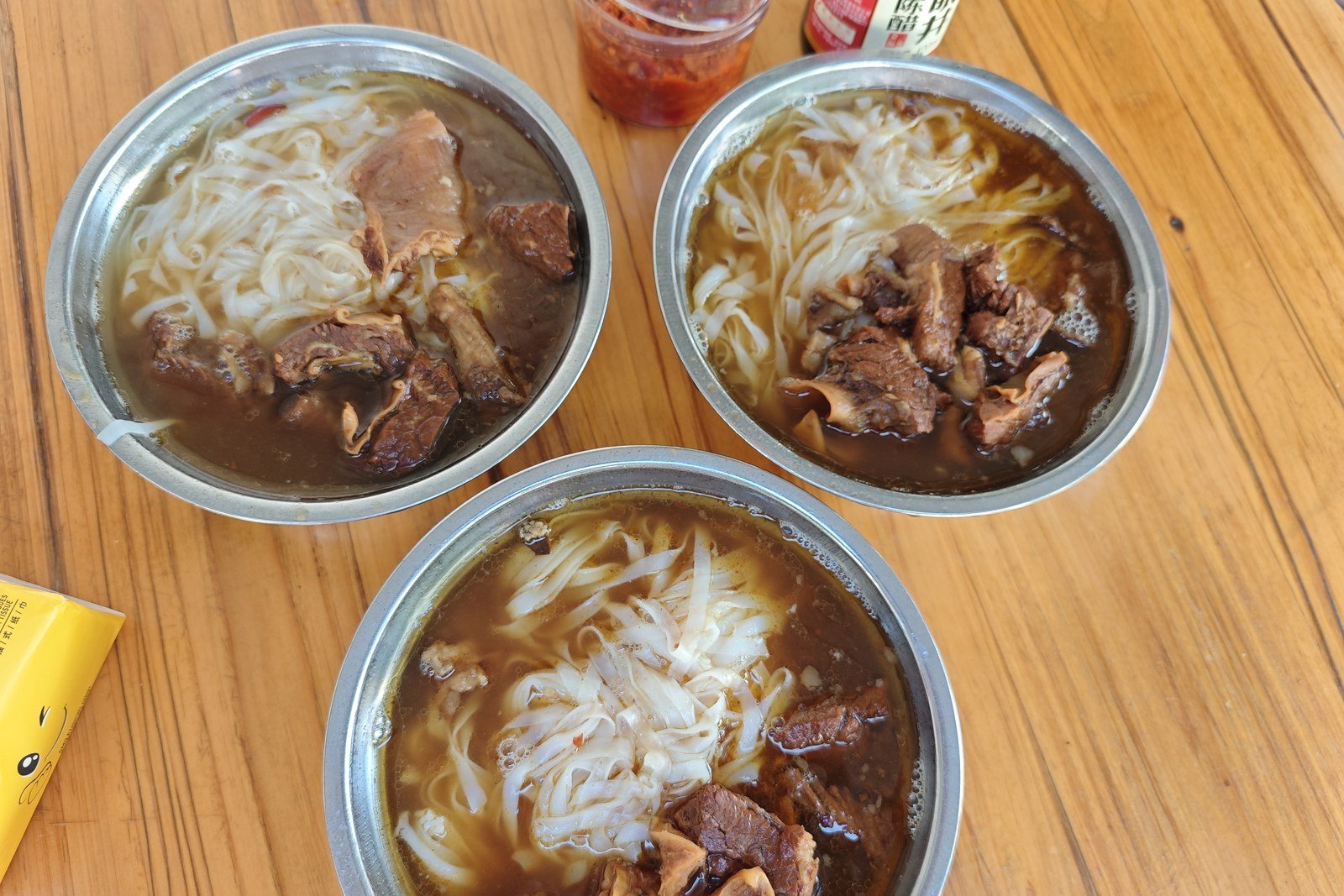

Liuzhou is an easy city to move around, and most of the confusion visitors have about it comes from expectations built in Guangzhou or Shanghai rather than from anything complicated on the ground. The city centre sits on a loop of the Liujiang, almost everything worth seeing is inside that loop, and the three things that actually matter are the high-speed rail station, the taxi app on your phone and a rented electric scooter. This guide covers how to reach Liuzhou, how locals get around once they are here, what each option costs, and what changes during the Mid-Autumn and National Day holidays.
Water bus
¥3
One way, two routes, 20–35 min
Airport
20 km
Bailian (LZH), shuttle ¥10–15
Scooter hire
¥30–50
Per day, deposit ¥100–500
Getting to Liuzhou
By high-speed train, which is what almost everyone does
Liuzhou Railway Station is the default way in, and it is unusually well placed: the station sits inside the city rather than on a ring road half an hour out, so a taxi to the central hotels takes about twenty minutes and the fare stays in single or low double digits.
The connections that matter most to travellers are short. Guilin is the closest major stop at around 57 minutes on the fastest services, with second-class fares roughly ¥26.5–50.5 and well over a hundred trains a day in both directions. Nanning takes about an hour, with second-class fares in the ¥52–99 range and close to ninety daily services. Guangzhou is the long one at about three hours and sixteen minutes on the quickest train, second class roughly ¥235–274, but only around twenty services a day — that is the route worth booking early.
Those frequencies are why a Guilin–Liuzhou–Nanning run works so well as a Guangxi itinerary: the legs are short enough that you can treat them like a long bus ride rather than a travel day.
By air, into Bailian Airport
Liuzhou Bailian Airport (LZH) is about 20 km from the city. It is a small airport with a modest route map, so unless you are connecting from somewhere the train does not reach well, rail is usually faster door to door.
- Airport shuttle bus Runs between the terminal and the city centre, with departures timed to flights rather than to a clock. Fares are around ¥10 from the downtown ticket office and about ¥15 from the Liuzhou Hotel stop, and roughly ¥10 coming back into town.
- City bus A regular city bus route serves the airport for a couple of yuan. It is the cheapest option by a wide margin, but headways are long — think roughly hourly — so it only works if your schedule has slack in it.
- Taxi or ride-hailing The quickest and least fiddly option, usually somewhere in the ¥20–40 band. There is a toll on the road out to the airport, charged in one direction, which the driver will add to the meter fare.
By car
Driving in from a neighbouring city is straightforward on the expressway; driving inside Liuzhou is the part to think about. The central road markings are genuinely complicated, with a lot of lane-specific turn restrictions, and camera enforcement is strict and unforgiving. Parking in the middle of the city also needs planning. If you are hiring a car to see the wider region, the sane approach is to park it at the hotel and use taxis or a scooter inside the city.
Getting around the city
Taxi
¥10–20 a hop
Flagfall about ¥6 by day, ¥8 at night. The default for visitors.
E-scooter
¥30–50 a day
Deposit ¥100–500, ID required, helmet supplied. The local way.
City bus
A couple of yuan
Dense network, Chinese-only signage, scan-to-ride via a local app.
Water bus
¥3 one way
A commuter boat down the Liujiang. Sightseeing at commuter prices.
Taxis and ride-hailing
This is the default for most visitors and it is cheap enough that the maths rarely matters. The flagfall is around ¥6 during the day and about ¥8 at night, and because the sights cluster inside the river loop, most hops between them land somewhere between ¥10 and ¥20. Ride-hailing apps work normally and are often easier than flagging a car down, especially at the night markets when everyone is leaving at once.
Renting an electric scooter, which is how Liuzhou actually moves
Liuzhou runs on electric two-wheelers to a degree that surprises first-time visitors, and the city has built for it: the separated non-motorised lanes here are among the better ones in a Chinese city of this size. Rental shops have multiplied around the railway station and near the main sights, and hiring one for a day is the single best way to understand how the city works.
Expect roughly ¥30–50 for a day, plus a refundable deposit somewhere between ¥100 and ¥500. You will need photo ID — a passport for foreign visitors — and most shops hand over a helmet and a rain poncho with the key.
You may not need to find a shop at all. Most hotels in Liuzhou rent scooters as well, working through the same rental platforms the street shops use, so asking at reception is usually the quickest route to a bike — often one waiting downstairs rather than a walk across town. Hotel rates are competitive rather than a mark-up: under ¥40 a day is normal.
- Wear the helmet It comes with the scooter for a reason. Helmet use is enforced across Guangxi and roadside checks in Liuzhou are routine.
- Stay in the bike lane Riding on the pavement is an offence, as are running red lights and riding against traffic. Fines are small — typically tens of yuan — but being stopped eats your afternoon.
- Budget for parking Some central parking areas charge a ¥1–2 attendant fee. Park where the other scooters are, not where it is convenient.
- Check the battery before you ride off Day rates assume you bring it back charged enough to be useful; ask the shop what range you actually have.
City buses
The bus network is dense, covers far more of the city than a visitor will ever need, and costs a couple of yuan a ride. The practical barrier is not price but information: routes are signed in Chinese and the useful real-time arrival data lives in local apps. If you read some Chinese, the Daoxing Longcheng app issues a scan-to-ride QR code that you top up or link to WeChat or Alipay, which saves hunting for coins.
The water bus: ¥3 down the Liujiang
Liuzhou’s water bus is a commuter service that happens to be the cheapest sightseeing cruise in Guangxi. It is a working public boat, not a tour, which is exactly why it is worth doing: ¥3 buys you a seat on the river that the city built its whole self-image around.
Fare
¥3 / ¥6
One way / return, paid on board
Hours
7:00–17:30
Departures every 30 minutes
Capacity
32 seats
Per sailing — queues build fast
Line 1
About 35 minutes one way · the best of the riverfront
Nanchedu pier
Start point for both routes
Dongdi pier
Everyone disembarks here
Line 2
About 20 minutes one way · best in the evening
Nanchedu pier
Start point for both routes
Yaobu pier
For Yaobu Old Town and the night view
There are two routes, both working out of Nanchedu pier. Line 1 runs to Dongdi pier and takes about 35 minutes one way, which is the stretch with the best of the riverfront. Line 2 runs to Yaobu pier and takes about 20 minutes, and is the one to take if you are heading for Yaobu Old Town in the evening. Pay after you board, either by dropping cash in the box or scanning with WeChat or Alipay.
What has changed recently
Both lines are running again after a suspension, but with a real restriction attached: because the river level is low, the intermediate piers cannot be used, so boats can only pick up and set down at the three end piers — Nanchedu, Yaobu and Dongdi. If you were planning to hop off halfway, that is not currently possible. The operator has also warned that autumn wind can stop sailings at short notice, and boats are pulled off the water when it gusts.
River conditions change. The pier closures described here were in force in September 2026; check locally before you plan an afternoon around the boat.
Everyone has to get off at the terminal pier. If you want to come back by boat rather than by taxi, you rejoin the queue and buy another ticket — there is no round trip on one boarding. On a holiday afternoon that queue can be long enough to eat an hour, so treat the return leg as optional.
Travelling during Mid-Autumn and National Day
China’s two autumn holidays fall close together and both change how the city moves. In 2026, Mid-Autumn Festival runs 25–27 September, three days; National Day runs 1–7 October, seven days, with 20 September and 10 October worked as make-up days. Those are the dates when trains sell out, not when the city becomes unpleasant — Liuzhou absorbs holiday crowds better than Guilin or Yangshuo do.
- Book rail first, hotel second The Guangzhou route has only around twenty services a day and is the first to sell out. Guilin and Nanning have enough frequency that you will usually find something.
- Assume the water bus will queue Thirty-two seats a sailing, one sailing every half hour, and the whole city off work. Go at 7:00 or 8:00, or skip it and walk the riverside instead.
- Scooter shops run out Rental points near the station empty early on the first holiday morning. If a scooter day is central to your plan, reserve it the night before.
- Ride-hailing surges at night market chucking-out time Walking ten minutes away from the market entrance before you order a car is usually faster than waiting at it.
What a day of transport actually costs
A visitor staying inside the river loop and moving around normally spends very little. Two or three taxi rides come to ¥30–60. A full day on a rented scooter is ¥30–50 and replaces all of them. The water bus is ¥3, or ¥6 if you come back by boat. Buses are a couple of yuan each. It is entirely normal to spend a day in Liuzhou and pay less for transport than for one bowl of luosifen and a drink.
Frequently Asked Questions
How do I get from Liuzhou Railway Station to the city centre?
Take a taxi or order a ride-hailing car. The station is inside the city, so the trip takes roughly twenty minutes and costs in the region of ¥10–20. Scooter rental shops also cluster around the station if you want to start riding straight away.
How much is the Liuzhou water bus and when does it run?
It costs ¥3 one way or ¥6 return, paid on board in cash or by WeChat or Alipay. Boats run from 7:00 to 17:30 with a departure every 30 minutes. Line 1 takes about 35 minutes, Line 2 about 20 minutes.
Can I get off the water bus at a stop in the middle?
Not at the moment. Low water levels mean the intermediate piers are out of use, so boats only pick up and set down at Nanchedu, Yaobu and Dongdi. Strong wind can also cancel sailings at short notice, so check before you build an afternoon around it.
Is renting an electric scooter a good idea for a visitor?
Yes, if you are comfortable riding in traffic. Liuzhou has proper separated lanes and short distances, a day costs ¥30–50 plus a refundable deposit, and shops supply a helmet. Ask your hotel first — most of them rent scooters through the same platforms, usually for under ¥40 a day. Bring photo ID, wear the helmet, stay out of the pavement and off the car lanes, and it is the most enjoyable way to see the city.
How far is Liuzhou from Guilin and Nanning by train?
Guilin is about 57 minutes on the fastest services, with second-class fares around ¥26.5–50.5. Nanning is about an hour, second class roughly ¥52–99. Both routes run frequently enough that you can travel on the day outside holiday periods.
Do I need to speak Chinese to use public transport here?
Not for taxis, ride-hailing or the water bus, all of which work by pointing, tapping or scanning. City buses are harder, because routes are signed in Chinese and the real-time information sits in local apps. Most visitors end up using taxis and a scooter and treating the bus network as optional.