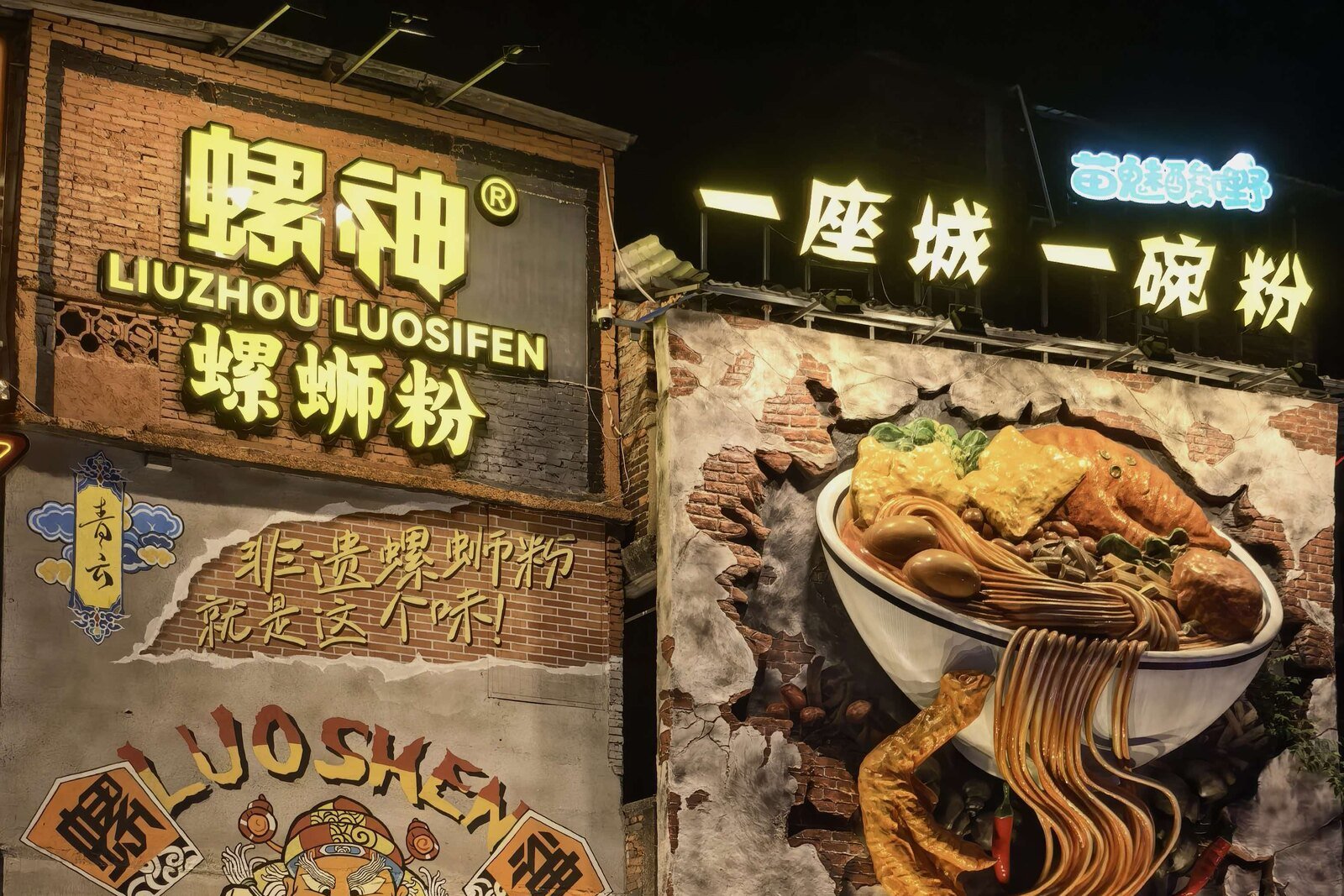
Most people arrive in Liuzhou for the noodles and leave with a rough idea of the city: it smells like luosifen, it makes cars, there are hills. Two free museums, twenty minutes apart, fill in almost everything that sentence leaves out.
One of them keeps a three-thousand-tonne press standing outdoors like a monument. The other hangs several hundred oil-paper umbrellas under a glass roof. Visiting both in the same morning is the fastest way to understand why Liuzhou feels the way it does.
One museum explains what Liuzhou built. The other explains who was already living here.
Two halves of one city
Neither charges admission, both close on Mondays, and neither takes long if you are selective. If Liuzhou is one stop on a longer trip, our Liuzhou travel guide puts the city in context first.
Two Museums, Two Versions of the Same City
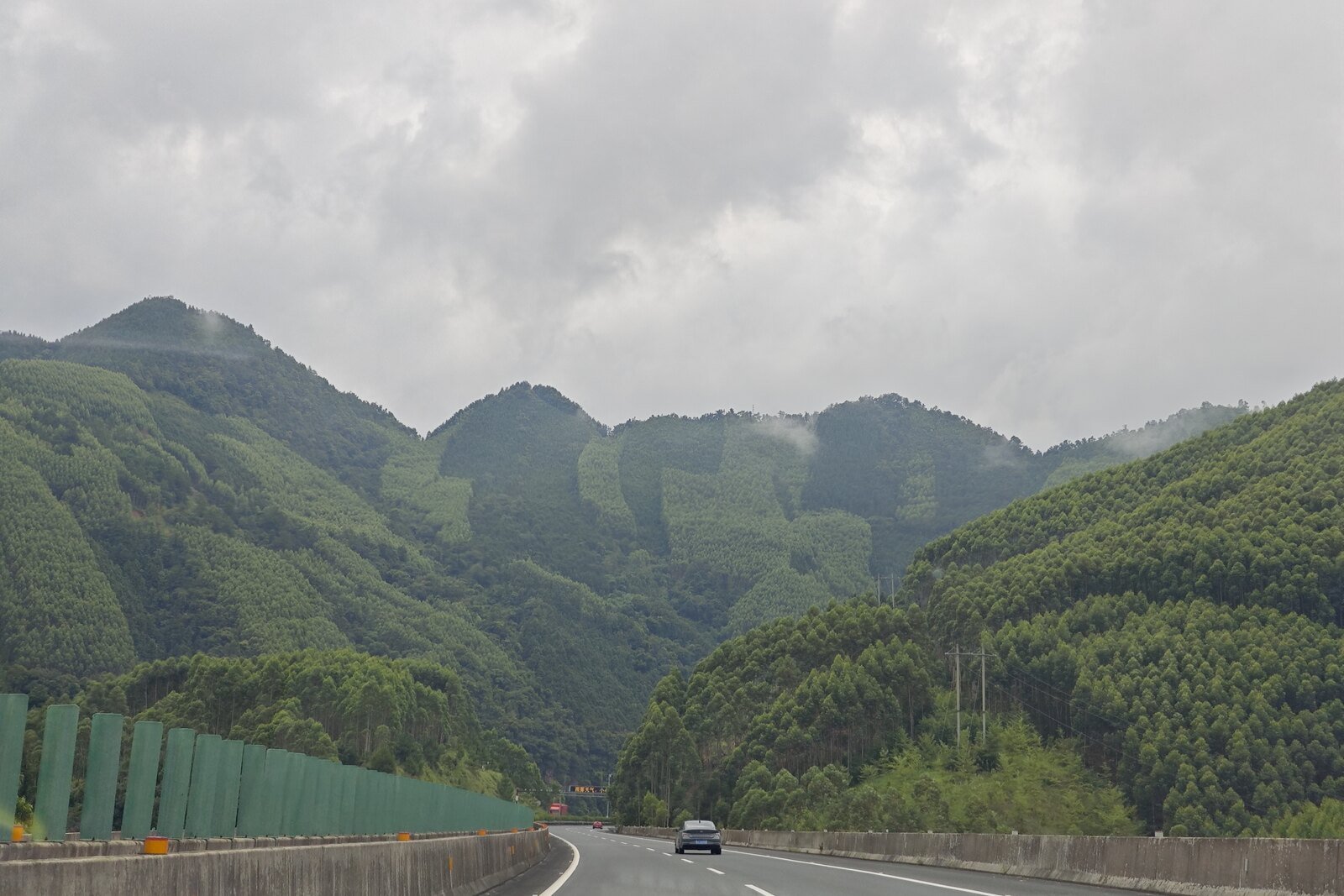
Liuzhou is unusual among Chinese cities its size: it is a heavy-industry town wrapped in karst scenery, sitting in a province best known for minority cultures and river landscapes. Those two identities rarely appear in the same place — except in its museums, which split them almost exactly in half.
The Industrial Museum takes the twentieth century: factories, engines, presses, the cars that still roll off the line here. Liuzhou Museum takes everything else: fossils, bronzes, and the Zhuang, Miao, Yao and Dong cultures of the surrounding counties.
Seeing them on the same day is what makes the contrast land. Apart, each is a decent museum. Together, they explain the city.
Liuzhou Industrial Museum
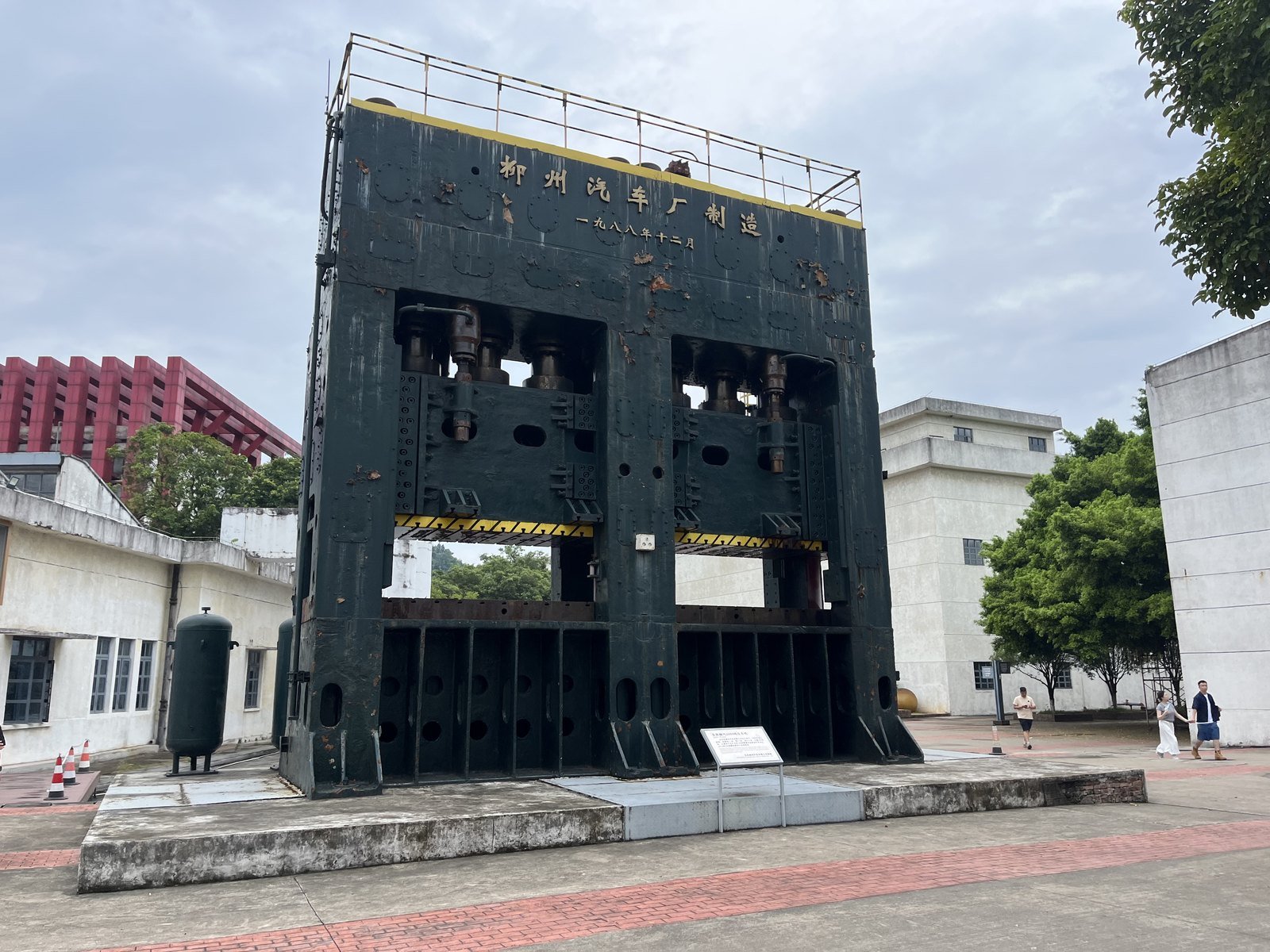
You meet the first exhibit before you reach the door. A black steel press stands on a plinth in the forecourt, four storeys of it, with yellow characters across the top reading 柳州汽车厂制造 — built by Liuzhou Automobile Works. The plaque beside it calls it a 3,000-tonne press from Dongfeng Liuzhou Motor.
It is an unsubtle way to open a museum and it works. Nothing inside a display case conveys industrial scale the way a machine does when you have to walk around it.
The museum occupies a converted industrial site of roughly 110,000 square metres, with about 60,000 square metres of floor space and a collection of more than 6,300 industrial objects alongside some 30,000 documents, photographs and recordings. Those numbers are worth knowing before you go, because they explain why the place does not feel like a municipal exhibition hall. It feels like a decommissioned factory that someone decided to keep.
What is inside
The permanent displays are split across three halls:
The second hall is the one that surprises visitors. Liuzhou spent decades as one of China’s more polluted cities, and the museum says so directly rather than skipping to the recovery. It is a more honest piece of curation than the building’s exterior suggests.
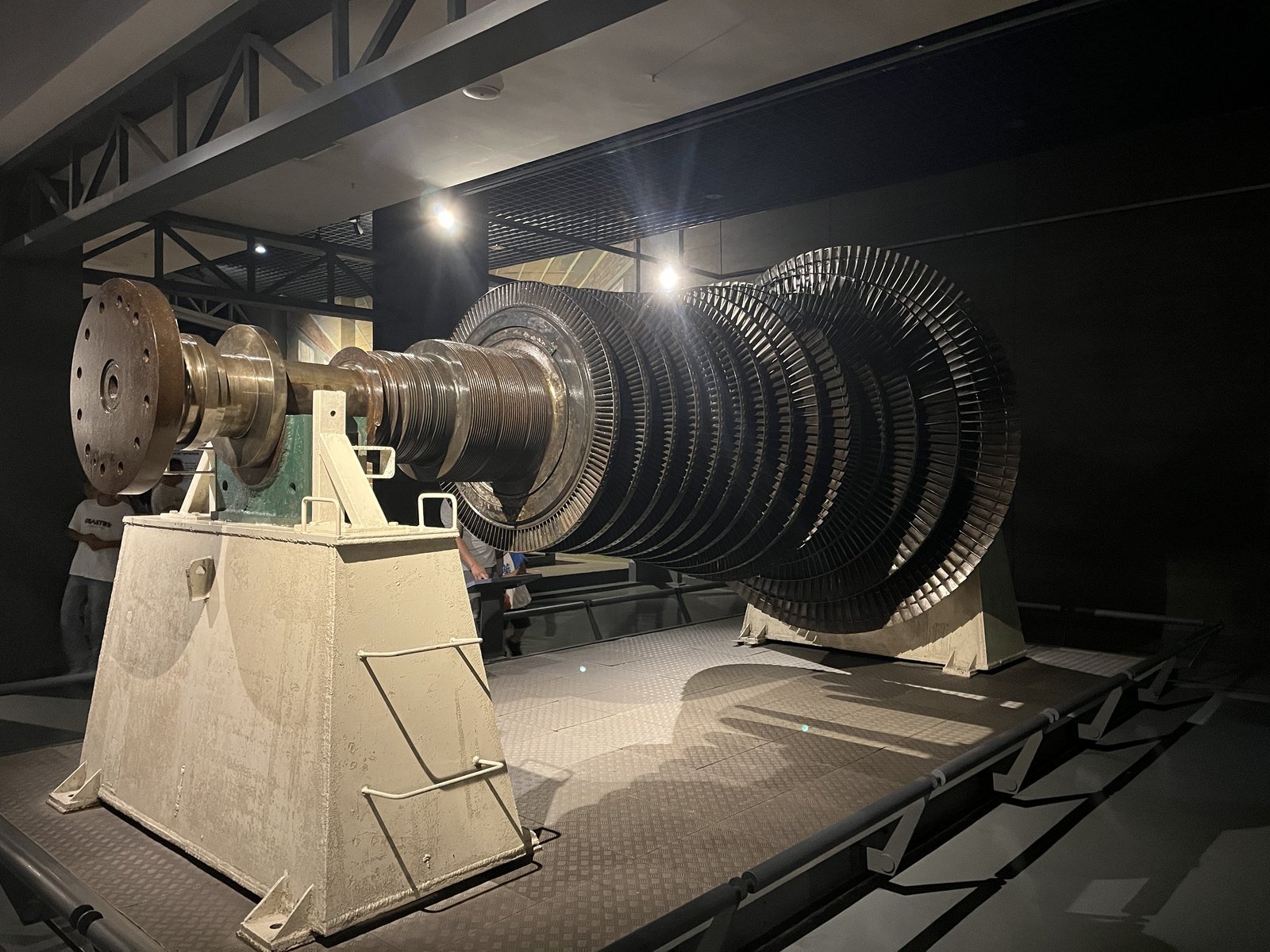
The train library is exactly what it sounds like: a diesel locomotive fitted out as a reading room, holding more than 6,000 books along with tablets and screens. It is a small idea, well executed, and it tells you something about how the city sees its own machinery — not as scrap, but as furniture.
If you have read our guide to Liuzhou luosifen, this is the other half of the same story: the factories that filled the city are the reason so many people needed a fast, cheap, portable bowl of noodles in the first place.
Liuzhou Museum
Liuzhou Museum sits on the east side of People’s Square, a grey stone block softened by climbing greenery, with a wide covered forecourt where people park and shelter from the sun.
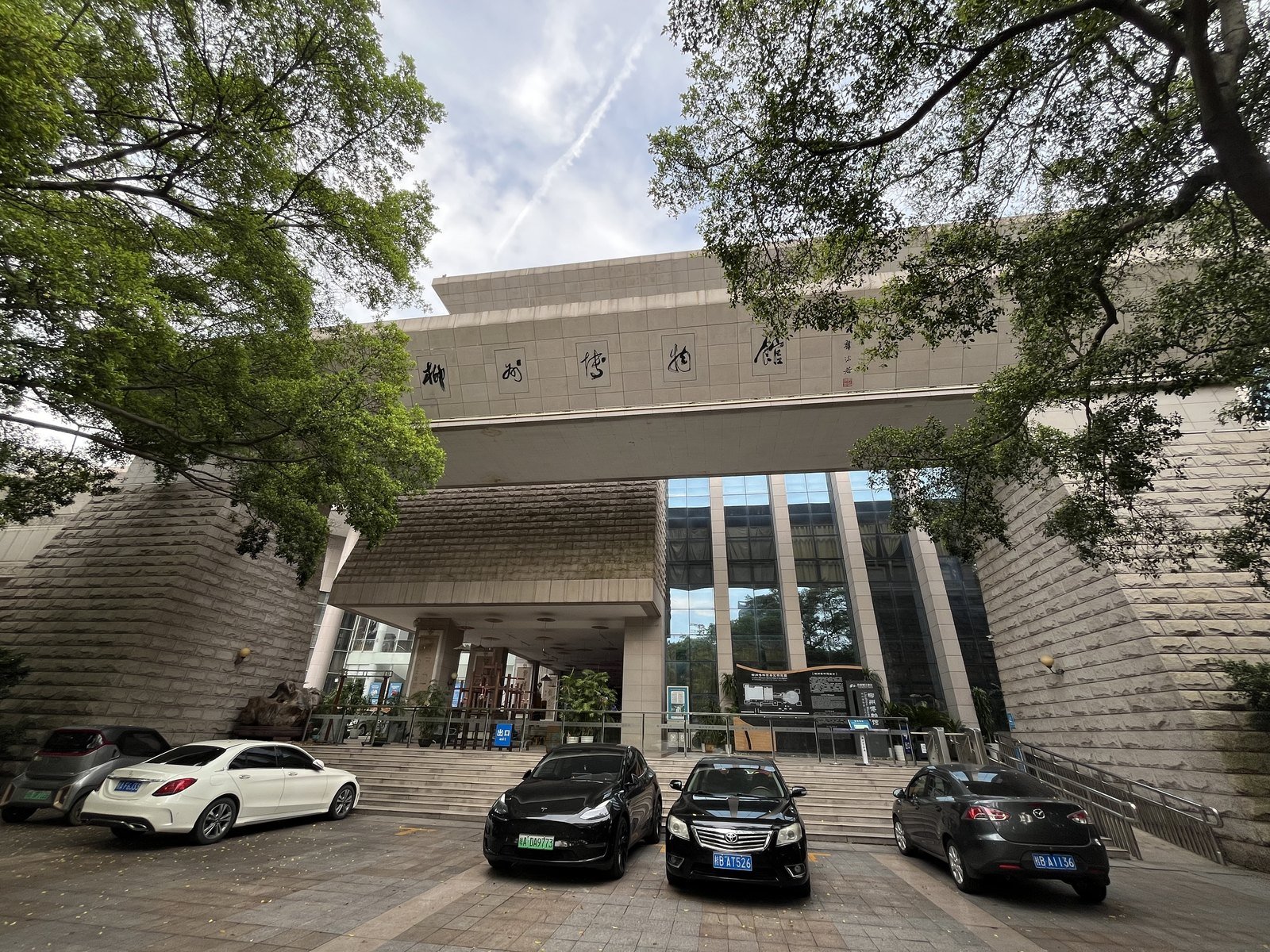
The atrium
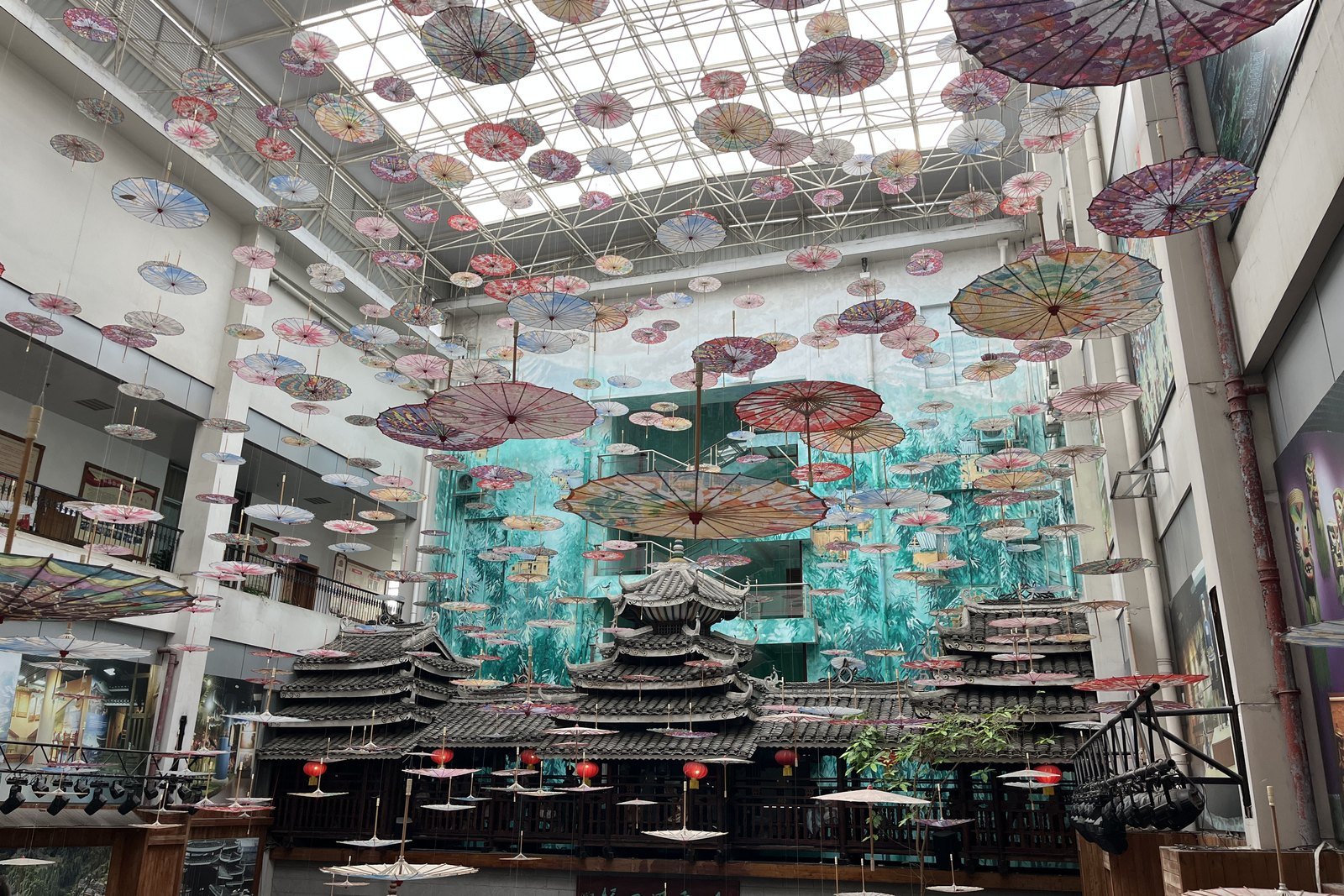
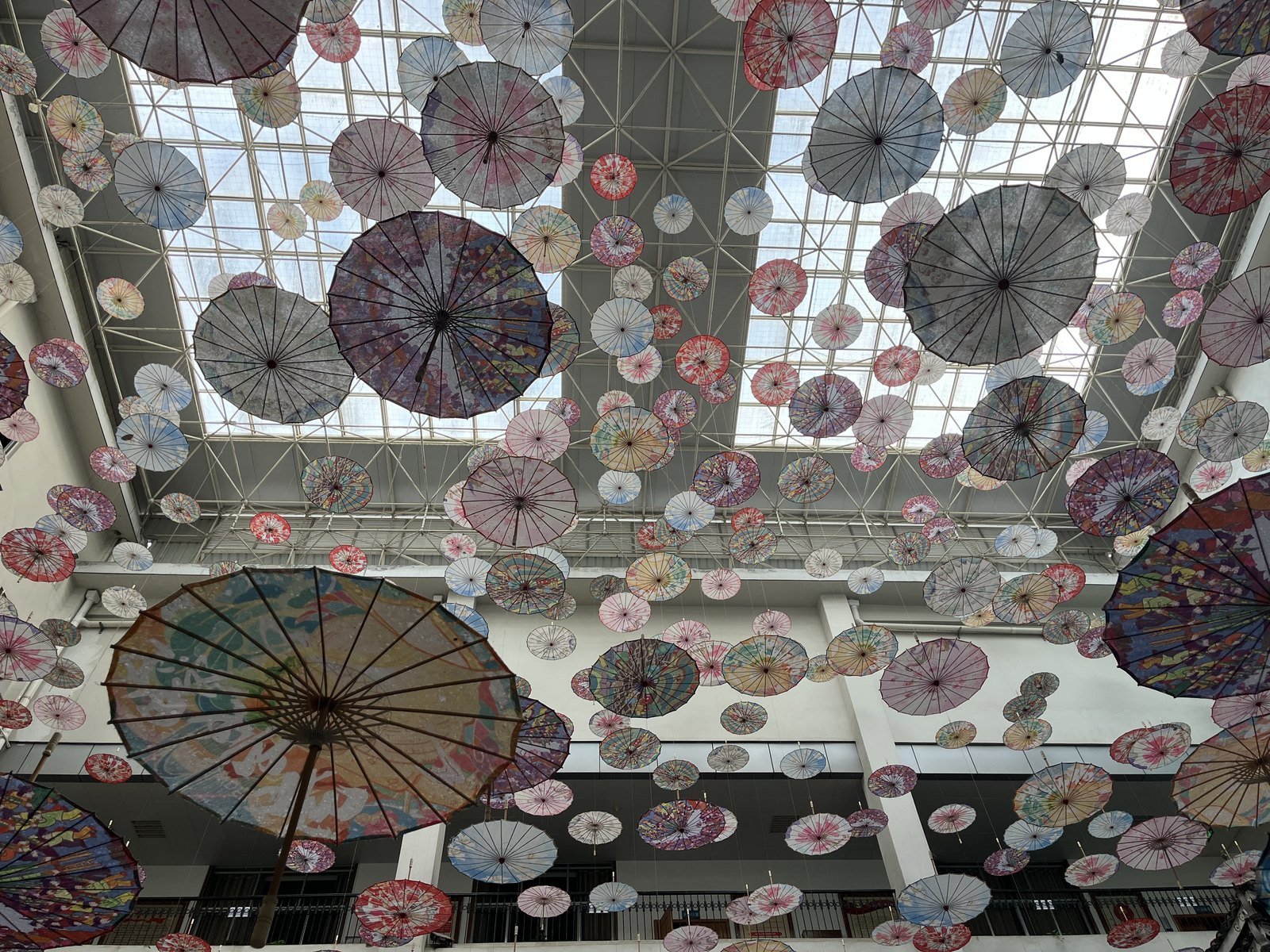
Walk in and the building does something you do not expect from a city museum. The central hall is a full-height glass-roofed atrium, and the whole ceiling has been hung with oil-paper umbrellas — several hundred of them, in every size and pattern, floating over the balconies.
Underneath sits a scale model of a Dong drum tower, backed by a large mural of a mountain village in washed greens. It is the single most photographed spot in the museum and, for once, deservedly so.
The Manggao Festival room
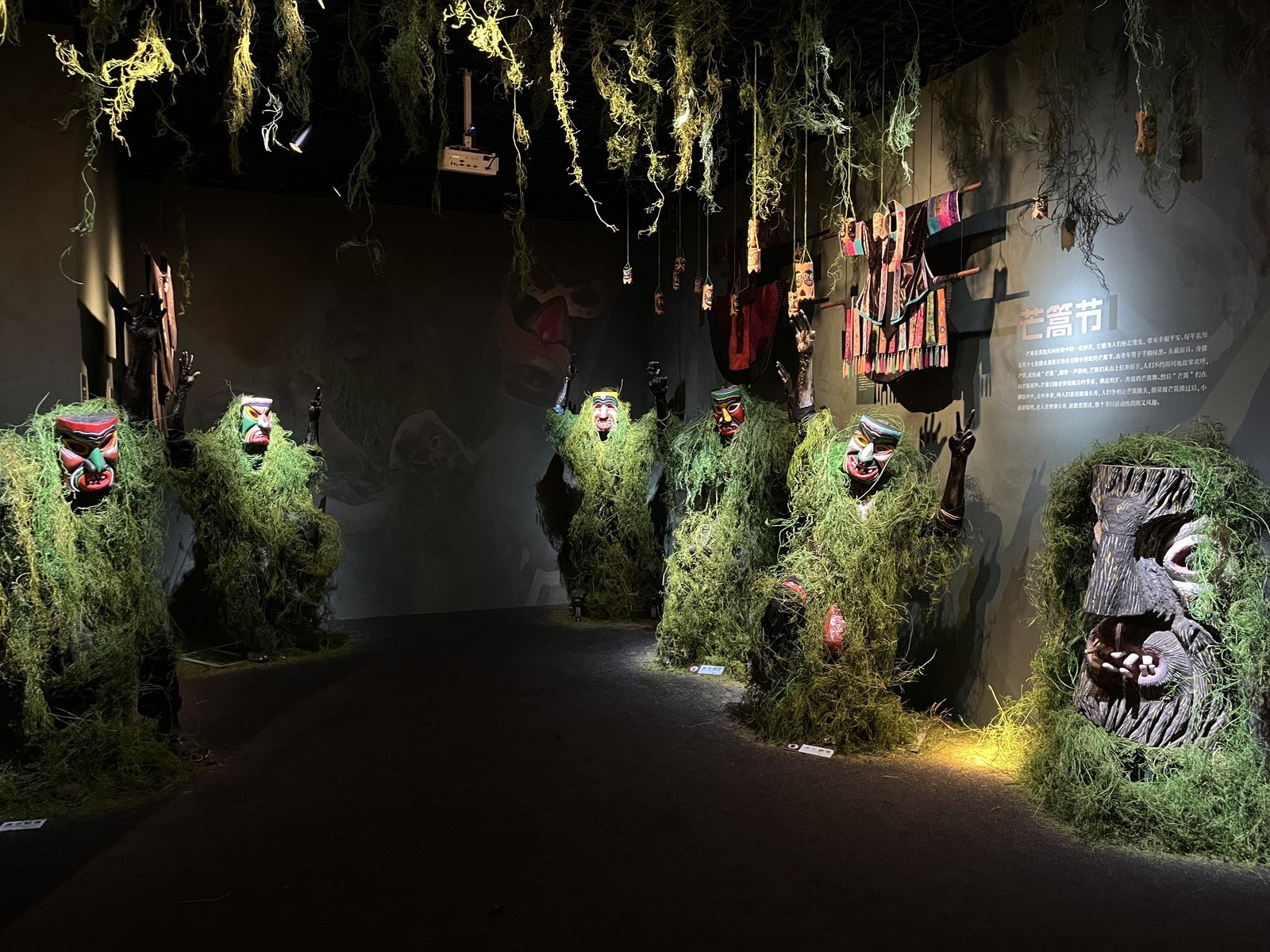
The ethnic culture galleries are the reason to keep walking. One room is staged almost as an installation: the lights are down, dried grass hangs from the ceiling, and carved wooden masks emerge out of the dark on either side of a path.
The wall panel explains what you are looking at. This is the Manggao Festival (芒篙节), held on the seventeenth day of the first lunar month in Rongshui Miao Autonomous County, north of Liuzhou. Young men blacken their hands and feet, put on masks and bundle themselves into grass costumes to become manggao — folk spirits believed to drive off demons and bring good fortune.
When the gongs start, the manggao come down off the hillside and dance through the villages, and people push forward to have their heads touched: for children it is said to bring cleverness, for the old, long life, and for brides, beauty.
Fossils, bronzes and the rest
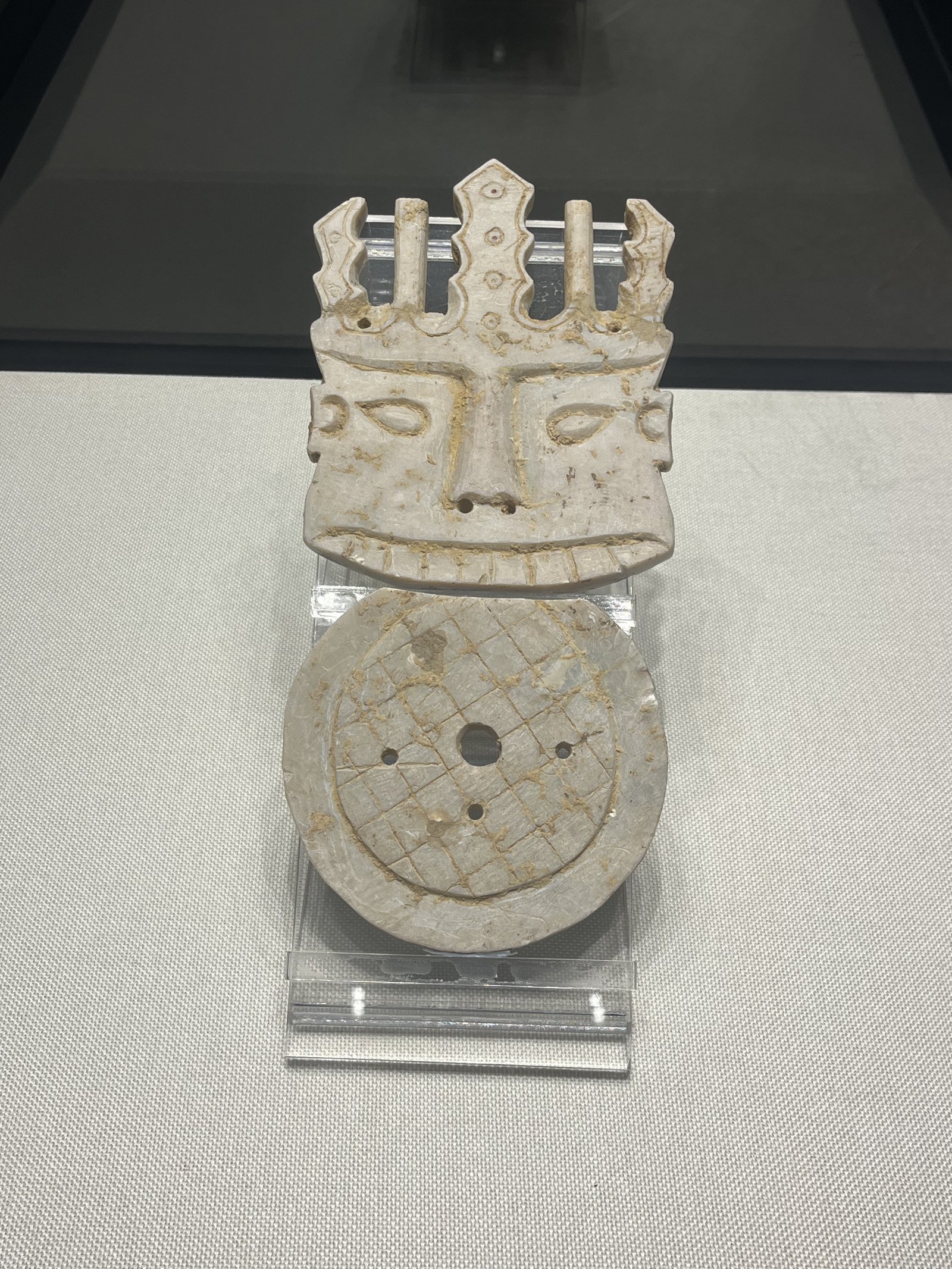
The permanent galleries also cover Liuzhou’s early history, its palaeontology — this is caveman country, and the fossil hall is one of the museum’s better-known displays — and a collection of bronzes and carved stone.
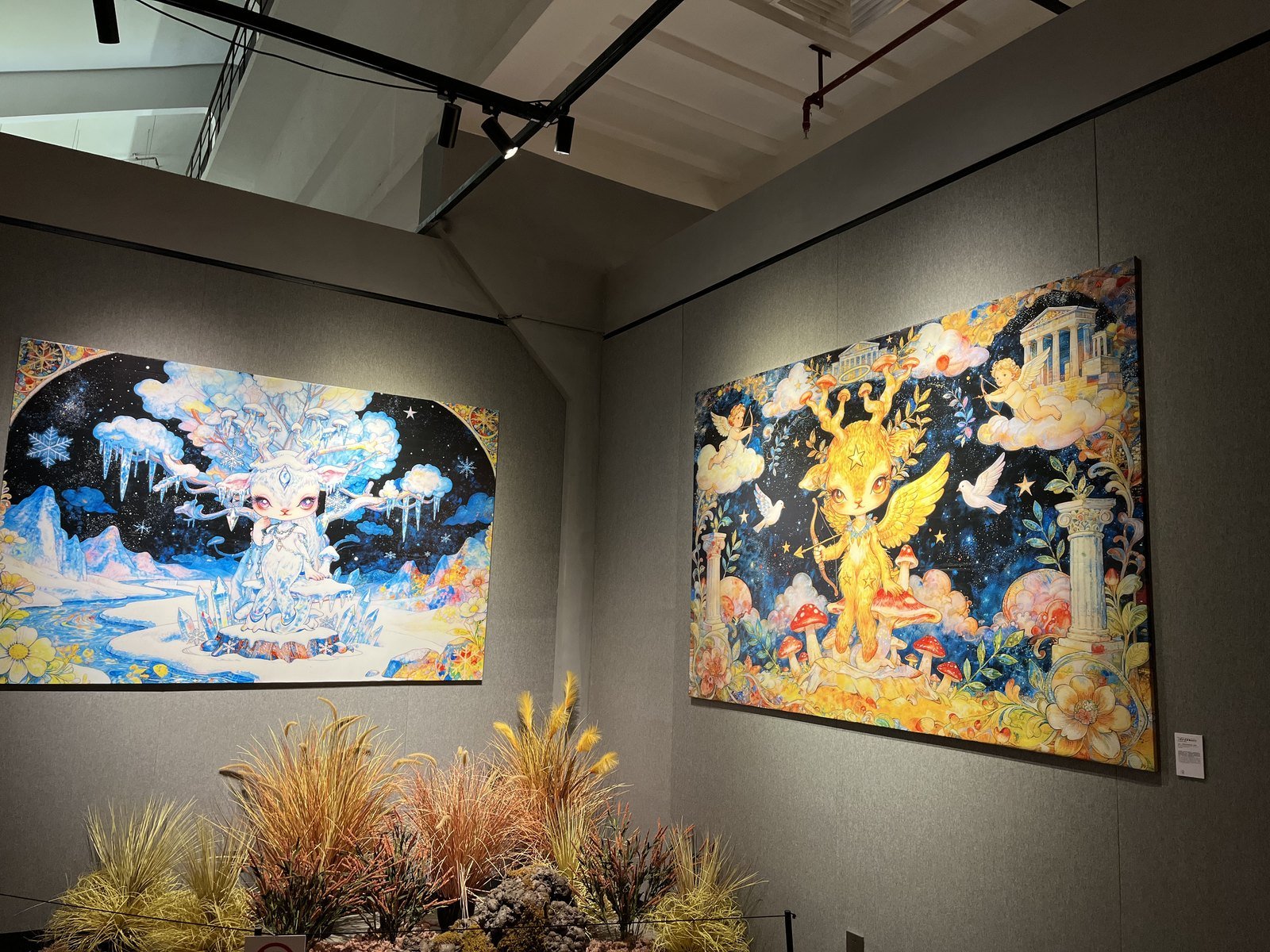
There are also temporary exhibition rooms, and they are worth a look even if contemporary art is not why you came. On our visit these held large, brightly coloured paintings — deities, deer, clouds, a lot of gold — hung in clean white rooms that feel nothing like the galleries next door.
Doing Both in Half a Day
The two museums are on opposite sides of the Liujiang River — the Industrial Museum out in Yufeng District on Liudong Road, Liuzhou Museum in the centre by People’s Square. Taxis and ride-hailing make the hop straightforward; there is no need to plan around it.
Hours, Addresses and Tickets
| Liuzhou Industrial Museum | Liuzhou Museum | |
|---|---|---|
| Chinese name | 柳州工业博物馆 | 柳州博物馆 |
| Address | 220 Liudong Road, Yufeng District 柳东路220号 | 37 Jiefang North Road, Chengzhong District 解放北路37号(人民广场东侧) |
| Opening hours | Tue–Sun, 9:00–17:00 | Tue–Sun, 9:00–17:00 Last entry 16:00 |
| Closed | Mondays | Mondays |
| Admission | Free | Free |
| Booking | Not required | Not required |
| Time to allow | 2–2.5 hours | 1–1.5 hours |
Hours and admission policies at Chinese public museums do change, particularly around public holidays. These were correct at the time of writing — check before you set out if the visit is the reason for your day.
Liuzhou Museums FAQ
Are Liuzhou’s museums free?
Yes. Both Liuzhou Industrial Museum and Liuzhou Museum offer free general admission. Special temporary exhibitions can occasionally carry a separate charge.
Do I need to book in advance?
No. Neither museum requires a reservation for general admission. Bring your passport or ID in case the entrance desk asks to see it.
Which one should I visit if I only have time for one?
Choose the Industrial Museum if you want to understand why Liuzhou exists in its current form, and Liuzhou Museum if you are more interested in the Zhuang, Miao, Yao and Dong cultures of the surrounding region. The Industrial Museum is the more unusual of the two.
Is there much English signage?
Signage is primarily in Chinese. Key panels carry English, but not all of them — a translation app is genuinely useful, especially in the ethnic culture galleries where the detail is the point.
Are the museums suitable for children?
The Industrial Museum tends to work well with children: the exhibits are large, physical and can be walked around. The train library is set up for reading.
How do I get between the two?
They sit on opposite sides of the Liujiang River, roughly twenty minutes apart by car. Ride-hailing is the simplest option; both are well known to local drivers by name.
A city that keeps both of its stories
Plenty of industrial cities quietly bury the factory years once the air clears. Liuzhou did the opposite: it put a 3,000-tonne press on a plinth by the road and built a museum around it, then hung several hundred umbrellas over the drum tower in the museum across the river.
Between them, the machines and the masks, you get a city that has not decided to be only one thing. That is a better souvenir than a fridge magnet.