Category: China

  • Beyond Luosifen: What Liuzhou Locals Actually Order for a Big Meal

    Beyond Luosifen: What Liuzhou Locals Actually Order for a Big Meal

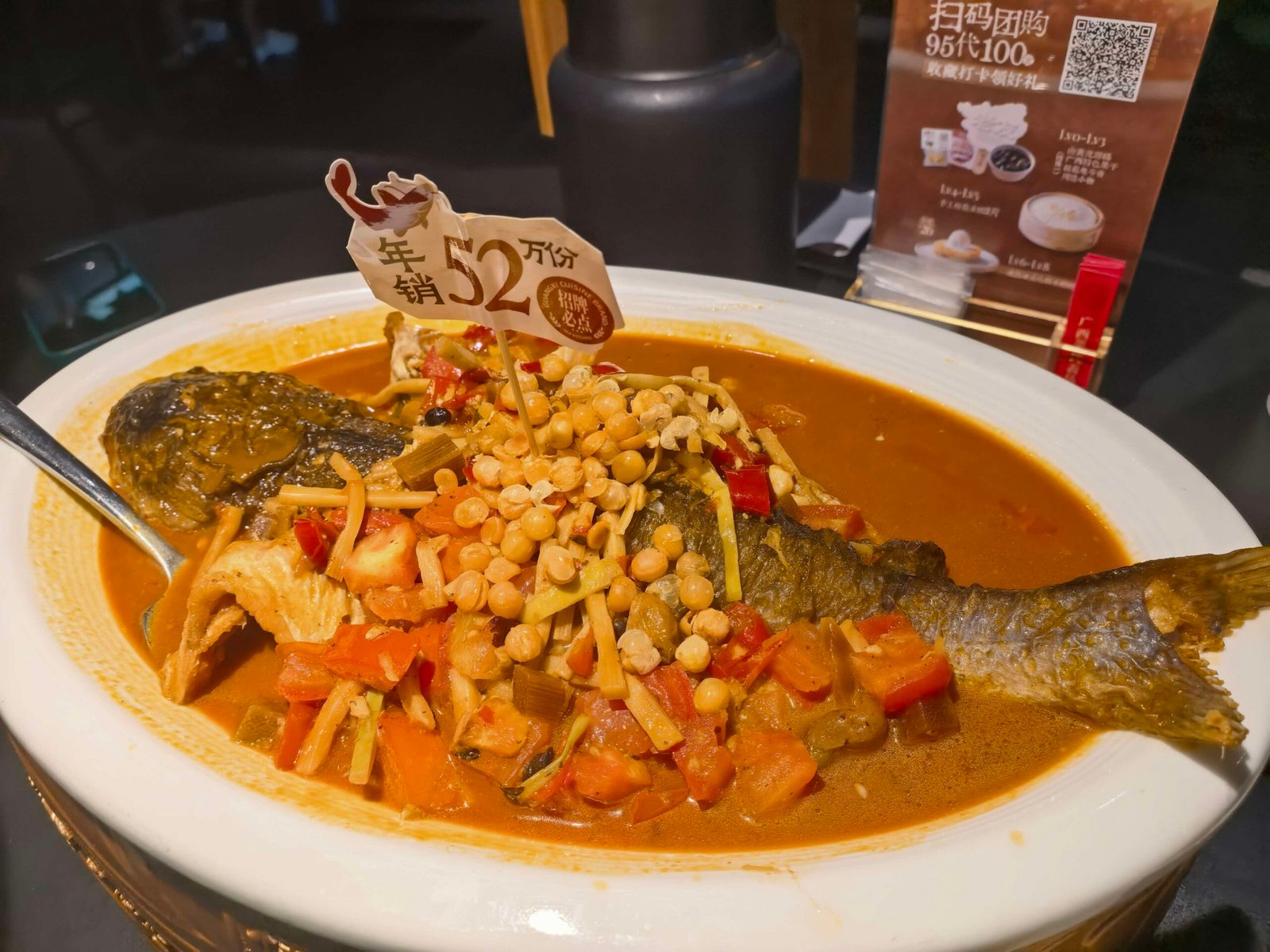
    Whole braised Laoyou fish topped with pickled bamboo shoot, tomato and peanuts at a Liuzhou restaurant
    Laoyou fish (老友鱼) at Guixiaochu (桂小厨) — a whole fish braised with pickled bamboo shoot, tomato and chili in the classic Guangxi “old friend” style.

    Mention Liuzhou and most people immediately think of luosifen — and it deserves the attention (see our full luosifen guide). But spend a couple of days in the city and you’ll notice locals eating a lot more than rice noodle soup: a duck-foot hot pot, a full Guangxi-style feast built around fish and clams, and street-corner sweet soups all show up just as often on the table. Here’s what that looked like across two real meals.

    Liuzhou’s other national dish: the duck-foot hot pot

    At Liu Yuan Yuan (柳元元), the dish to order is a luosi duck-foot pot (螺蛳鸭脚煲) — slow-braised duck feet simmered tableside in a spicy, sour broth built on the same fermented bamboo shoot base as a bowl of luosifen. Rice noodles go straight into the pot toward the end of the meal, and because they finish cooking in the simmering broth rather than being boiled separately, they come out noticeably softer and more tender than a standard bowl of luosifen — a good pick if you found the regular version a bit too firm.
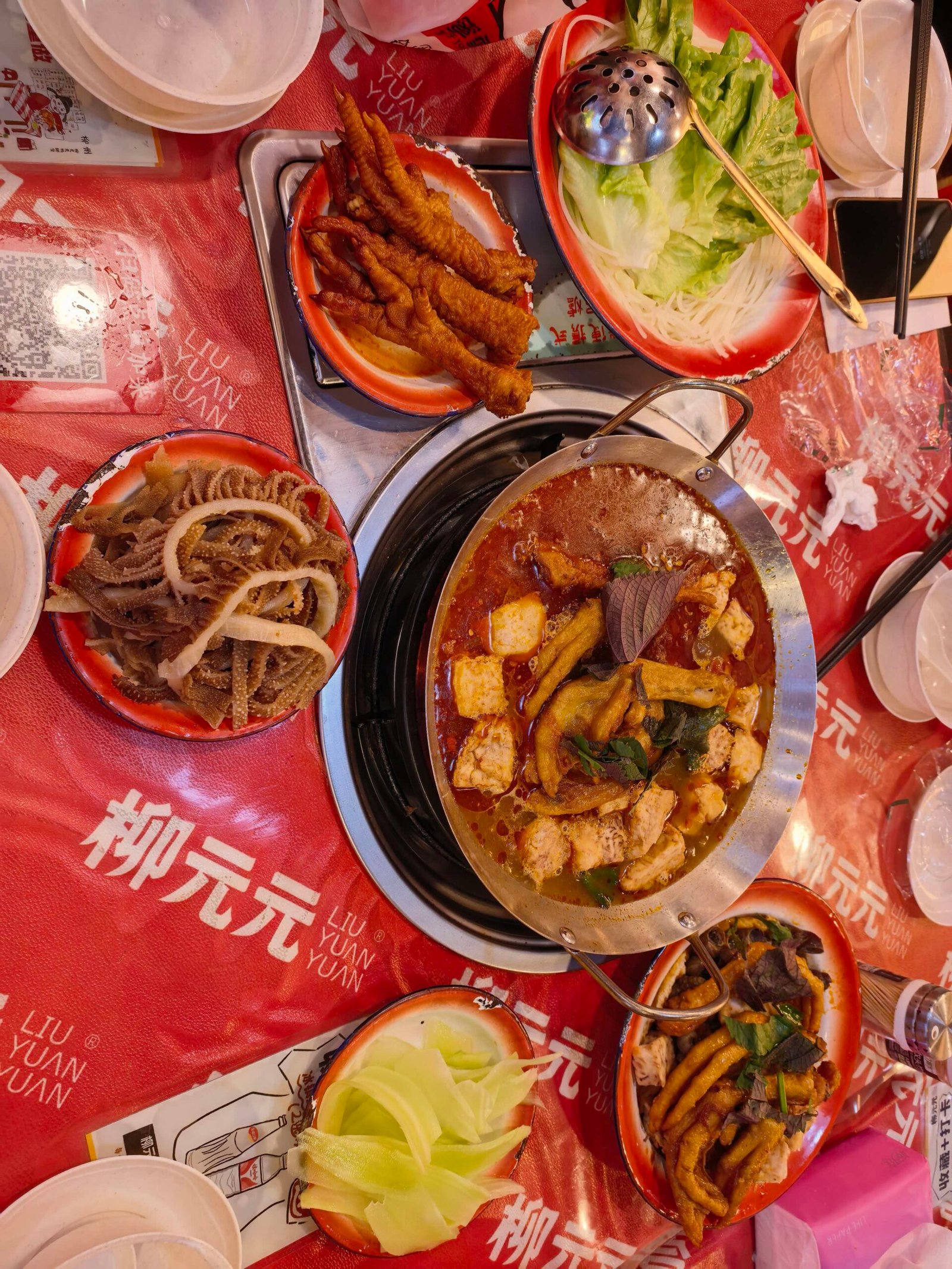
    Table spread at Liu Yuan Yuan restaurant in Liuzhou with a central hot pot and side dishes of fried tofu skin and pickled vegetables
    Liu Yuan Yuan’s duck-foot pot, served with sides of fried tofu skin and pickled vegetables — the broth and noodles here are softer than a standard bowl of luosifen.

    A proper Guangxi feast at Guixiaochu (桂小厨)

    One sit-down meal at Guixiaochu (桂小厨) covered four dishes that each show a different side of Guangxi home-style cooking, starting with the Laoyou fish pictured above — a whole fish braised in the classic “old friend” style with pickled bamboo shoot, tomato and chili, more sour-and-savory than spicy.
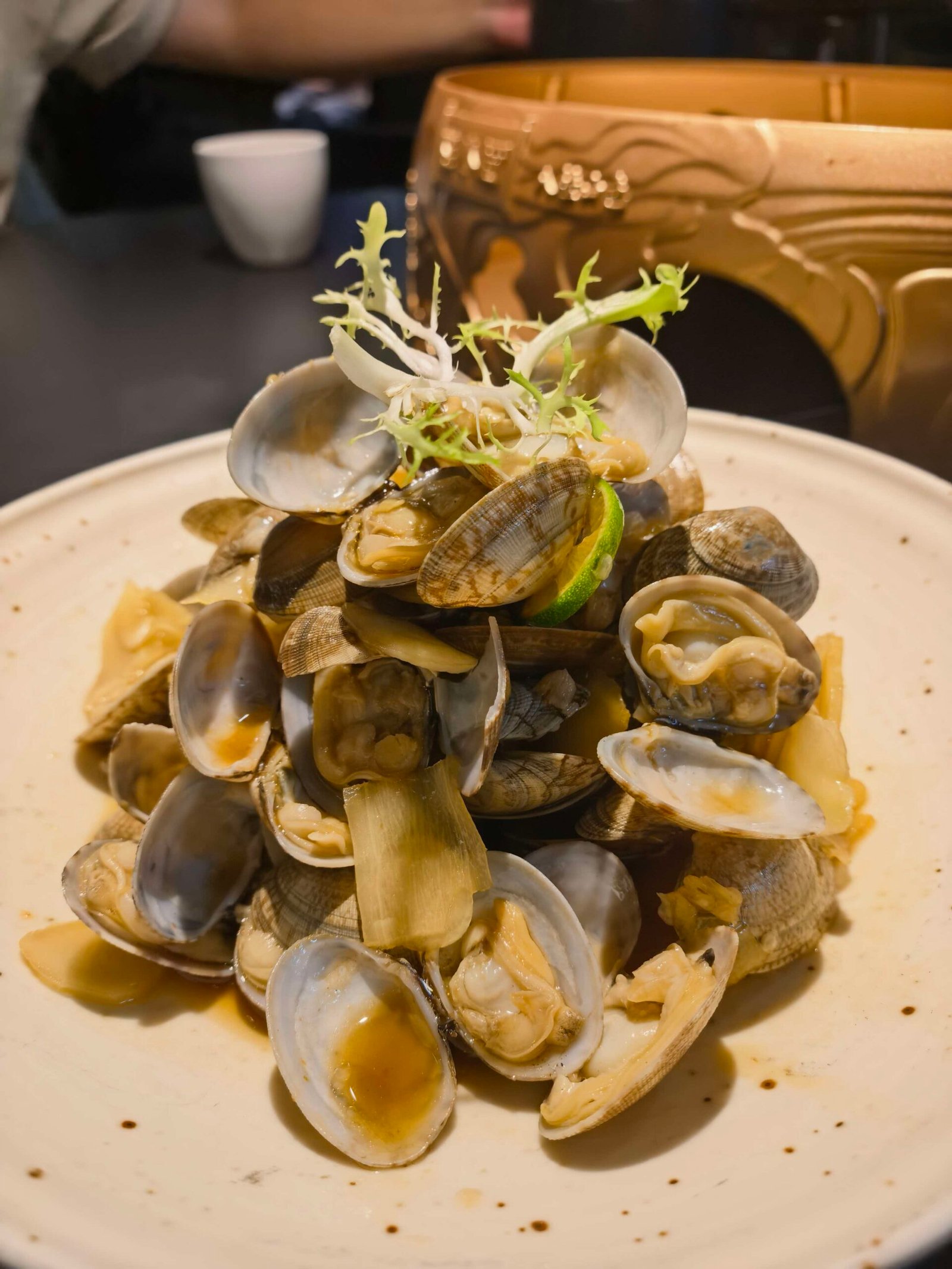
    Cold-tossed clams with garlic and herbs on a plate at a Liuzhou restaurant
    Cold-tossed clams — locally called “螺” (luo) in Guangxi, not to be confused with the river snails used in luosifen broth — a light, garlicky starter.
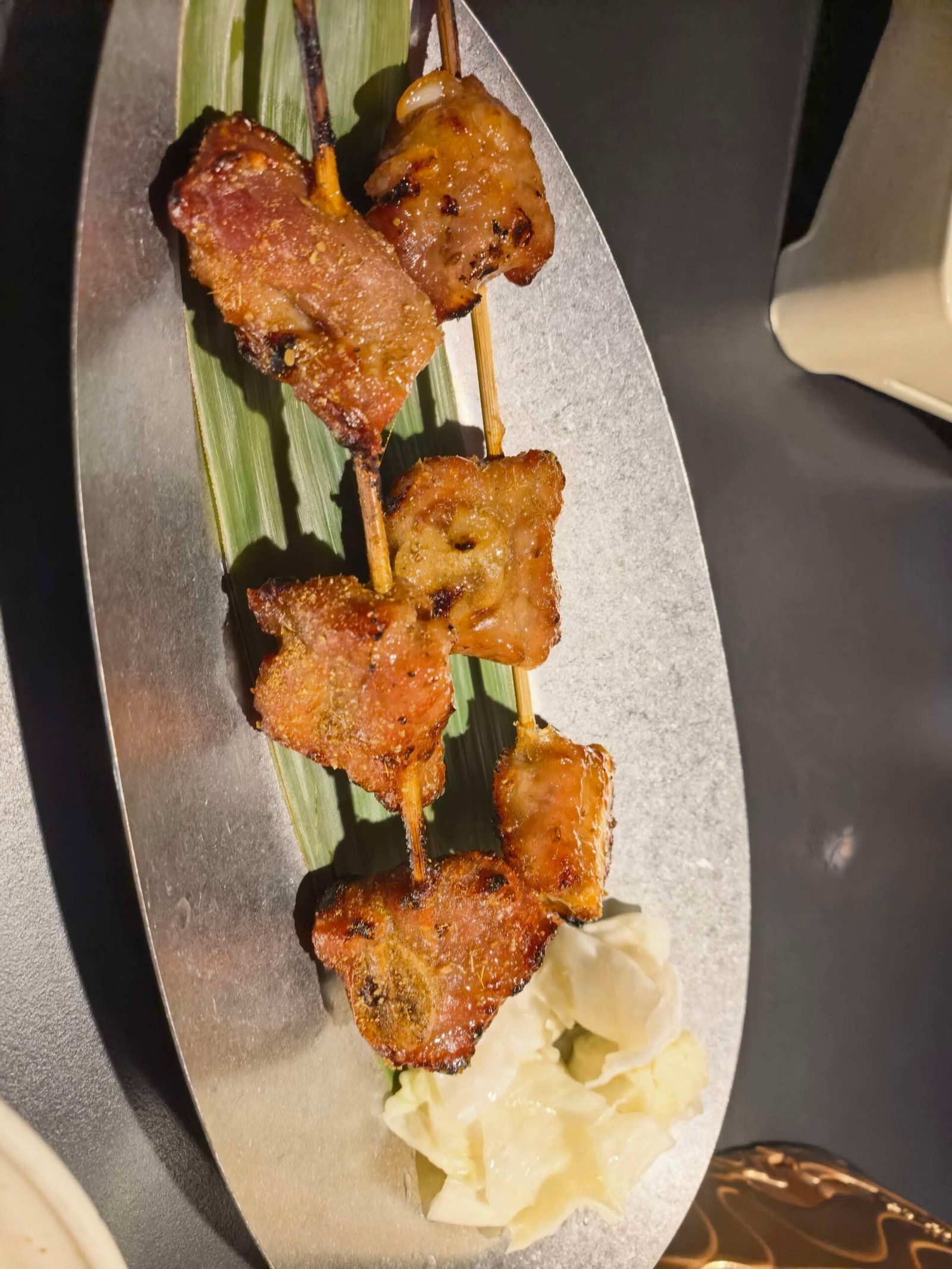
    Honey-glazed grilled pork ribs on a decorated plate at a Liuzhou restaurant
    Honey-glazed grilled ribs (蜜汁烤排骨) — sweet, char-grilled, and a good contrast to the sourer dishes on the table.
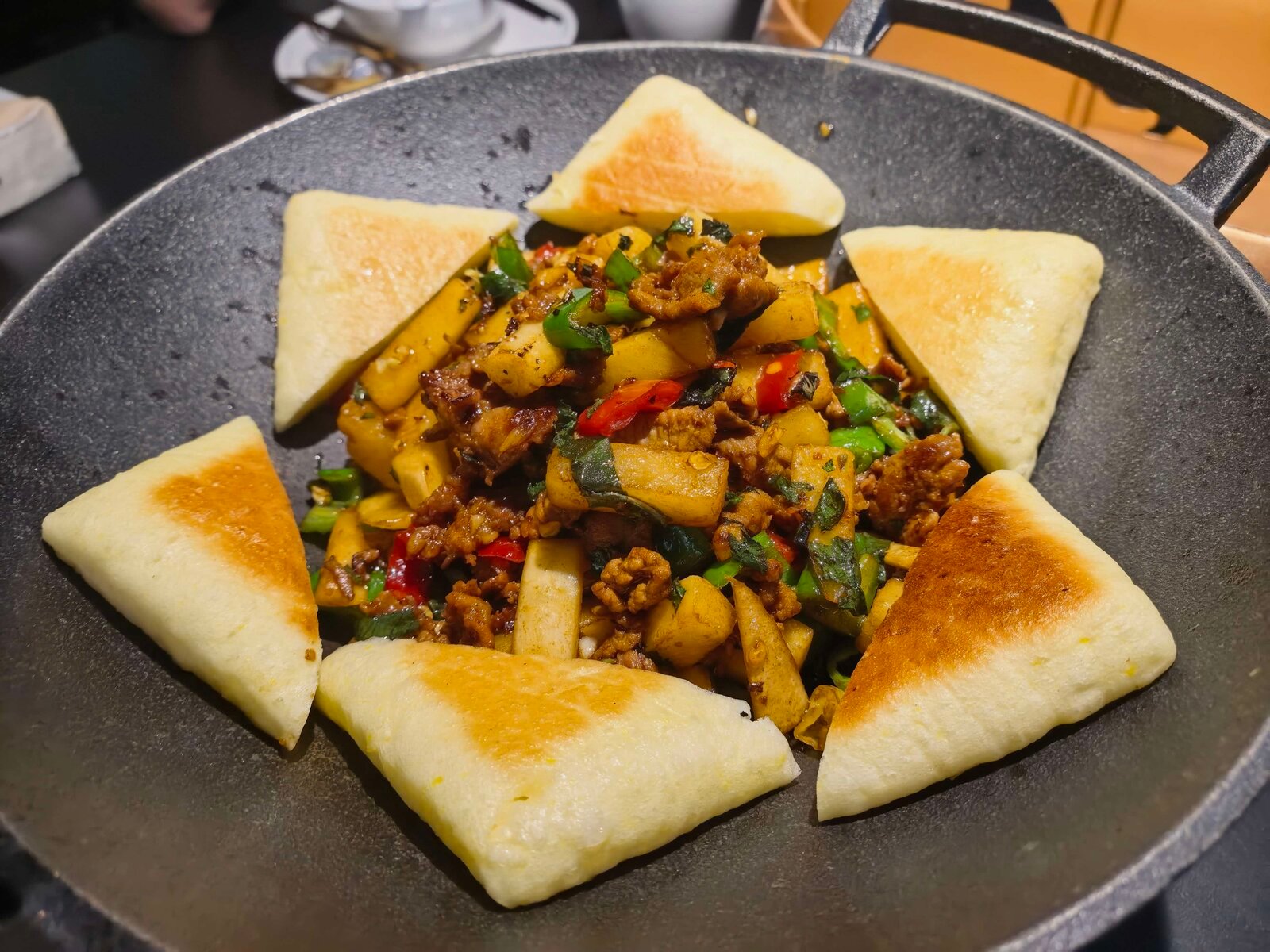
    Stir-fried beef with pickled radish and perilla leaf served with fried bread on a hot plate
    Stir-fried beef with pickled radish and perilla leaf (酸萝卜紫苏炒牛肉), served with fried bread on the side — an unusual but very Guangxi pairing.

    This was one real meal rather than a comprehensive menu review, so treat it as a sample of what a proper Guangxi spread looks like rather than a definitive “best dishes” list for the restaurant.

    Street-corner sweet soups

    Dessert in Liuzhou often means tong sui — sweet soups sold from small street stalls. The set pictured below included what looked like a mung bean or barley-based soup, a coconut milk dessert with jelly cubes, and a separate bowl of jelly cubes in syrup. We couldn’t confirm the exact names of each from the photo alone, so we’d rather say that plainly than guess — but it’s a good example of Liuzhou’s dessert culture beyond the noodle soup the city is famous for.
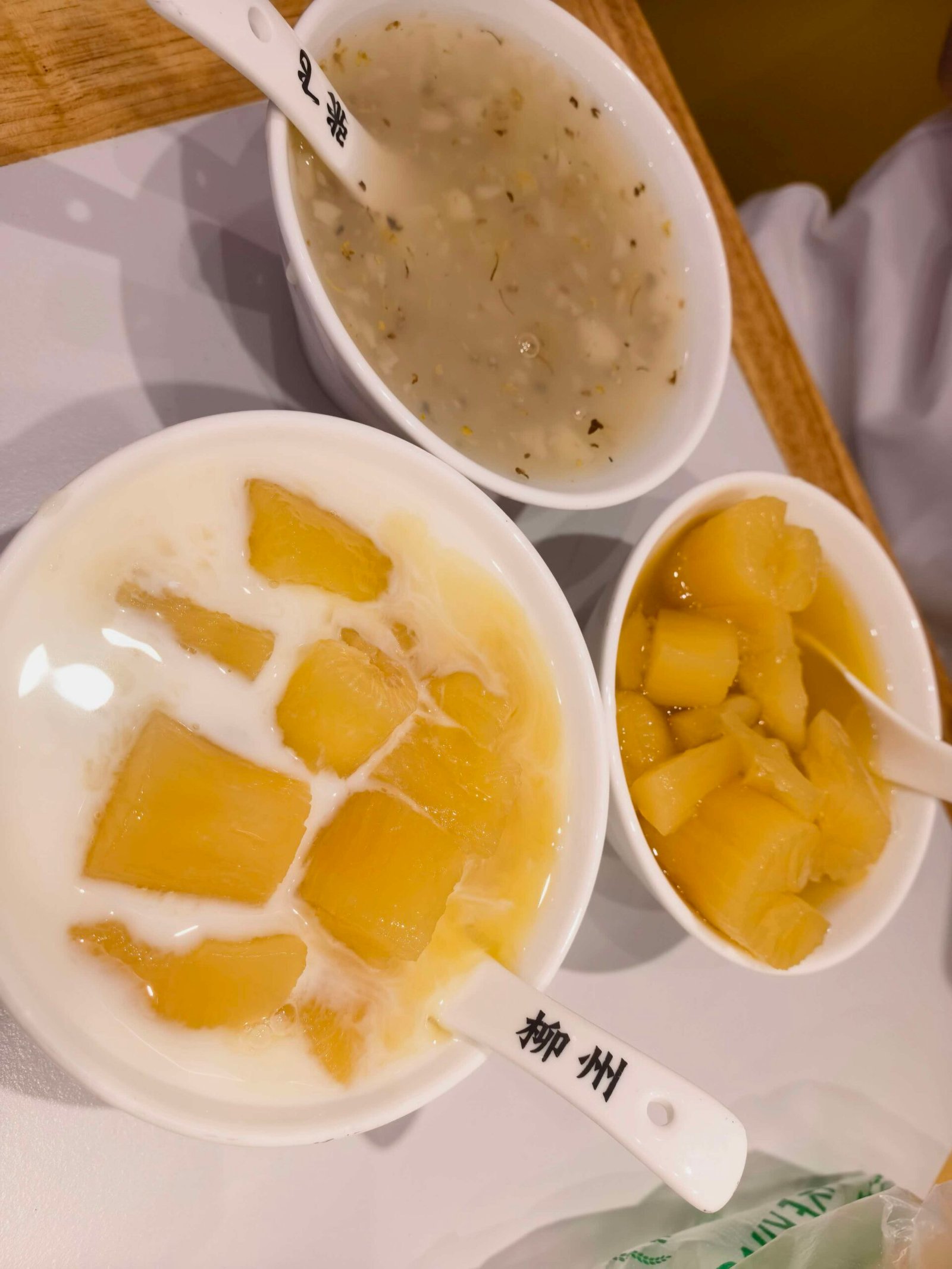
    Three bowls of Chinese sweet soup desserts including jelly cubes and coconut milk on a Liuzhou street stall counter
    A trio of street-side sweet soups (tong sui) in Liuzhou — exact names unconfirmed, but a good sample of the city’s dessert culture.

    A lighter note to end on

    Eating your way through Liuzhou is close to a full-contact sport, and a packet of digestive tablets making an appearance partway through the trip is a fairly honest summary of what a serious food day here looks like.
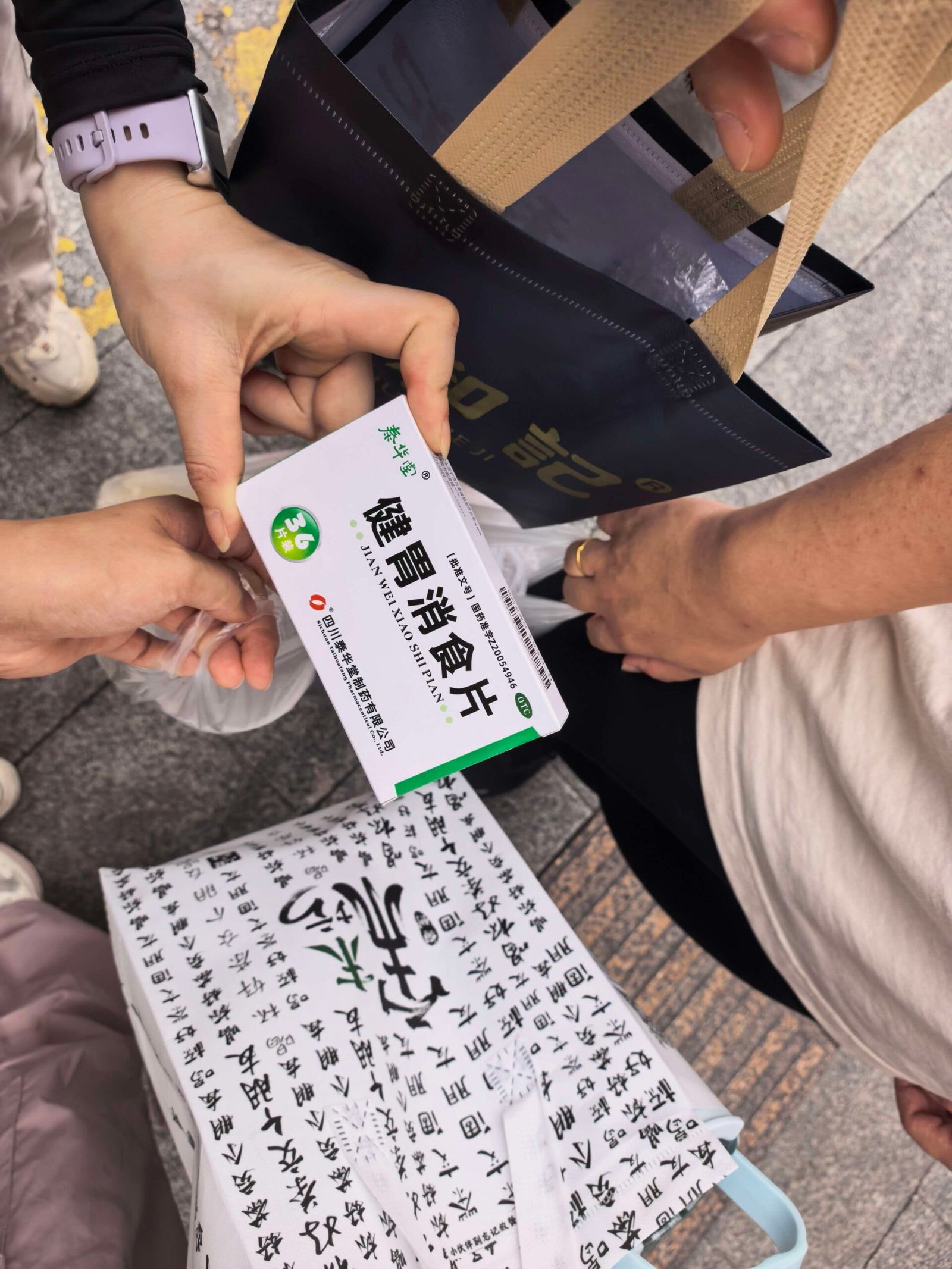
    Hand holding a box of digestive tablets on a Liuzhou street, a lighthearted moment during a food tour
    A packet of digestive tablets makes an appearance — a fairly common sight after a full day of eating in Liuzhou.

    If you haven’t already, don’t skip the bowl that put this city on the map — see our full guide to Liuzhou luosifen.
  • Liuzhou Luosifen: Why This Smelly, Sour Noodle Soup Is Worth a Special Trip

    Liuzhou Luosifen: Why This Smelly, Sour Noodle Soup Is Worth a Special Trip

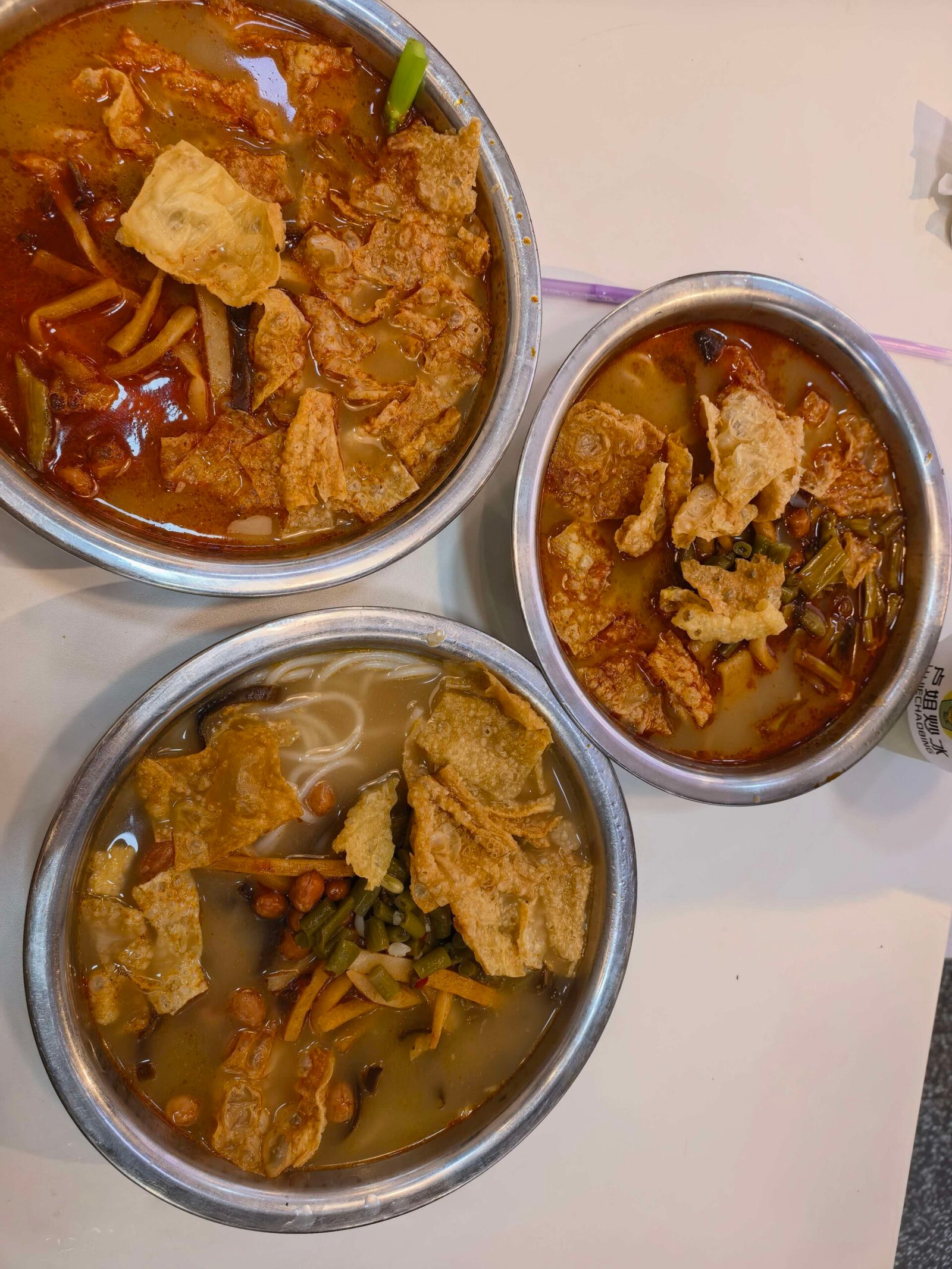
    Overhead view of three bowls of Liuzhou luosifen with fried tofu skin, pickled bamboo shoot, peanuts and wood ear mushroom
    Three bowls of Liuzhou luosifen, loaded with fried tofu skin, pickled bamboo shoot, peanuts and wood ear mushroom.

    Luosifen (螺蛳粉) is Liuzhou’s signature rice noodle soup, and it’s the reason most people outside Guangxi have heard of this city at all. The broth is simmered with river snails and pork bones, then sharpened with fermented bamboo shoot and piled with a specific set of toppings that locals eat almost daily. The smell puts some visitors off before they’ve even sat down — but the flavor is sour, spicy, savory and genuinely addictive, which is why it’s worth seeking out a proper bowl instead of judging the dish by the packaged supermarket version most people outside China have tried.

    What’s actually in a proper bowl

    A standard bowl is built around round, chewy rice vermicelli in a red, snail-and-pork broth. On top you’ll typically find fried tofu skin (腐竹), pickled bamboo shoot (酸笋), peanuts, wood ear mushroom, pickled green beans and a spoonful of chili oil. Each ingredient does a specific job — the tofu skin adds chew, the peanuts add crunch, the pickled bamboo shoot brings the sourness the dish is known for, and the chili oil ties it all together. It’s a more carefully balanced bowl than it first looks.

    Why it smells the way it does

    The smell mostly comes from the fermented pickled bamboo shoot, not the snails themselves — it’s a fermentation process similar to other pungent fermented foods found around the world. Locals have a saying for it: it smells strong but tastes great, and most first-time visitors who push past the smell end up agreeing.

    Where to actually get a bowl — and how the noodles differ

    Two real spots worth knowing by name: Pingjie Luosifen (萍姐螺蛳粉) cooks its rice noodles firm and chewy, which is worth ordering if you like a bowl with some bite — their stir-fried version (炒螺蛳粉, noodles pan-fried instead of served in broth) is particularly good and worth trying alongside or instead of the soup. Liu Yuan Yuan (柳元元) is better known for its duck-foot hot pot than a plain bowl, but the noodles that come with it are noticeably softer and more tender — a good option if firm noodles aren’t your thing (more on that hot pot in our other Liuzhou food guide).

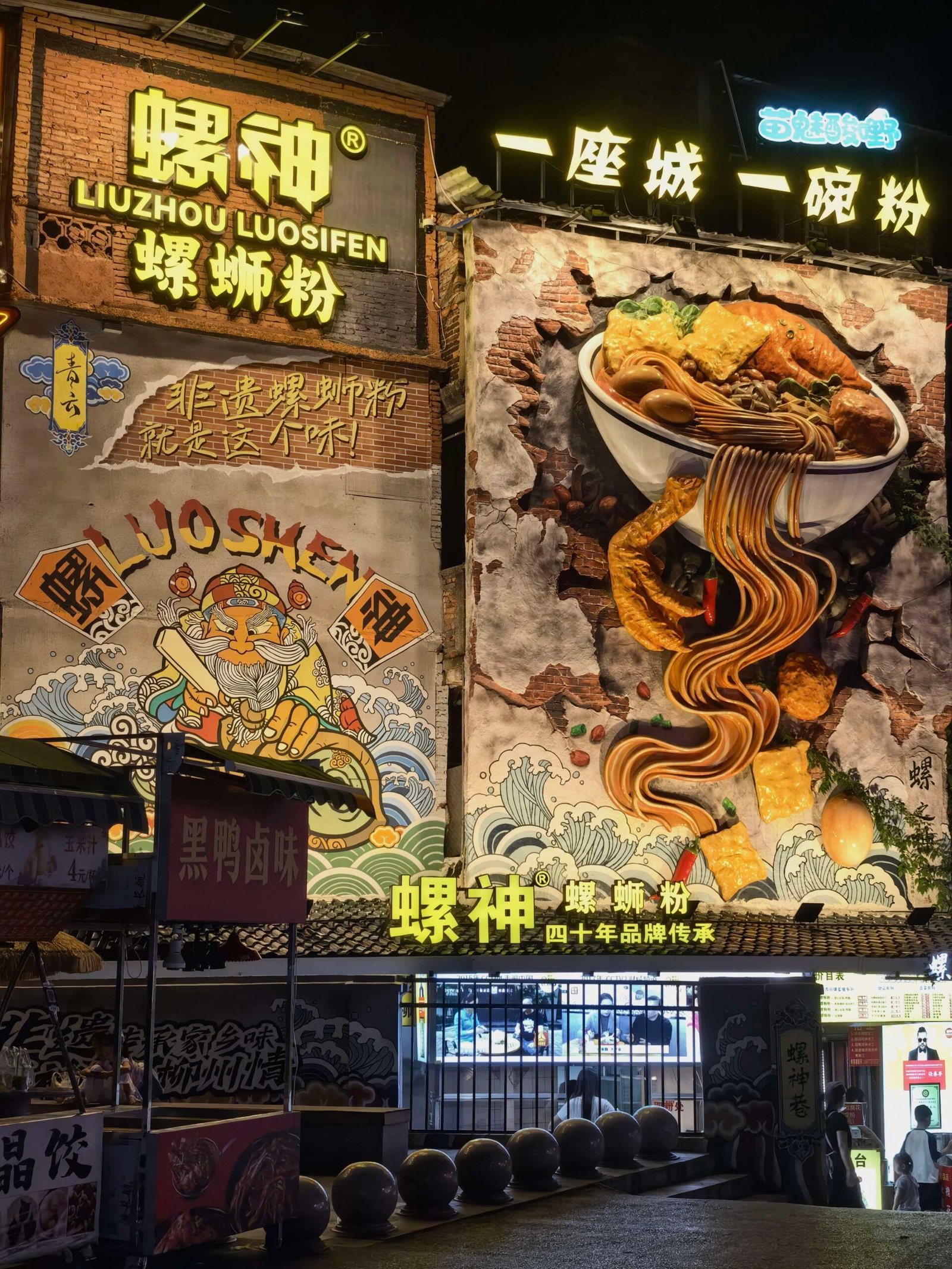
    It’s also worth a walk down Luoshen Alley (螺神巷), home to Luoshen Luosifen (螺神螺蛳粉) and one of Liuzhou’s most photographed food landmarks: a giant 3D mural of a bowl of luosifen appearing to pour straight out of the wall.

    Large 3D mural of a bowl of luosifen pouring out of a wall at Luoshen Alley in Liuzhou
    The giant luosifen mural on Luoshen Alley, outside Luoshen Luosifen — one of Liuzhou’s most photographed food landmarks.

    Ordering tips for first-timers

    • Luosifen is normally made spicy by default — ask for it 微辣 (mild) or 中辣 (medium) if you’re worried about the heat.
    • If you’d rather skip the broth altogether, ask about the dry stir-fried version (炒螺蛳粉), like the one at Pingjie Luosifen.
    • Extra toppings — more tofu skin, more peanuts, an added egg — are usually available if you want to customize your bowl.
    • Noodle texture varies by shop. If you have a preference for firm versus soft noodles, it’s worth trying more than one place, the same way Pingjie Luosifen and Liu Yuan Yuan differ from each other.

    Good to know before you go

    Luosifen is street food and casual sit-down fare, so expect a quick, inexpensive meal rather than a sit-down dinner — plan for well under an hour unless you’re also exploring the surrounding food street. Prices vary by shop and by how many extras you add, so we won’t quote a fixed number here; check the menu board when you arrive or ask locally.

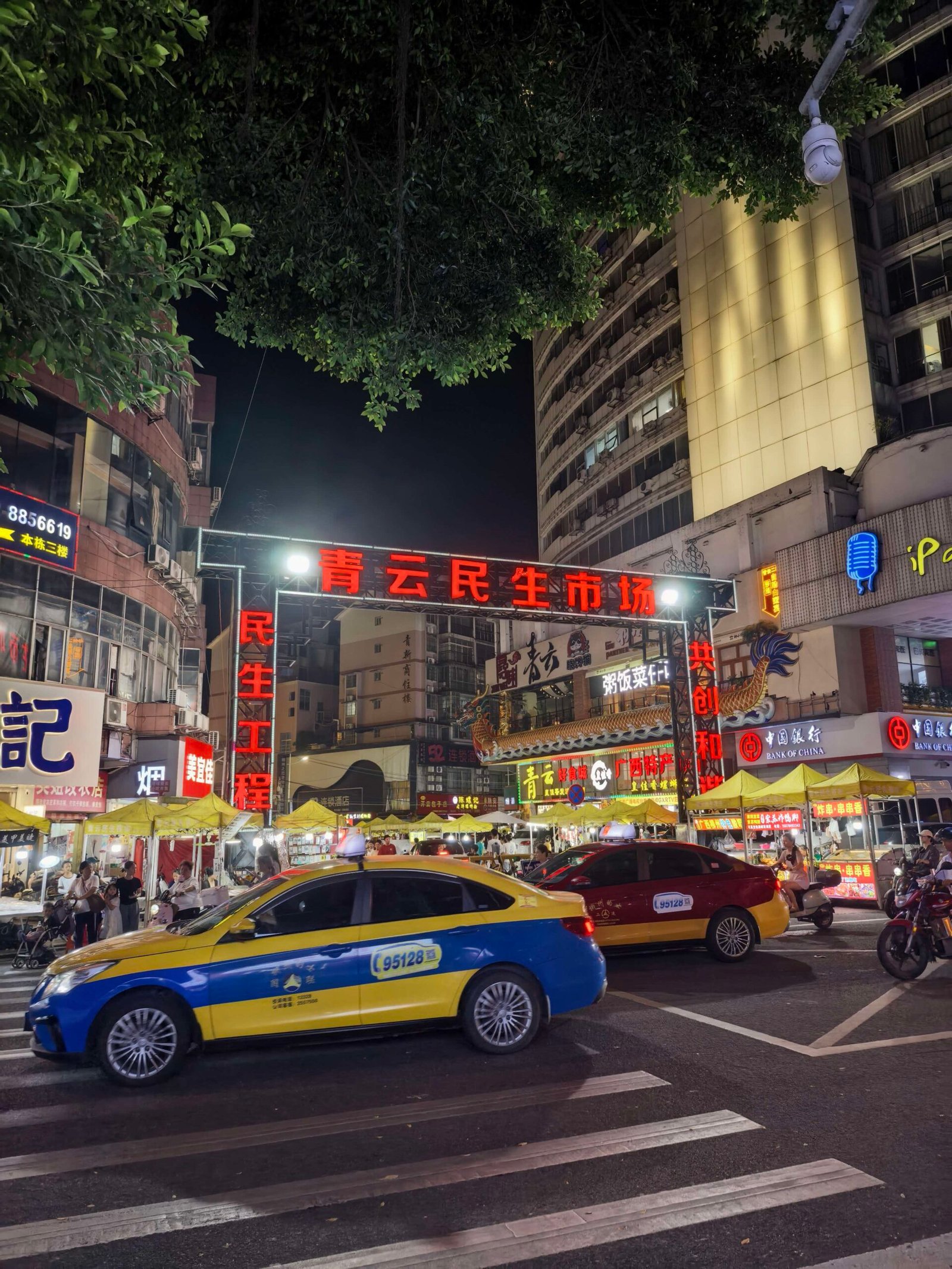
    Night view of Qingyun Minsheng Market food street in Liuzhou with neon signage and food stalls
    The Qingyun Minsheng Market food street at night — a popular spot to combine a bowl of luosifen with a wider street-food crawl.

    Luosifen might be Liuzhou’s most famous export, but it’s far from the only thing worth eating here. For a look at what else locals order for a proper sit-down meal — including that duck-foot hot pot and a full Guangxi-style feast — see Beyond Luosifen: What Liuzhou Locals Actually Order for a Big Meal.